
As an Amazon Associate I earn from qualifying purchases.
Venison stew is a standard in my home, and I make many varieties. This one, inspired by the flavors of Tunisia and North Africa, is one of my favorites. If that sounds exotic, it mostly isn’t. Virtually everything you need to make this recipe you already have, or is easily found in the supermarket.
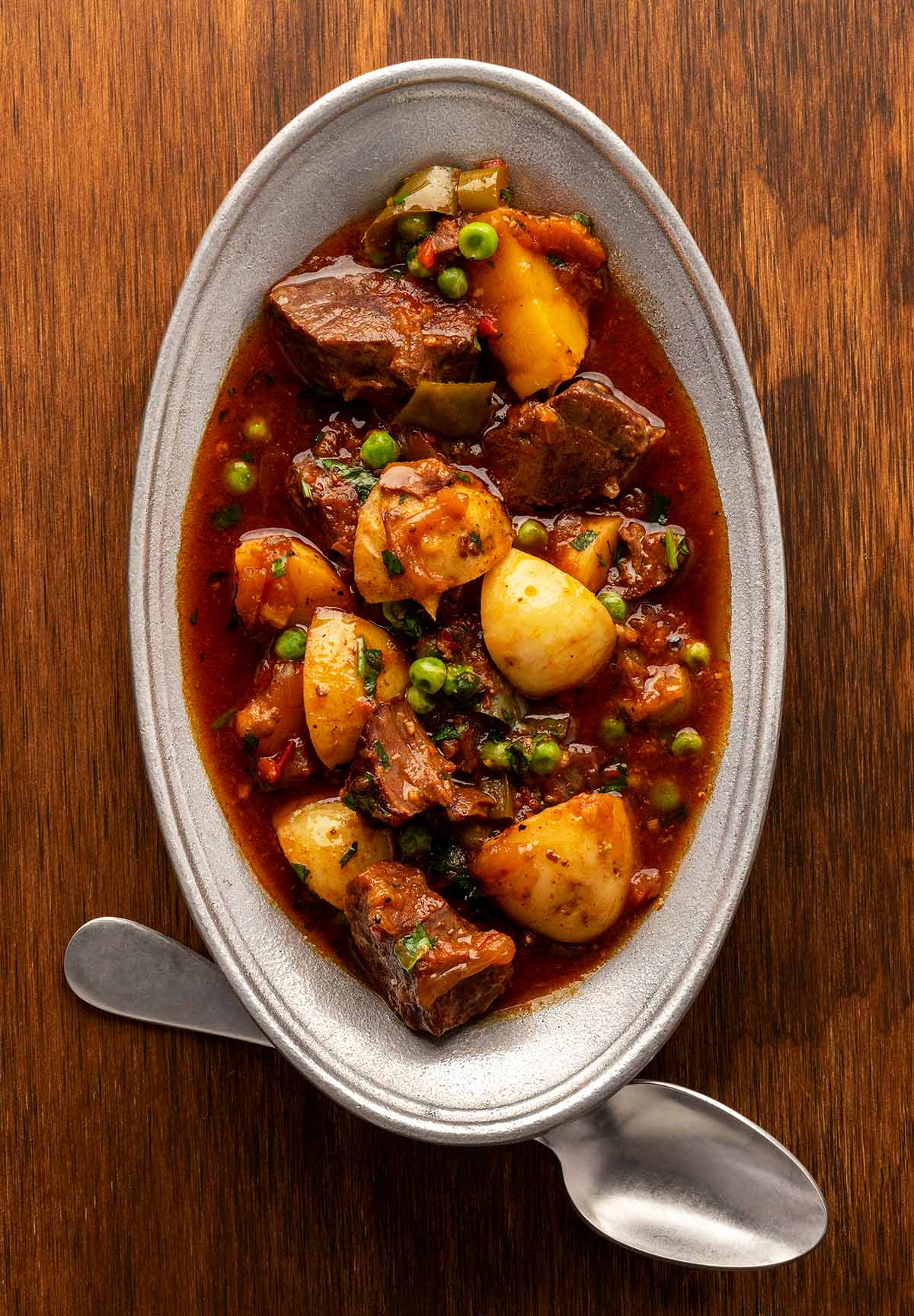
I first made this venison stew from a whitetail doe I shot in an alfalfa field in northern Wyoming. She was a magnificent animal — with a thick layer of sweet, grain-fed fat — and this is a magnificent stew. Everything falls into place together, and the flavors, seasoning and texture of this dish all come out perfectly.
This recipe is an amalgam of several I’ve read in books by Paula Wolfert, Clifford Wright and, most notably Claudia Roden’s New Book of Middle Eastern Food, which I highly recommend.
Building a Better Venison Stew
I make so many stews from so many different animals I have developed a set of rules I rarely stray far from. I wrote a whole article on this, but I’ll give you the short version here:
- Brown your meat before the liquid enters the stage.
- Tomato paste is versatile and amazing. Most of my stews have at least a tablespoon. I make my own, too, which is worth the time. Cover it with oil and homemade tomato paste will last a year.
- Add ingredients gradually. Learned this one from my mom. Put everything in the pot at once and you will have some things soft and lovely and other things soft and mushy. That’s why I wait to add the potatoes, peas, olives and such.
- Don’t overcook pepper and potatoes. Both will dissolve if you let them stew too long. Think al dente pasta.
Game meats and tough domestic cuts suitable for stews require a long time before they will submit. You cannot make a venison stew on a schedule. Sometimes it’s done in 90 minutes. Sometimes, like when you have an old bull or graybeard buck, it can take upwards of 4 hours. Slow and low is the key.
Don’t worry, just kick back and let the stock and herbs do their thing.
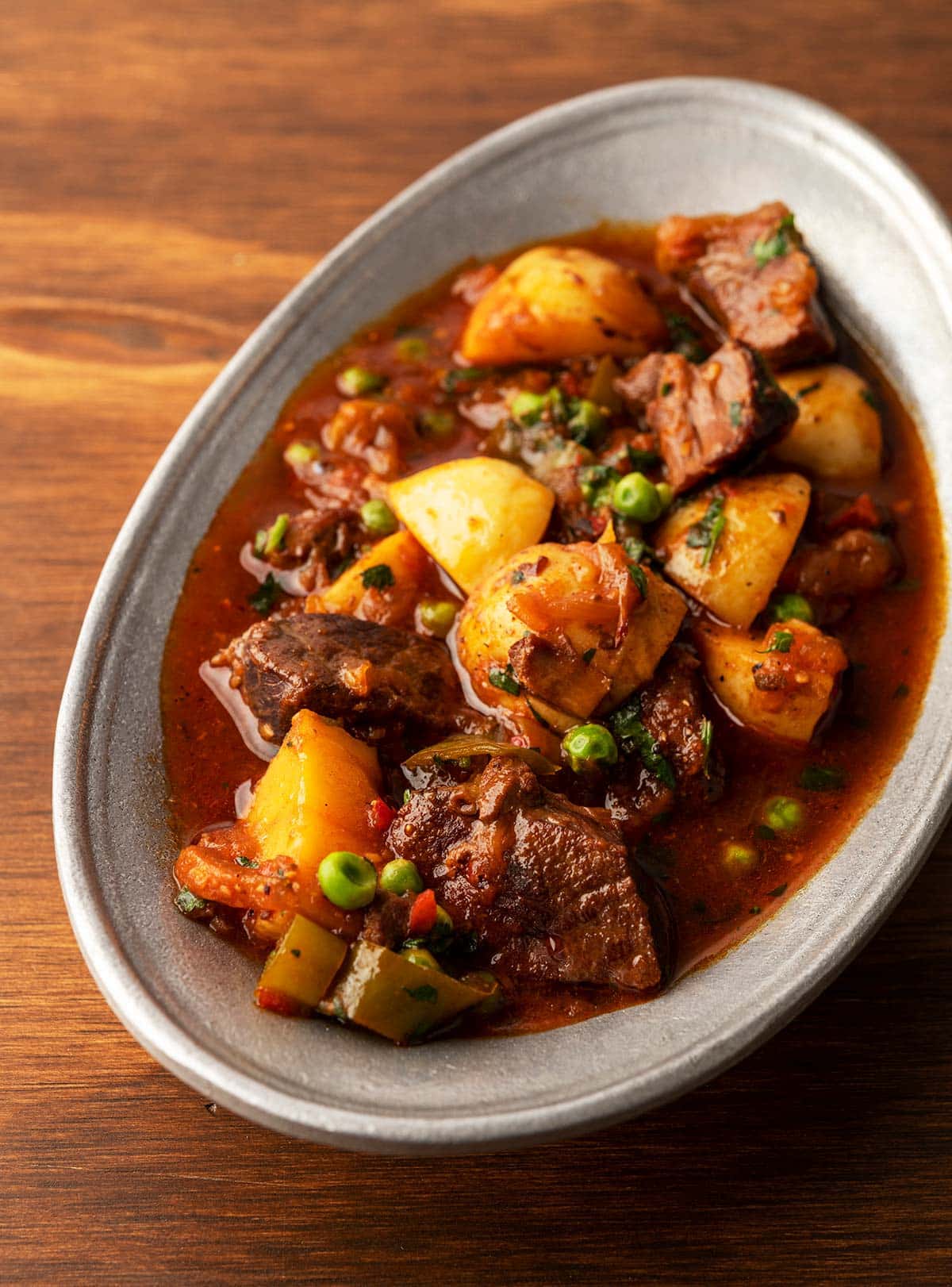
That’s another reason why you add your veggies later — elk, deer or moose can stew for several hours even after they’ve become tender, giving you all the time you need to cook your vegetables.
Add another dose of herbage right at at the table, and if it is a venison stew that lacks bright flavor notes, you could do worse than hit it with a little squeeze of lemon right at the end. Your family will not really notice it, but they will notice a wider range of flavors than they would have otherwise.
Meat for Venison Stew
Well, stew meat, duh. Seriously, any decent piece of meat off a big game animal will work fine.
It is a myth to say you need to remove sinew to make a tender venison stew. The entire point of making a stew is to let it cook slow and low, and that process naturally dissolves connective tissue and makes your stew richer, with more body and heft. Give it time and you will be rewarded.
If you are in a hurry, a better trick is to dice your venison, like for venison sauce piquante. This will help it all cook much, much faster.

Oven or Stovetop?
Either. I prefer the stovetop because I can monitor things easier. Lift the lid, check on doneness, stir, replace lid, move on.
But oven baking a venison stew works very well, and results in a more even cook that requires less stirring. Put your stew in a covered pot at 325°F for about the same amount of time.
Alternate Venison Stew Recipes
Looking for a venison stew with a different set of flavors? I have lots. Lots and lots, actually.
- For a venison stew with flavors of the Southwest, try my New Mexico green chile stew recipe or my chile colorado.
- I did a lovely stew based on ingredients you find in a “food plot” seed mix.
- I have a Mexican mole chichilo, which is a thick, rich venison stew. I have another that highlights the flavors of charred vegetables call chocolomo.
- Cajun venison sauce piquante or venison gumbo.
- An Egyptian venison and okra stew called bamia.
- A West African greens and venison stew called palava.
- Bigos, a Polish hunters’ stew that can be done with venison.
- And last but not least, the greatest venison stew of them all — although it can be made with almost any meat — is the Spanish stew called chilindron.
A final suggestion: Big wines and malty beers. This is not the place for Pinot Noir. Lusty reds are the ticket here, like a Spanish Rioja or a California Cabernet Sauvignon. A Scottish ale or a German dunkel or bock is the ticket here.
North African Venison Stew
Ingredients
- 2 to 3 pounds venison stew meat, or beef or lamb
- Salt
- 1/4 cup olive oil
- 2 large onions, sliced root to tip
- 5 garlic cloves, chopped
- 2 tablespoons tomato paste
- 1 quart venison broth or beef stock
- 2 bay leaves
- 2 pounds fingerling or Yukon Gold potatoes
- 2 Anaheim peppers, diced
- 1 cup peas
- 12 green olives, chopped
- 1 or 2 preserved lemons, chopped (optional)
- 2 tablespoons Harissa or ground chiles
- 1/3 cup chopped parsley or cilantro
Instructions
- Heat the olive oil in a Dutch oven or other large pot with a lid. Brown the stew meat — I like 2-inch chunks — over medium-high heat. Do this in batches and take your time. Set aside the browned venison while you do the rest.
- Heat the oven to 325°F.
- When the meat is all browned, add the onion — this will deglaze the pot. Stir it around until no browned bits are left in the pot. Sauté this until the onions are browned, then add the garlic and cook another minute or two.
- Add the the meat back to the pot, then the tomato paste and mix well. Pour in the venison stock and bay leaves and bring to a simmer, add salt to taste, cover and put into the oven for 2 hours.
- At the two-hour mark, turn the heat down to 300°F and add the potatoes and peppers. Return to the oven.
- Once the potatoes are tender, remove the pot from the oven, turn it off, and stir in the remaining ingredients. Cover the pot again on the stovetop and let this sit for 5 minutes before serving.
Nutrition
Nutrition information is automatically calculated, so should only be used as an approximation.



So, for preparing this or your venison flamande recipe, do you go ahead and completely cook the stews first or just brown/mix the ingredients and place into the quart jars. Seems as if I cook it completely then can it for 90 min. under pressure the ingredients will be mush.
Thanks much for all your delicious recipes and for sharing your wealth of knowledge with us.
Dona: Oh, you’re talking about canning it? You can undercook the stew quite a lot, but in cases where there are things like beans (not the case here), or other things that can take more than 90 minutes to cook, you’ll want toi cook on the stove a bit. I typically go halfway with any stew before pressure canning. It comes out fine.
Hi Hank, quick question from a novice cook. At what point do you add the peas olives and chopped parsley? At the two hour mark when you turn the heat down to 300° and add the potatoes and peppers?
Dominic: No, it’s Step 6 at the end. All of those final ingredients need only be heated through.
I have traditional American stew down to perfection. This recipe was way out of my comfort zone of cooking stew. It turned out great. It is perfect and everyone loved it.
Thanks~Bret
This is a Tunisian receipe not a Moroccan one. Your title talks about Tunisian version and few lines later you say it’s inspired by Morocco cuisine (and north Africa)…anyway, the Morocco version is based on turmeric wich gives it a yellow greenish look.
I made this tonight using a boneless lamb leg and fresh peas. Not sure if Hank means harissa paste or harissa sauce but I used sauce and it was perfect! Subbed in poblanos and only cooked for 1 hour since I used lamb, then added potatoes and peppers. Then 18 minutes at 300* for the taters. I squeezed in a lemon at the end and that made this extra special
This is delicious. I’m not huge on peppers but this has such complex flavour that I still loved it. Fed it to people for their first venison dish and it was unanimously delicious and tender.
Making this with a boneless venison neck roast, my kitchen smells amazing! But I CAN wait for it to be done….giving it the time it needs to cook low and slow!
Our son keeps us supplied with various cuts of venison, including his Italian sausage and our preference is to use the venison in international cuisine recipes that use chicken or lamb or beef. This stew knocked the top off. We’re lucky to have a Lebanese market in our city neighborhood, so the preserved lemons were in the fridge, migrated to the slow cooker, and happily resided in the bowl as a perky addition. I love your site. And I tell all our hunting/fishing friends to check you out.
How would you adapt this for a crockpot? This looks like a great way to use up some of my elk stew meat!
I don’t think I’ve ever had a stew with so many bursts of different but complimentary flavors. The preserved lemons were an neat touch. I made the dish with back leg from an older elk, turned out great. Excellent as usual Hank, thanks.