My Secret Garden

Sep 21st, 2009 | By | Category: The Garden | Comments | 12 Comments |

butter lettuces

OK, so maybe it’s not so secret, especially as I am telling you about it, but my winter garden always feels like my little secret to me.

While most of my friends are happily enjoying the fruits of their summer garden, with not a thought about planting for fall, I am busy prepping beds, planting seeds and defending my little charges. A winter’s garden here in Northern California struggles to emerge in the swelter of August and must be doted on daily while the pests of summer still live.

It is both a hurried and harried youth. In addition to the pests — cabbage loopers and whitefly mostly — my garden’s life begins with a mad rush for growth while the light lasts; for it is light, not cold, that kills our gardens. I get a truly hard frost less than a handful of mornings each year, but a magnolia tree nearby shades the garden a lot during winter, putting my plot at a disadvantage compared to more open garden.

All through August and September, I find myself constantly refilling rows destroyed by bugs, drought (I’ve skipped a day of watering to find a withered row more than once) or Harlequin the Cat, who likes to chase things through the garden. It ends up being a pretty successful system of succession planting, actually.

By October, all my overwintering legumes – typically favas and sugar peas — are in the ground, as are my onions, garlic and shallots. But we’ve got a month to go until we’re there yet.

Last week I wrote about how autumn brings with it a year’s worth of regrets, a remembrance of vows broken and tasks left undone. When I feel that way, a trip to my little green world in the backyard usually cheers me up, and puts life into its proper perspective.

For every task I failed to accomplish this year, I did do something else I’d never done before.  For every missed chance — I whiffed on my window to plant beets and carrots, so I now need to wait until late February — I seize another. The place that was supposed to be for beets and carrots will be filled with a United Nations of lettuces, such as these.

lettuces

I love nothing better than to eat salads all winter long. My autumn regret last year was failing to plant any, and I was grumpy about it for months. This year I already have these four rows in, and another four will soon go into the ground.

But a proper salad, which I have written about before, requires more than lettuce. I compose my salads, and have done so long before I even knew who Alice Waters was. Foraged salads of mixed green things were one of my first discoveries, and I still try to recreate the symphony of flavors, colors and textures a proper salad presents.

To that end, I have whole sections of the garden devoted to chicories: Narrow Treviso and plump radicchio, plus loose endive, frisee as well as the dandelion-looking red chicories the Italians grow that are so pretty in winter. A boon about chicories is that they are long-lived. The three large ones in this picture were planted a year ago. (And yes, I know I need to weed!)

chicory salsify bed

There are also three volunteer chards in this picture; I’ve long since given up growing chard, as I find it necessary only to let the prettiest one set seed. The wind does the rest. What looks like wide-leaved grass at the bottom left and sprinkled throughout is really scorzonera, a black salsify. This is a wonderful root I wrote about a while back that tastes like artichoke hearts — and is practically impossible to find at markets.

And that pretty much gets to the heart of how I decide what I plant every season. Can I get it better in farmer’s markets? Do I use so much of it (parsley, storage onions, etc) it’s impractical to grow here? Then I skip it. Most of what’s in my garden is tough to find. A sampling:

  • Scorzonera
  • Italian chicories and endives
  • Potato onions (also known as multiplier onions)
  • Japanese edible chrysanthemum (for sushi garnish)
  • Freaky lettuces and mache (also known as corn salad)
  • Even freakier Italian greens, such as stridolo, minutiana and wild arugula.
  • Root chicory, which I use to make an ersatz coffee.
  • Japanese mustardy things, such as a mibuna
  • Chinese celery
  • Lovage and chervil, the seedlings of which are below.

chervil seedlings

I also grow some things I know I can grow better than most other people, even the pros. Leeks and parsnips are two such veggies. Leeks require almost a full year in the ground, a commitment few growers can make. These divas of the onion world also need to be hilled up constantly, so they have long (8-12 inch) shanks that are blanched white. I almost got thrown out of a Raley’s for accusing the produce manager of selling inferior leeks once: His “leeks” had a four-inch shank that was bright green. An abomination.

Parsnips are another long-term project.

parsnip seedling

I grew surpassing parsnips years ago, when I lived in Fredericksburg, Virginia. Big, foot-long roots that were so sweet I seriously contemplated making wine out of them. I admit I have never grown them in California, and I am nervous about our lack of frost, which turns a parsnip’s starch to sugar (quite the opposite of cold’s effect on tomatoes, oddly enough). But we’ll see.

Chickpeas are another experiment this year. I always grow fava beans over winter, and am always the first to have a good harvest in April. Chickpeas also like the cold, and I dearly love eating green garbanzos — they arrive en masse in Mexican markets in early May — so why not enrich my soil with a new legume? Will they overwinter? Again, we’ll see.

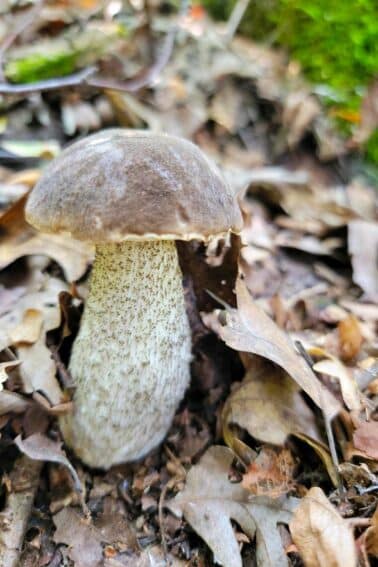
A long-term experiment nearly ready to “fruit” is my little mushroom patch. I bought some starter kits last year and never really followed through on the directions, so I just buried them in the garden. I did both pioppini mushrooms and shiitake. No sign of the pioppini, but they’re a cold weather ‘shroom. The shiitake actually fruited last week, although I did not notice until the evil pests of summer made a mess of it.

rotten shiitake mushroom

I’m hoping it had time to send spores out so I can continue to get mushrooms this winter. Once we hit November, I’ll look for more mushrooms — wild and domestic — because by then we should have rain, the light will be low, I will be hunting nearly every weekend, and the garden will rest. Busy times now mean delicious greens later. That’s the secret.

Tags: , ,
Print This Post

________________


Subscribe to comments for this post

12 comments
Leave a comment »

  1. Love your winter garden post. Our favas just popped up this week, and we’ve got the greenhouse all repaired for another attempt at hardy winter greens. Nice work on this!

  2. I always find it so difficult to pull out the tomatoes and peppers when they are still so faithfully producing for me.
    Inspiring choice of greens! I need to get to work.

  3. Hank,
    Im doing my first winter Garden and am excitied to start this adventure. You have given me lots of tips! thanks
    Jenn

  4. Nice post. I don’t have a garden anymore- but we do have farmer’s and green markets.

  5. Nice garden there. I’ll be starting mine pretty soon, but I have some issues I’ll post about on my blog. The biggest ones are three little bodies walking around back there that turn everything into compost – slugs, snails, earwigs, as well as cabbages, lettuces, and cucumbers – the blessings and curses that are ducks.

  6. Winter. Garden. Envy.

  7. Sarah: I leave spots open for the early winter garden, then pull my tomatoes and peppers when it is time to plant overwintering favas or sugar peas.

  8. Hi Hank. I have been contemplating a winter garden for a few years now (yeah, I tend to be slow with home projects). I’d like to have some basic greens, root veggies etc., for our small plot, but I have no idea where to even begin. Any thoughts on good resources for a newbie winter gardener? Capitol Nursery, near our house, has been only marginally helpful in the Q&A department in the past…

    Just recently searched out your blog after meeting you at BlogHerFood. I am enjoying your writing. :)

  9. Dawn: It is late to start a winter garden right now. You can still plant favas, garbanzos and sugar peas — which you’ll harvest in spring. You also can plant onions and garlic, also for spring.

    For earlier harvest, plant mache (corn salad), lettuces and — if you have a vewry sunny spot — brassicas (broccoli, cauliflower, collards, kale, etc) or spinach.

    Generally I plant most of my winter garden around Labor Day. It’s a light thing, not a temperature thing…

  10. Thanks for the advice! Yep, I figured it was pretty late to plant anything for winter harvest, but I do like the idea of planting now and then having something to look forward to when spring arrives. Thanks again.

  11. What an awesome winter garden. I’m inspired (just a few months too late for this year). Do you think it is possible to grow garbanzos as a spring-planted crop in our climate? Will the vines fry in the late May heat if they’re planted now?

    Thanks!

  12. Kristy: I think you may get away with it. No way to tell unless you try…

Leave Comment

*