A Time for Drying

Jun 24th, 2009 | By Hank | Category: Cooking Basics, The Garden | Comments | 12 Comments |

dried mushrooms

oregano verticalHot weather has finally arrived here in Sacramento. We’d been having an unusually cool summer up until yesterday, when the temperature in my backyard hit 101 degrees. Today should be the same, and temperatures higher than 90 should be the rule until September.

While Sacramento can be simmer in the summer — we had 114 degrees a few years ago — it is not a humid place, and most evenings we get a wind we call the Delta Breeze. This cools off the nights and moves the air around. Good for tomatoes and grapes. But the breeze also makes Sacramento a perfect place to dry food.

I do a lot of drying, and over the years I’ve settled on what works well and what doesn’t. Technically you can dry anything, but I remember those dried vegetables in the foil soup packets from my college years. Ick. In my climate I see no reason to dry veggies, with a few exceptions.

Mostly I dry herbs, fruits and mushrooms. Tomatoes are my mainstay, but it’s still June and they are not really ready yet; I’ll come back to sun-drying tomatoes in a few weeks.

What’s the big deal about drying? It’s easy, right? Put whatever it is you want to dry out in the sun and come back later. Not exactly. In reality, only a few things can be sun-dried. Sun bleaches and sun steals flavor in things that lack the acid or sugar to hold the rays at bay. Try drying oregano in the sun and you’ll be left with something closer to straw.

Most things I dry in my garage, which has several advantages: It’s hotter than hell, dark (ish), protected (for the most part) from insects and birds, and it has a ceiling fan to move air around. Not too shabby, eh?

Stop for a second. Why dry at all? To those of you who are deeply into food, the answer is obvious. But for many of you, it’s a legit question: Why bother to dry products when you can get them fresh at the store, or the farmer’s market, or even your own garden? The answer is flavor and cost.

Dried oregano, for example, has a very different flavor from fresh. Drying mushrooms concentrates their flavor, and, even when reconstituted for a stew or a sauce, are never quite the same — in a good way. Besides, you can’t make mushroom powder, a delicious element of a dry rub for meat, without dried mushrooms.

lovageOther herbs have a season, even here in California. Lovage is a prime example. Lovage is a heady herb, tasting of celery, parsley and something bolder still. It’s a prima donna of an ingredient, but plays well with beets and beans. It is especially good in stews. But stewing season does not coincide with lovage’s whims. As an herbaceous perennial, it has died back for the winter by Thanksgiving. The solution? Dry it. I keep it fresher by vacuum sealing it in one of those special jars until winter.

Lemon verbena is another example. I have a verbena bush outside my window and it kicks out hundreds of those lovely serrated leaves that smell wonderfully lemony; incidentally, this is the smell that those bastards at Pledge stole to scent their wood polish. Now I can never, ever smell lemon verbena without feeling the urge to clean the table. Damn you Pledge, damn you! But I digress. Like lovage, lemon verbena drops its leaves right when I am thinking about verbena tea. Solution? Dry it.

lemon verbena

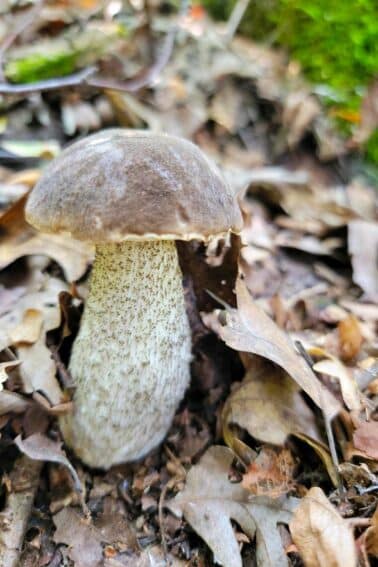
Another reason for drying is cost. Spring porcini mushroms are in high season now, and the price has come down from that exorbitant $30 a pound I paid earlier this spring; I just got a bunch from Oregon for $14 a pound. It’s more than I could eat fresh, so I dried a lot of them. Why not just buy dried porcinis from the market? First, store-bought are of indeterminate age, and really old mushrooms have the texture of cardboard and the flavor of feet. And, ounce for ounce, they are more expensive than spending the money for fresh and then drying them.

CA bay laurelAnother cost issue comes in with ingredients that only live in certain places. Mushrooms fit in this category, but so are herbs such as California white sage or California bay laurel, which I just used in a wild boar salami. I am not often in Monterey, three hours away, so when I get those herbs I dry them. Saves me gas money.

One more reason to dry is if you are a gardener. I am more than a little obsessed with growing onions in all their forms, and I save seed from those that set it. Not all alliums do. But those that don’t always have bulbs that can be replanted later in the year. Shallots, potato onions and garlic are the prime examples. When you harvest, keep the small bulbs from heads that do not fully develop — sometimes you’ll get a garlic that’s one big clove, for example — and save them for fall planting.

But you need to “cure” these bulbs so they will store properly over summer. Curing is just drying, by the way. Once the outside layers and stalk are dry, you should then store the bulbs in a cool place.

dried onion and garlic sets

For me, all this drying comes easily. I place whatever it is on a wire rack in the garage and let it dry. Mushrooms and herbs should be brittle, fruits leathery. My Mission figs are coming ripe now, and they are huge — so big I need to cut them in half to dry. Since bugs like sweet figs, I am drying these indoors. Uncut figs I dry in the sun.

But I know not everyone lives in a semi-desert. Moisture is the enemy of drying, and it makes the process trickier. When I lived in Virginia, I used a gardening shed for things like curing onions, and my oven for everything else. Oven-drying is pretty simple: Put the oven on its lowest setting and keep it ajar for air circulation. I still do this for venison jerky.

With the drying season just beginning here, I have many projects in mind. I have a Bartlett pear tree that bears more fruit then I know what to do with. I am thinking of drying them like apples in rings. Anyone ever do this?

I am also planning on drying some apricots and of course my endless fig supply. If we get a real heatwave, I may just dry some meat in the garage for machaca or carne seca. Never done this before. 

But what I am really waiting for is tomato season. Tomatoes, to my mind, are perfect for sun-drying. And of all the tomato products I am waiting to make, strattu is chief among them. Mmmm…strattu. It is a Sicilian type of tomato paste that makes store-bought seem like baby food. And the tomatoes are almost here, so it won’t be long now…

UPDATE: Looks like my friend Lang was drying porcini at the same time I was. He wrote about drying mushrooms here.

Tags: , , ,
Print This Post

________________


Subscribe to comments for this post

12 comments
Leave a comment »

  1. Have you tried drying Hachiya persimmons? You can do so when they’re still hard; the drying gets rid of the tannins and you get a lovely dried fruit. I peel them and slice them about 1/4-1/2 inch thick, then use my dehydrator.

    Of course, the fancy way is to make hoshigaki.

  2. I’m going to try my first real drying attempts this year. I’ve got a side-room that looks to be just right.

    Also, I picked our first red tomatoes this morning – sweet 100′s, so big they look to be sweet 30′s this year. And I’ve never seen tomato plants so big!

    As for dried pears, watch out, they are addicting. The sugar that forms is amazing.

  3. My grandparents in Sonoma County have always had huge gardens and many fruit trees, and for years have used their dehydrator to help keep fruits as well as mushrooms and other items. I’ve definitely had dried pears at one time or another, since they have 4 or 5 trees of different varieties, and they’re similar to apples, chewy and delicious.

  4. Great info!

    I’m looking forward to trying some of your techniques in the future.

    Thanks,
    Albert

  5. Can’t wait for the post on strattu. I use a $50 Walmart dehydrator for everything from morels to venison jerky. I like the fact that I can set it to 90 degrees, much lower than the oven. Putting the jerky in the oven, even at lower temps cooks the meat, which aint jerky!

  6. Another interesting piece. I’d like to see a picture of the inside of your garage when it filled with the drying fruits of your labor.

  7. Thanks for the shout-out, Hank! I’m wondering how many of your readers have invested in dehydrators. Where I live (Seattle) the drying conditions can be questionable. So far I’ve been okay, but I wonder if I would dry even more plants & fungi with a reliable and efficient dehydrator. Anyone want to chime in here?

  8. All I have so far is herbs- mostly chive and sage flowers since they’re done already. For us, September is the time for all this (provided the sun ever comes out again.)

    Our garlic is full of fail this year too; I’m blaming the rain for that as well although I have no idea why.

  9. I’ve not tried drying yet but probably will this year.

    I do can, but commercial canned vegetables taste better and have better texture than what I can do at home. Tomatoes are an exception here, although mostly we do sauces and vegetable juice.

  10. Diana: GREAT idea! I love persimmons.

    Josh: Several people have mentioned that dried pears are addicting. I assume you pick them as normal and then core, peel and dry them, yes?

    Brady: I would be hard pressed to find a place outside that was as low as 90 degrees right now. It is 108 degrees here and it is 6:45 pm. Sigh.

  11. Great post. Like Lang we find there is too much moisture here in Seattle to reliably dry fruits and veggies, but herbs are do-able on the hotter days. Friends with dehydrators love them and can get much lower sustained temps than your standard oven which is how I dried tomatoes and plums/prunes last year. I’d definitely recommend drying tomatoes — the bigger ones made for better drying, the Sun Gold halves shriveled up to almost nothing.

  12. I see you 108 degrees and rise you 90% Humidity! I am sure you can rember that from your days in the Commonwealth!

Leave Comment

CAPTCHA Image