Public Goat, Private Goat
Apr 27th, 2009 | By | Category: Charcuterie, Greek | Comments | 19 Comments |
I have become a big fan of goat. Don’t get me wrong, I never shied away from eating it — hell, I ate stewed goat necks several times a month back in graduate school because it was one of the few meat items I could afford. But last week’s goat extravaganza taught me quite a few new things about the little ruminants. I’m beginning to figure out why goat is the world’s most eaten meat.
All of this began last year, when I met Gary Silva. Gary is a goat rancher who runs several thousand meat goats down in southern Sacramento County. I had been writing a story about the business of meat goats, which has become something of an underground success story. Underground because while mainstream America still turns its nose up at goat, the growing Latino, South Asian, Middle Eastern and African immigrant populations eat tons of it — and until recently most was imported.
I thought about buying one of Gary’s goats then, but it wasn’t until I came back to write a story about goat’s appearance in haute cuisine that I asked him to set aside a couple of animals for me. He said sure, and we agreed I’d pick them up in late April. Now your first thought might be two whole goats? Yep. I had plans.
First and foremost I wanted to roast one whole for our annual Big Fat Greek Party; I did a whole lamb several years back and it was cool, but really bulky. I reckoned that a goat would be a perfect party size.
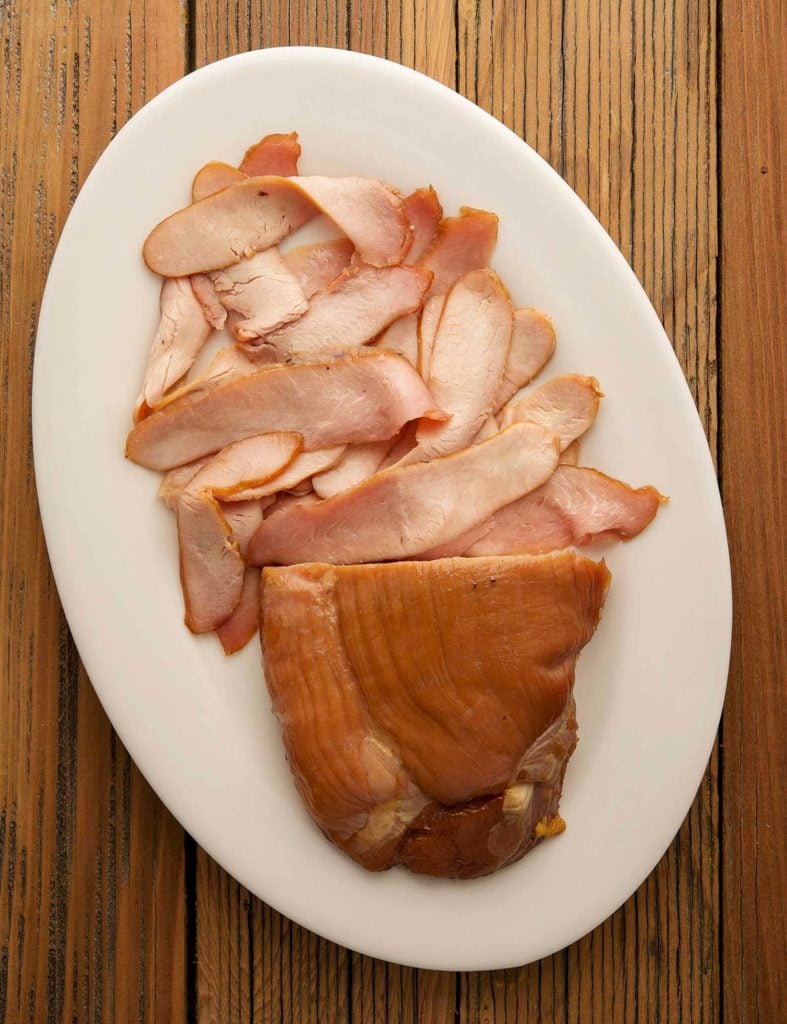
I also wanted to break the second goat down for charcuterie. My main goal for this animal is to make the Northern Italian specialty mocetta (MOH-chettah), which originally was a salted, air-cured hind leg of a wild ibex hunters had shot in the Alps. Now it’s done with domestic goats: Think of it as goat ham.

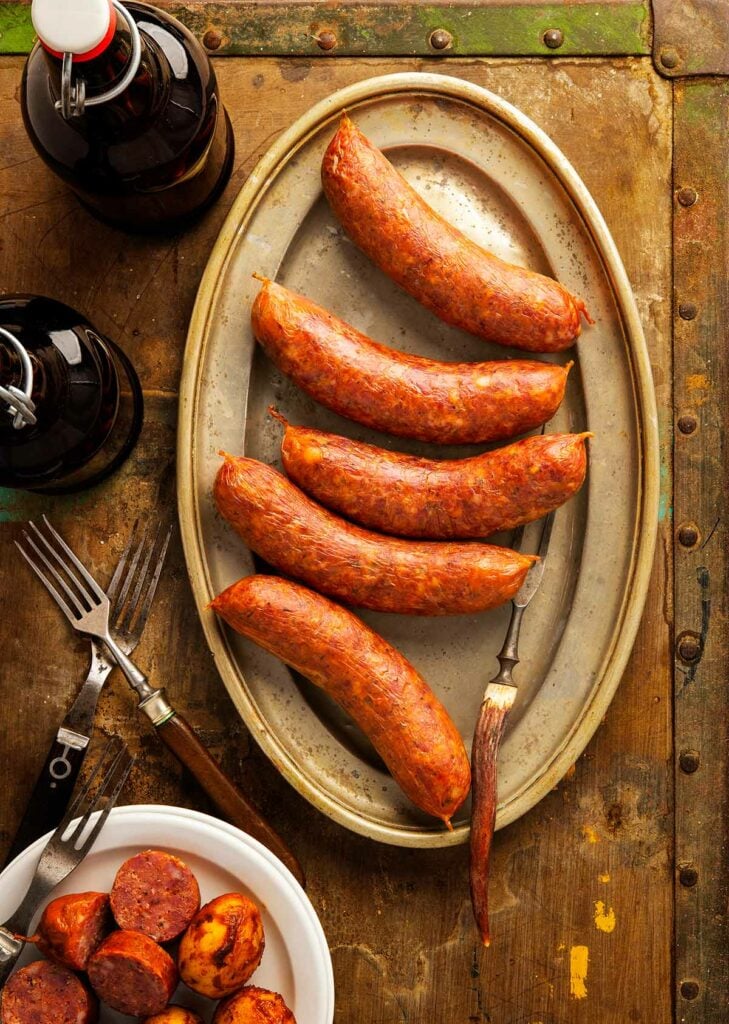
With what was left I wanted to make a big batch of fresh goat sausages, made like a Spanish longaniza with lots of sweet paprika, fresh rosemary and garlic. The bones would go for stock.
It took some doing, but I managed to set a date to meet Joe Earl, a traveling butcher who serves the area farmers. Yes, his name is really Joe Earl, and he is as huge as you might imagine someone who slaughters animals solo might be. When the day arrived, I found myself a little nervous. Yes, I’ve shot big game animals before and have killed domestic chickens, but I was not certain what to do when confronted with a bucking billy goat. I hoped Joe would show me what to do.
As it happened, I got stuck in traffic on the way down, so when I arrived at Gary’s farm, the goats were already hanging. I was immediately struck by how small they were. Two weeks ago, I had picked up a lamb for the Greek party in Rio Vista from my boss’ father-in-law, a former Niman Ranch sheep farmer. That lamb was roughly 70 pounds hanging weight. This goat Joe was working on was no more than 35 pounds. To put it in perspective, a typical deer or wild pig will be well north of 100 pounds, often twice that.
But the goats’ small size made life a lot easier at home. I managed to stuff the whole goat into the top of my curing fridge, and I broke the other down into cuts in less than an hour. Easy-peasy. I was rapidly seeing why a whole goat is considered a perfect party-sized animal — and at $125 or so won’t break the bank.
Having now had close encounters with both goats and lambs recently, here is a quick primer on the differences.
- Goat is always leaner than lamb, but the 5-7 month-old goats typically sold for meat still have enough white fat to make your lips glisten.
- Goat is also lighter in color than lamb. Why I have no idea, although it may be because goats forage on a wider range of plants than do sheep, whose iron-rich grass diet darkens their meat.
- Goat is also noticeably milder than lamb, which is the shocker. Everyone thinks goat meat should be smelly, stringy and strong-tasting — and it is, from an old goat. The flavor of these goats was ethereally mild: red meat yes, but neither heavy nor cloyingly fatty the way lamb can be. It is perfect with a Beaujolais, Sangiovese or Pinot Noir.
- Goat’s major problem, if it can be called one, is that it is so small your normal cuts don’t really apply. Loin backstraps are skinny and while the legs will indeed slice like a leg of lamb, they only weigh about 3 1/2 pounds each; this is why you typically see goat cut into chunks.
I am sorry I have no pictures from the Greek party (Garrett has some here), but I can tell you that our 60-odd guests ate that whole goat (seasoned with salt, thyme, chile flakes, celery seed and garlic, then splashed with lemon juice) faster than I could carve it. I think even a vegetarian tried some. It was like piranhas.
Good thing I also had a big batch of those Spanish goat sausages. No pictures again, but I served them as grilled sandwiches with sorrel leaves, caramelized onions and good mustard. Pretty damn good, I’d say.
Party over, that left Holly and I with the private parts of the goat.
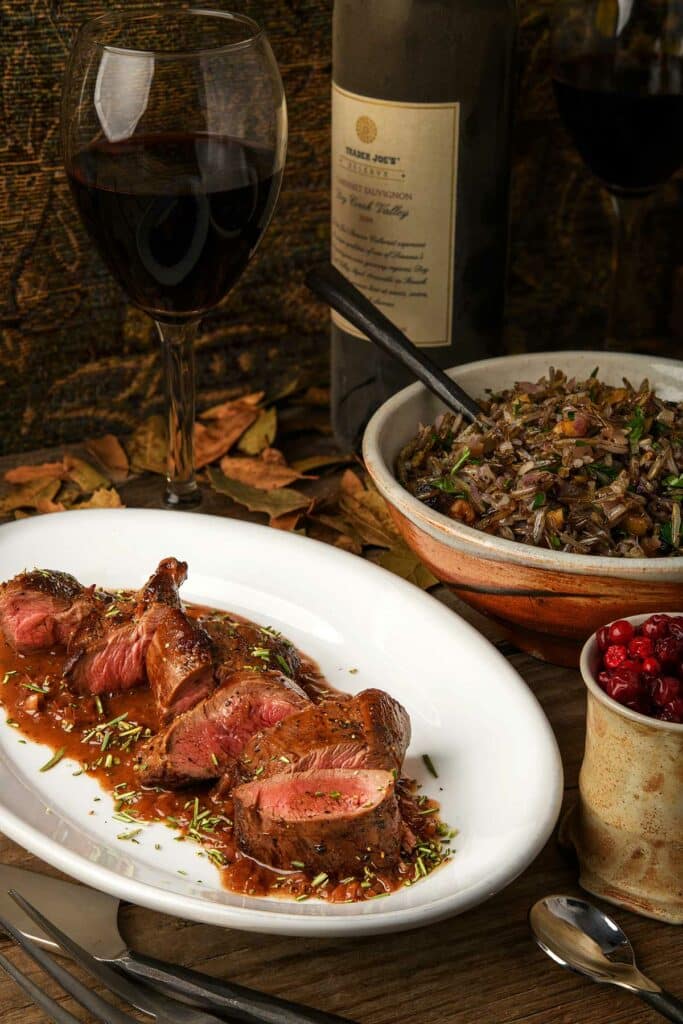
What I’m talking about are the parts of the goat I wanted to save for us, rather than serve at a public gathering. Were you thinking of something else, perhaps? Anyway… Yesterday I fixed up a mixed grill of the goat’s heart, kidneys and tenderloins, plus a couple Greek pork sausages and some spring onions.


I get heart so rarely I tend to cook it the same way every time: I trim it of fat, cut it flat and then pound the heart with a mallet between two pieces of waxed paper to make cutlets. Heart is flavorful but dense, so it benefits from the tenderizing action of the mallet.
As for the kidneys, they require a bit more thought. Goat kidneys are itty bitty, just morsels when split and grilled. I like kidneys a lot, especially grilled, but as they are a filtering organ it helps to soak them in milk for a day beforehand.
To prep them, start by peeling the membrane off the outside. Then split them lengthwise with a sharp knife. Inside you will see a network of white stuff, which is hard and crunchy — cut it out with a pair of scissors (kidneys are very slippery). Soak for a day in milk, then for a few hours in a mixture of olive oil, lemon juice and garlic.
Thread the kidneys on skewers — this helps prevent them from falling through the rack on the grill — and grill over high heat for 5-8 minutes; you want the interior just a little pinkish.
Grill the heart the same way, and the tenderloin will take care of itself.
How was it? Each meat had its own texture and flavor: Tenderloin is, well, tender, the heart is dense, full of flavor and a bit chewy, and the kidneys are crispy on the outside and soft on the inside. What’s not to love?


Sounds like a great time!
Hank, at 35 pounds, dressed out, it sounds like your goat was less than a year old. I love the flavor and leanness of goat, but my experience has been that it’s just too tough to grill or roast and eat. I cut up some for shish kebab once, and, even though I marinated it for a good long time, we were chewing and chewing and chewing… So I’ve ended up using most of mine for stews. I wonder if my meat came from a more mature animal.
Goat sausages will have to be next!
Have to agree on the goat. Very underated meat in the States. My wife’s family (Germans) raised goats on their property in Central Texas. Each Easter, they woud prepare BBQ’d cabrito. Lovely stuff. Far milder than lamb. They sold that place about 5 years ago, and I haven’t had a fix since. I must do something about that.
Hi,
I started reading your blog awhile ago and I’ve really enjoyed it. I just have to disagree with your comment about older goat meat. We raise goats and the first one we ate was well past 4 years old and really delicious! Goat is our favorite meat now and what we primarily eat.
I find the flavor of older goat, at least one year old but two is better, to be far superior to the flavor of young goat. It is not as tender, of course, but slow roasted or cooked into a curry, it’s really good. It’s much darker in color, closer to the red of beef. We’ve never had bad goat meat and that includes intact bucks over a year old.
Larbo: You bet it was younger than a year: five months, tops. Not tough in the slightest.
Mr. S: I’ve heard stories about the Texas goat BBQ. Need to get me some, one of these days.
Sasha: We’re not disagreeing, actually. I have eaten many an old(er) goat that was curried or otherwise stewed — you’re right, they have more flavor. But try to grill that meat rare and you will be chewing for quite some time.
Hank, I’ve gotta say what you did with that goat this weekend was right on! I love goat, but there often seems to be an aftertaste… there was none of that with the stuff you cooked.
On another note, we had a couple of goat cook-off champs cooking for us last year on our TX hunt. Good stuff (especially followed up with some Jalisco Jumping Juice)! I can only imagine a whole fairground covered with smokers, grills and the aroma of goat and hardwood. Should definitely be worth the visit.
Now I’m even sorrier we missed the soiree, if that’s possible.
I have always loved goat, grew up eating it. Where I come from (basically, where you went to get your goats and sheep), it’s not a staple, but it occurs at parties.
That last dish, though, looks the best to me.
Speaking of local growers, did you know that Magpie catering has a cafe’ open now? If not, I thought you might be interested.
Wow, that looks so good. My pale-pasty-breakfast-burrito is wilting with envy . . .
I’m glad no one else is here at work yet, so I don’t have to explain why I’ve crawled onto my desk and started to lick my screen.
So, I guess, now I have to find me a heart.
I’ve got to find a 5-7 month old goat. Sounds just as tasty as a little button buck.
Great informative information on goats. My grandparents had a family next to them that raised them but I did not have much interaction with them or ever tried one. Would not turn it down at all.
I really did not realize how small they were too. Last pig I had slaughtered was over 100 and that was a lot of meat for 1 person.
Do you have a write up on your curing fridge? I have an old fridge I want to convert but keep getting conflicting information.
It has been a long time since I had goat, but do remember it fondly.
Would have loved to see the shots of the goat sausage sammy’s – they sound fantastic, heck it all sounds fantastic.
I always learn a ton everytime I stop by here.
I have only had so so luck grilling the older goat meat but I’m not really great at grilling. One thing, we learned that we had been overfeeding our goats and the first ones we slaughtered had incredible amounts of fat. The meat is not marbled but it definitely made a difference. We’ve grilled the ribs from almost every goat and the first ones were definitely better; in fact the last ones didn’t really get eaten. Our goats are dairy goats, by the way, Nigerian Dwarf goats and Toggenburg/Nigerian mix.
I have been dying to cook a whole goat like kalua pork. I’m just afraid that it won’t cook all the way through. Seems like a lot of meat to risk.
Josh: I have not heard of Magpie Catering. Should I have?
Alyssa: As for a heart, ask the Lion. He may have one…
Carolina: Any meat goat rancher will sell you one, I bet. Most all of them sell their animals at that age.
Jeff: I wrote a little about my curing set up here.
Sasha: It’ll cook through — and remember, goat can be eaten rare, unlike pork.
Hank, I love your blog and you whole outlook on food. Over the weekend, I was cleaning out our deep-freeze to make way for 70lbs of Axis venison, when I came across a cabrito hindquarter (the name for young “kid” goat in Latin America as well as South Texas, where I acquired said piece of meat).
Having sat in the freezer for an embarassingly long stretch of time, I opted to cook it low and slow. After searching the web for a good recipe, I adapted your “Wild Turkey Carnitas.”
It was spectacularly good, and sublimely mild — even my wife, who abhors the taste of lamb, came back for seconds. And the kids particularly enjoyed telling their friends they “ate a kid” over the weekend!
Great post-I’m curious, did you add any pork fat to the goat sausages, or did the goat meat have enough already? I used to add some pork fat to lamb sausages, but I’ve found that lamb shoulder is fatty enough to stand on its own.
Andrew: Like your lamb, this goat was fatty enough to stand solo. Pretty cool, eh?
Great post. I’m on a similar path with goat (incl. charcuterie) Check out my goat post (with recipes) from this past February: http://www.salmoncabin.com/2009/02/goat-butchery-101.html
I’m one of the cookers Phillip spoke about. We love goat, here in the Heart of Texas. We have the World Championship Bar-B-Que Goat Cook Off every labor Day. We have a practice cook off planned in a few weeks. Really enjoy all of your cooking info.
loved this post, hank. i also love goat. it’s something i didn’t start eating until about 6 or 7 years ago and we’re lucky to have a significant Caribbean population here in brooklyn so we can get it easily in our grocery store. i am so interested in seeing how many different things you do with the goat besides the same ‘ole same ‘ole.
I am a chef in central Indiana and was looking for and something different to serve for our bi-monthly wine dinner as the main course. I think whole roasted kid is it…thank you.