Roast Grouse and Minnesota’s Glories

November 06, 2009 | Updated October 29, 2020
As an Amazon Associate I earn from qualifying purchases.
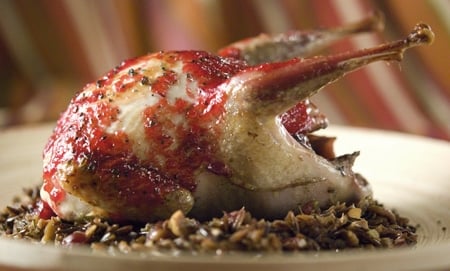
I’ve met many here in California who think that all good things can be had in our Golden State, where the magic of fresh and local and seasonal cooking is strongest. They’re wrong.
Just five years after Alice Waters opened Chez Panisse, a similar restaurant opened in chilly Madison, Wisconsin, called L’Etoile. Just as Waters’ mantra was (and is) fresh-local-seasonal, so it was with Odessa Piper. I first ate there as a graduate student in 1992 and was, frankly, shocked at such good food so far from my home in New York. Piper has retired, but L’Etoile lives on and is still a giant of Midwest restaurants.
I mention this little history lesson to make this point: It requires far more skill and imagination to be seasonal and local in a place like Madison, where winter temperatures can drop to -30°F, than it is in Berkeley, where it rarely, if ever, actually freezes.
With that skill and imagination, the Upper Midwest becomes a treasure trove of magical ingredients that are all-but unobtainable if you are a California locavore: Wild rice, hickory and butternut, walleye, yellow perch and wild currants to name a few. As a hunter and forager, I can add others, none more important than woodcock and ruffed grouse.
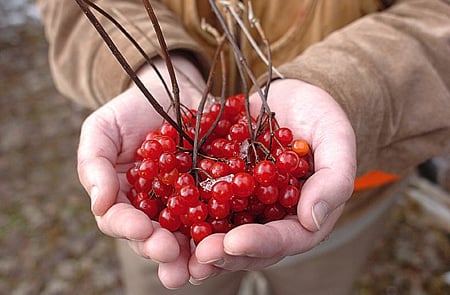
These are high bush cranberries (not actually cranberries), a member of the viburnum family. They taste like cranberries, however, and are softer and sweeter after a frost — you can see the snow on the ones in my hands. Very tart, the berries need sugar to balance them out. But they make a great glaze for the grouse.
I also saw tons of mushrooms while walking in the woods, and noticed that most of the grouse we flushed had been eating catkins off hazel bushes. My friend Chris, who I was hunting with, said these bushes will set little hazel nuts the size of your pinkie finger, but the bears usually get them first; we saw a lot of bear shit around, too.
Mushrooms… Hazel nuts… Grouse… I decided to invent a Minnesota North Woods pilaf to go with roast grouse. Many of my decisions about this meal (and other wild meals) I made using a slightly grisly method: As I cleaned and plucked the grouse, I opened up their crops and looked inside.
A bird’s crop is a sac at the base of its throat that stores whatever it eats until the muscular gizzard can grind it up enough for the bird to use it as nutrition. These grouse all had viburnum berries, hazel catkins, clover and strawberry leaves in their crops. Ideas for later.
Grouse are not corn-eating pheasants. I might serve pheasants with polenta, but I would never do that with a ruffed grouse. They are woodland birds and need to be treated that way. The pilaf, I decided, would look like the duff on the forest floor — only tasty.
As for the grouse themselves, plucking them is difficult. Most hunters skin them, as it is far easier, but I couldn’t bear to lose that skin, which adds flavor and protects the meat from drying out. If you have grouse and want to pluck them, follow my instructions for plucking pheasants, only dip your grouse for 20 seconds at a time, not 30. If you do it right — be patient! — you should get a lovely plucked grouse.
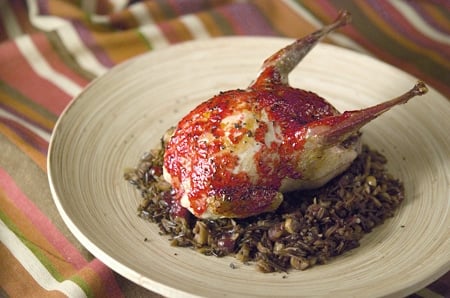
The woodland pilaf — wild rice, toasted hazelnuts, shallots, maitake mushrooms, cranberries, rosemary, shallots and butter — needed a good 50 minutes to come together. It wasn’t the most colorful dish I’ve ever made, but it fit: It really did look like the forest floor. It all came together nicely.

How can I describe the flavor of a roast grouse? The first words that spring to mind are “funky” or “gamey,” but in a good way. There is an aroma to grouse that I’ve never encountered before, and, just like roast pigeon, the legs and thighs have the best flavor by far. The breasts remained fairly tender, and tasted closer to “chicken,” although the grousey aroma and flavor was still there.
The woodland pilaf brought it all together. Earthy, dark and welcoming, it was quite the bed for the grouse to rest on. The hazelnuts had softened and became meaty, and the crushed maitake mushrooms melded with the wild rice to create a texture and flavor that’s tough to describe; al dente pasta comes closest. The balsam notes from rosemary and the tart craisins tied it to the grouse above. And the butter gave it a proper North Woods richness.
No matter where you live, flavors are all around you; all you need to do is put them together.
Simple Roast Grouse
Ingredients
- 2 grouse, plucked and whole
- 3 tablespoons unsalted butter
- 1 lemon
- Salt and pepper
Instructions
- Preheat oven to 450°F. Remove grouse from the fridge and pat dry. Let stand at room temperature for 30 minutes while the oven is heating. Halve the lemon and stick each half into the grouse. Smear butter all over the grouse, including a small knob in the cavity and under the neck where the crop once was. Use more than you think you need, at least a tablespoon per grouse, preferably two.
- Place the birds in a roasting pan or cast-iron frying pan and roast for 15 minutes. Turn the heat down to 350°F and turn the grouse on one side. Baste it thoroughly with the melted butter in the pan. Roast for another 10 minutes. Repeat by turning the grouse on the other side. Be sure to baste again. Roast for 10 more minutes.
- Remove the birds from the oven and let rest on a cutting board, covered in foil, for 10 minutes.
Notes
Nutrition
Nutrition information is automatically calculated, so should only be used as an approximation.



Super meal. I followed your recepie to a tee.
This was fantastic!!
I didn’t add any salt other than brining for 4 hours.
I may never braise grouse again.
You are the whole package, Hank! Good to meet you! I would love to run into you while doing one of my lakeside weekends where I camp out and fish and cook over an open fire all weekend..
This is another thing my late Dad never left a recipe for and all I know is then taste like a very rich Cornish hen
Grouse feathers are great for tying flies and are hard to come by. If you get some skins, remove excess tissue and cover with borax. Store them in plastic boxes. They should be good after a few weeks. Your fly tier friends will love you for them.
I usually cook grouse with a propane barbeque rotisserie. I use a basic oil-based rub (oil, salt, pepper, garlic, herbes de Provence) and cook on low (about 350 on the thermo) to an internal temperature of 150, then crisp the skin a bit on high, no more than 5 minutes. Let it rest, 10 minutes sounds about right. I have never tried brining, we usually can’t wait to eat the grouse, and start cooking the day of the hunt. But, maybe I should? Oh – and I love Pinot noir with grouse.
Fabulous recipe. I forgot to pick cranberries though the grouse I shot was feeding on them (White Mountains of northern NH). I didn’t even have any cranberry relish in the house but tried it with Stonewall Kitchen’s Hot Pepper Jelly which did not overwhelm the mild and sweet flavor of the bird. I have never tried roasting a grouse for fear it would be dried out. This as lovely…beautifully browned on the outside and perfectly moist on the inside!
Your article/recipe recalls fond memories of derision aimed at my twin and hunting partner for hunting “swamp grouse” in thick swampy and highbush cranberry coverts. This sort of tangled struggle is beneath all virtuous grouse hunters of course. In defense of his miserable and shameful practice he drug me into one such hell hole suffering my constant skepticism. Having heard enough he directed me to a fully loaded cranberry bush and said that he guaranteed a flush if I would simply walk towards the bush. Scoffing the whole way I obliged and sure enough flushed half the wisconsin population of ruffs with nary a feather loosened. This story is annually recounted to me as you might imagine. I suppose I might swallow my pride and hunt more swamp grouse now that I know of the value the cranberry.
I like the skin on too and find that plucking is easiest when the grouse is still warm. I save the entire bird and often use the backs, legs and thighs to make a quick grouse stock by browning the grouse parts in butter and oil and simmering with some canned chicken broth for making a sauce to serve with the grouse.
Here is a method I have been using for several years now, which has always resulted in a juicy bird. First I brine them, (for one grouse I use a mixture of 2 cups of water with 2 tablespoons of salt and 3 tablespoons of sugar whisked in until dissolved ) after rinsing and drying, I lay some sort of fat over the breast – butter, bacon, guanciale (my favorite), or thinly sliced pork fat – just my personal preference, then I roast them at 400 degrees for 20 minutes. The internal temperature will be around 145 to 150 degrees. Let them rest for 10-15 minutes after removing from oven. Even my bachelor neighbor who claims to cook as little as possible was able to roast a moist tender grouse with this recipe, plus a pan to roast it in. I loved your use of wild highbush cranberries with the grouse. Every once in a great while I run into them, but not often enough.
For whatever reason, I only read this post now – and totally agree that the grouse and hb cranberries are non-substitutable if seeking the ‘terroir’ feel of the flavors. [I made a ‘paste’ from the berries this year when reducing a failed jelly to dense consistency. Highly recommended for its deep cherry notes and propensity to blend harmoniously with sauces. Loses some of the funk high tones, but still worth a go] Having long envied warmer climes and growing seasons, I’m now really feeling blessed by our own regional endowments.
ZombieStomper: Dude, I was 22 years old and had never left the New York metro area. Cut me some slack. And not for nothing, but L’Etoile was groundbreaking — not just good food, but GREAT food, in Madison effing Wisconsin, in the early 1990s no less. I’d suggest that at least on this site, you need to get over your Flyover Land hangup (which gets every bit as old as the New York snobbishness): You won’t find too many more fervent boosters of the possibilities of Midwestern cooking than me…
You lost me at how you were “shocked” to find “such good food so far from my home in New York”. I know, I know, New Yorkers invented food and are always surprised to learn us primitives here in fly over land aren’t limited to eating boot leather sammiches & Top Ramen… but it gets so freaking old.
Thanks Hank. Sadly, they don’t have the skin on. I’ll have to try something else. I have a few old British cookbooks that I think have some grouse recipes in them, perhaps I’ll look there.