
As an Amazon Associate I earn from qualifying purchases.
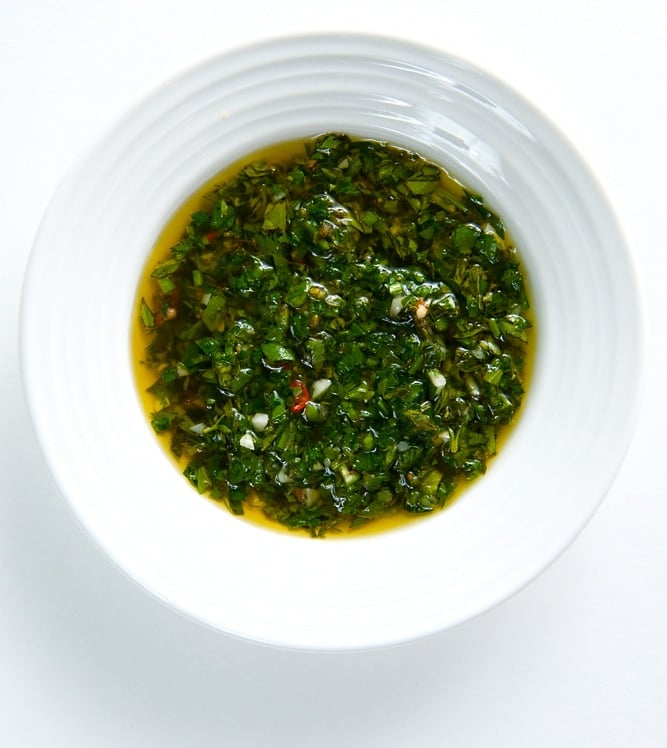
Chimichurri is one of those wonderfully herby salsas you make when the weather is warm and the grill is hot. Of Argentine origin, chimichurri is the quintessential sauce for grilled meats, in this case venison.
Chimichurri is primarily a mixture of parsley and mint, garlic, salt, oil and either a little vinegar or citrus. Some people add a bit of chile, and I am one of those people. But you mostly want to taste herbs and garlic.
Any mint will do, but I have a thing for wild mints. I seek them out wherever they are, which, in North America, is pretty much everywhere. Over the years I have become a connoisseur, tasting and savoring these little plants like fine wine. Mountain pennyroyal has become my favorite of them all.
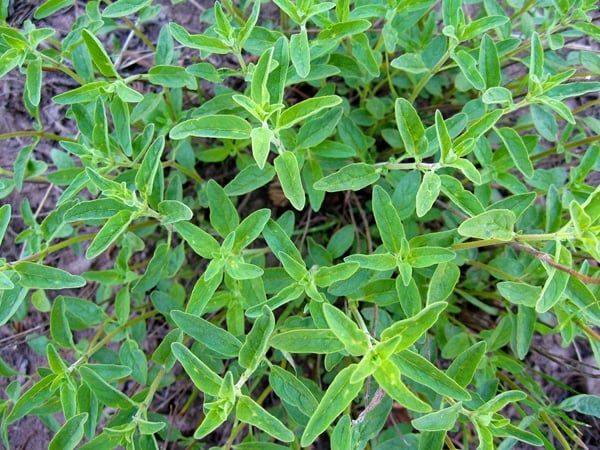
All I need tell you about this little mint is its Latin name: Monardella odoratissima, the “most fragrant” monardella. Monardellas are the pennyroyals of the Western United States. There are lots of them, and they all pretty much have the same characteristics:
- Monardellas like dry places. True mints prefer wet places.
- They’re short, not much more than a foot tall or so.
- The base of the stems can get woody, which makes sense since these plants are perennial.
- They tend to have narrow, lance-shaped leaves that are fairy thick.
- Their flower heads are squat and round. If you’ve ever grown bee balm in your garden, they look very similar, although monardella flowers range from white to lavender.
We have another pennyroyal close to home here in Sacramento, Monardella villosa, the coyote mint. It grows in large swaths around the American River Parkway, among other places. I’m a big fan of that one, too.
In case you are wondering, no, this pennyroyal is not related to the European pennyroyal, which has been used as a traditional medicine to promote abortions, and which was featured prominently in a song by Nirvana. That pennyroyal is actually a true mint, Mentha pulegium.
But don’t get hung up on finding wild mints for making real-deal Argentine chimichurri. As I said, any mint will do.
Ideally you would chop and then pound everything together in a mortar and pestle — this brings out the aromas and flavors better than any other method. But it’s far easier to make chimichurri in a food processor.
Don’t use a blender unless you want to use your chimichurri as a marinade for meat or fish (it is exceptionally good for that, by the way) because you want some texture in this sauce.
Chimichurri with Grilled Venison
Ingredients
CHIMICHURRI
- 1-2 garlic cloves minced
- 1 cup fresh chopped parsley, lightly packed
- 1 cup fresh chopped mint, lightly packed
- 1 small hot chile, minced
- 2-3 tablespoons lime juice
- 1/2 cup olive oil
- Salt and black pepper to taste
VENISON
- 1 1/2 pounds venison backstrap in one piece
- Vegetable oil
- Salt
Instructions
- Food processor method: Put the garlic, herbs, chile, lime juice and a little salt in the bowl of a food processor. Buzz to combine, but do not puree. With the motor running, drizzle in the olive oil. Add more salt and black pepper to taste. Let steep for an hour or so before serving.
- Traditional method: Mince the garlic, chile and herbs by hand and pound a little in a mortar and pestle. Add the lime juice, salt and pepper and then mix in the olive oil slowly by hand, stirring all the while. Let steep for an hour or so before serving.
- For the venison: Take the meat out and let it come to room temperature. Pat it dry with a paper towel, then coat with the vegetable oil. Salt it well.
- If you are grilling, get your grill hot and clean the grates. If you are planning on pan-roasting, preheat your oven to 400 degrees Fahrenheit and get a large saute pan hot on your hottest burner.
- Grill the venison, turning occasionally until it is medium-rare, or however you like it; this should take about 10-15 minutes. If you are pan-roasting, brown the outside of the venison backstrap in the saute pan, then put the whole pan into the oven. Roast for about 8 minutes for rare. Use the finger test for doneness as your guide.
- Let the venison rest on a cutting board. Right before you slice and serve it, Pour any accumulated juices into the chimichurri. Pour the chimichurri over the sliced venison and serve at once.
Nutrition
Nutrition information is automatically calculated, so should only be used as an approximation.



Made this with moose the other weekend, spectacular and simple
Had to find a chimichurri sauce after having it at an Argentine restaurant. As always Hank comes through with a winner!
I reverse seared a whole backstrap to medium rare, sliced, and topped with this chimichurri. It was a big hit as an appetizer. I think I chopped the mint/parsley/garlic too fine but it was still delicious!
I’ve replaced my usual chimichurri recipe with Hank’s version – great balance. In the summer, this graces grilled salmon and venison alike on a weekly basis.
This is a new favorite of mine! Turned out great using wt venison backstrap. Only sub was the marisol chili, which I couldn’t find. Instead used a single dried arbol. Came out plenty balanced. Unfortunately, I didn’t have enough time to steep it, but it still came out better than any chimichurri I’ve had eating out.
I think in the future, I am going to try the venison part as a sousvide, as the taper of the cut made some of this a bit more done than I wanted. Still plan to sear on the cast iron skillet.
This is an awesome recipe! I never would have thought Pesto and Venison, but man does it work! I actually did not have fresh mint on hand; but instead used fresh basil and lamb’s quarters from my garden! I have a new recipe that i will use for years! thanks!
That looks delicious. How would you use dried coyote mint in cooking? I harvested some at Lindsey Lake (near where HWY 80 and 20 meet) this past weekend as part of a plant ID class. The flowers tops were nearly dried, but the plants were alive and well and very much in abundance. I wonder what conditions the plants would be in Sacto. right now?
I use it like dried oregano or mint. It’s basically a combination of the two. Not sure how the plants are now, it’s awfully dry out, but they’re pretty hardy.
I made this topping and put it on moose steaks cooked rare/medium rare and it turned out GREAT! Side dish of roasted red potatoes with parmesan cheese. Nice red wine. Enjoy!
Yum! And a good read. Not surprised. Thanks, Hank
In all my years kicking around the Sierra I’ve only ever used this little delight for a basic tea when I’m resting. A chimichurri, now this I’ll have to try.
I’ve never found coyote mint in the Parkway, but I gather spearmint occasionally on the section of the river by Rodeo Park in Folsom. Some seeps and drains that seem heaven sent for Miner’s Lettuce, Watercress, Mugwort and Mint.
Thanks for all the well-reading detail in this post, as always. I’ll have to check out mountain pennyroyal, since I seek out mints too. Cheers!
I’ve got some chest high mountain mint (Pycnanthemum albescens) that might go well in this recipe since it has a nice spicy note.
Who in the wide world of sports has a venison backstrap in their possession this time of year?!!!? Guess I need to get closer to the bag limit (8) from now on.
Javahead: Absolutely! Coyote mint will work just fine.
How do you think this would work with Coyote Mint, the Monarda species that’s easier to find in the coastal foothills?
Knock me over with a feather, I never knew there was a wild pennyroyal. How very odd that it is not related in any way to true pennyroyal which is a great favorite of mine (a very sweet mint). The flowers do have a monarda look to them. I can’t wait to try it. I can imagine as you describe it, it would make a perfect chimichurri for that divine venison you made.
Very Cool! I was just introduced to chimichurri a few weeks ago and I’ve been planning on trying it with venison. I’ve also been working up in the high country and wondering if this mint had culinary uses. Wierd how they came together in one post. Thanks!
Thanks! I always wondered about wild mints and Pennyroyal.
I love all the information you put into these posts about the edible wild plants around us. When I was a kid in school, we would run around with this lady named Elizabeth Terwilliger who showed us about the natural flora and fauna of the Marin headlands. I always loved it when she would point out something we could eat 🙂