
As an Amazon Associate I earn from qualifying purchases.
Elderflower fritters. It is the default recipe for those who gather elderflowers, and for good reason. But you will notice that mine are a little different. I think you’ll like my elderflower fritters better if you give them a try.
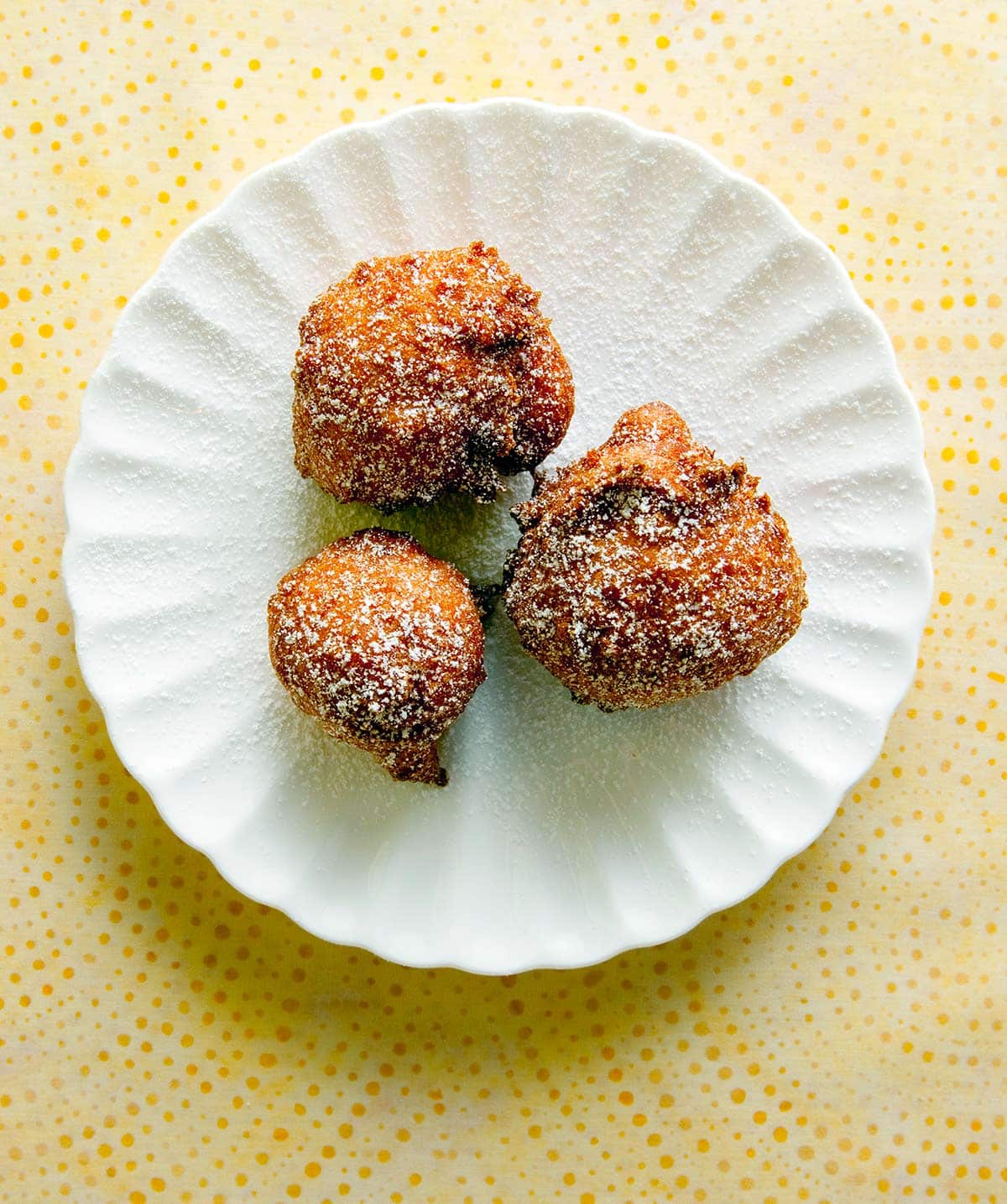
Frying the flowers captures their sweet aroma and delicate flavor better than most anything else. (Most likely because the elderflower’s aromas are fat soluble.) But I have a problem with every elderflower fritters recipe I’ve ever seen: They all involve dipping the whole flower heads into batter and frying them.
What’s the big deal? Well, all parts of the elderberry are toxic, except for the flowers and ripe berries. The typical image of batter-fried elderflower fritters gives the impression that the whole head is edible. Not so. If you eat too many of the stems, you will get sick. A few little stems here and there is not an issue, but I’ve seen people chow down on whole heads and, predictably, get nauseous afterwards.
So I present to you my version of elderflower fritters. It’s basically an elderflower beignet, where elderflowers and a little elderflower cordial are mixed in with the batter. The result is a fluffy, lightly-sweet pastry that packs a powerful elderflower punch — an effect you can’t get by merely dipping the flowers in batter.
Elderflowers are in season from March in the Deep South to September in the north, or at high altitudes. Generally speaking, look for elderflowers in late spring.
And just to be clear, I am talking about blue elderberry here, not red elderberry. Red elderberry is mostly a Pacific plant, but it can be found sporadically across the country. Red elderberry is, depending on who you talk to, either just nasty or is outright toxic.
I prefer to make elderflower fritters with fresh flowers, but you could also use dried. If you are not near any elder bushes, you can buy dried elderflowers or in home brewing shops. You will also need elderflower cordial or syrup: Use my recipe for elderflower cordial or buy it online.
If you have fresh flowers, start by shaking the flower heads over a large bowl. This will shake loose lots of flowers… and any bugs. The earlier in the day you gather, the fewer the bugs. Then pick the flowers off the stems. The teeny stems that hold each flower onto the head are OK, but try to get out as many of the stems as possible. My method is to pick quickly, then do quality control on the bowl when you’re done.
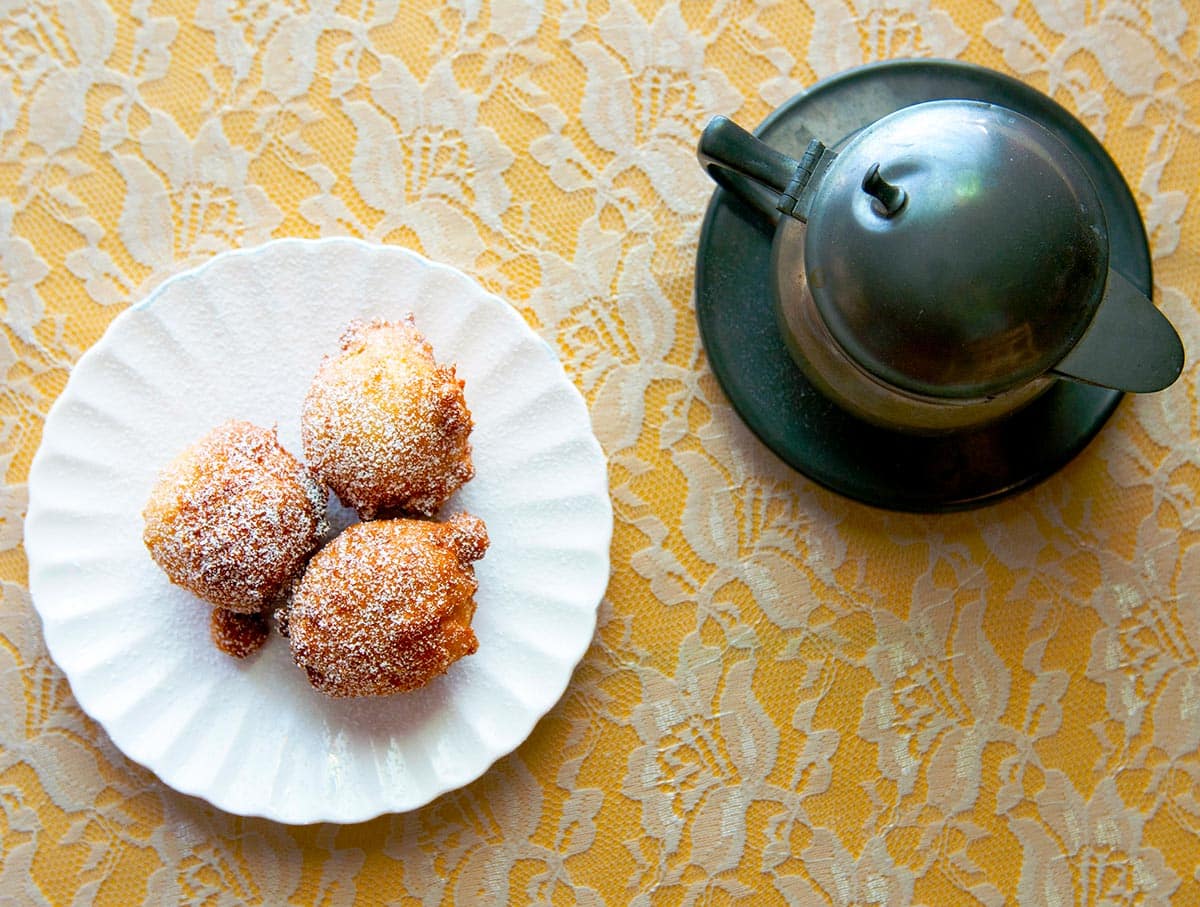
I deep-fry my elderflower fritters, and you will need to fry them in at least an inch of oil, preferably a lot more. The shallower the oil, the flatter the fritters will be. I like them like beignets, so I use my deep fryer. Your choice.
Another cool tip? Fry the whole batch, and if you don’t eat them all at one sitting (possible, but improbable), you can refry them for a minute or so the next time you want to eat the fritters and they will be just as crispy.
The result is addictive. These elderflower fritters are essentially an aromatic, floral doughnut hole. Dusted with confectioner’s sugar and eaten with coffee or tea, you could do a lot worse on a Sunday morning.
Elderflower Fritters
Ingredients
- 2 beaten eggs
- 1/2 cup buttermilk
- 1/4 cup sparking wine, pilsner or lager beer, or seltzer water
- 2 tablespoons elderflower cordial
- 1 cup elderflowers
- A pinch of salt
- 1/2 cup sugar
- 1 3/4 cup cake flour or all-purpose flour
- 1 1/4 teaspoon baking powder
- Vegetable oil for frying
Instructions
- Pour enough oil into a deep fryer or a large, heavy pot to come up to a depth of 4 inches or so. You can use as little as an inch's worth of oil, but your fritters will be flatter. Turn the heat to medium-high and bring the oil to 350°F.
- When the oil is hot, mix all the other ingredients into a large bowl. Make sure there are no lumps. The consistency should be thicker than pancake or beer batter, but not so thick that it will completely hold its shape if scooped. If it is too thin, add flour. Too thick, add more beer, champagne or seltzer.
- Drop about a tablespoon of batter into the hot oil for each fritter. It is important not to crowd them, so you'll have to cook the fritters in batches. After about 30 seconds or so, if the fritters have not floated to the surface of the hot oil, use a chopstick or butter knife to dislodge them from the bottom of the fryer or pot. Fry until golden brown on both sides, about 5 minutes.
- Drain on paper towels as you cook the rest of the fritters. When they are cooled a bit, dust with confectioner's sugar.
Notes
Nutrition
Nutrition information is automatically calculated, so should only be used as an approximation.



Absolutely incredible! Made these with fresh flowers from my yard and followed your recipe for the cordial as well. I will definitely be making these again!
We make fried elderflowers by dipping the flowerhead in batter and then frying on the first side until it starts to get a little set. Then with kitchen shears just snip the main stem (and others) as far down the stems as easily cut. Flip and fry on the other side. Never had any digestive discomfort and fried blossoms hold together well for serving.
Hank,
My parents were from Bavaria. My mom made fried elderberry blossoms every year when we kids were growing up.I usually did the
blossom picking. We ate everything except the main stem most of the
time, and never suffered any ill effects. Also the leaves were used
for medicinal purposes. I can recall one time when I had a rather
large painful boil on my upper arm. She applied elderberry leaves,
wrapped it up and in no time the boil was gone.
Kelly: The raw berries are not toxic to everyone, but you are right that some people do get a stomach upset by eating them raw.
I don’t know if the blue elderberries in the US are the same species or not, but the one that grows in Germany, the berries are also most definitely toxic unless cooked. Well, toxic in that they make you throw up, not toxic like major organ-failure-toxic.
Haven’t had that since the last time I was in Germany in the 90s. I need to find me some elderflowers.
Hey Hank!
I’ve been doing a bit of research into red elderberries. I’m planning on making wine with them as well as trying your fritter recipe when the flowers come around again next year. I’d love it if you could leave a comment on my post confirming or denying any of the information I list:
https://sanjuansufficiency.com/elderberry-toxicity-and-edibility/
Cheers!
Chris Troutner
I have had them fried in a very light tempura batter and they were divine. This sounds equally good.
Oh Hank! I swoon… no, let me rethink that…. aha, I drool!
Thanks again for another wonderful wild foodie post.
These look so delicious, and this post has rekindled my interest in looking for elderberries here in the Seattle area. I know they are out there…
I’m so glad you addressed that! I have seen such recipes a number of times and wondered how people are eating the stems and not getting sick. (Apparently they are) These look really wonderful. I have yet to try anything made with elderberry flowers because I’ve been so focused on foraging the berries.