
As an Amazon Associate I earn from qualifying purchases.
Elderflower cordial is sunlight and rainbows in a bottle. Golden, floral and sweet, this syrup makes everything it touches better. Here’s how to make it at home.
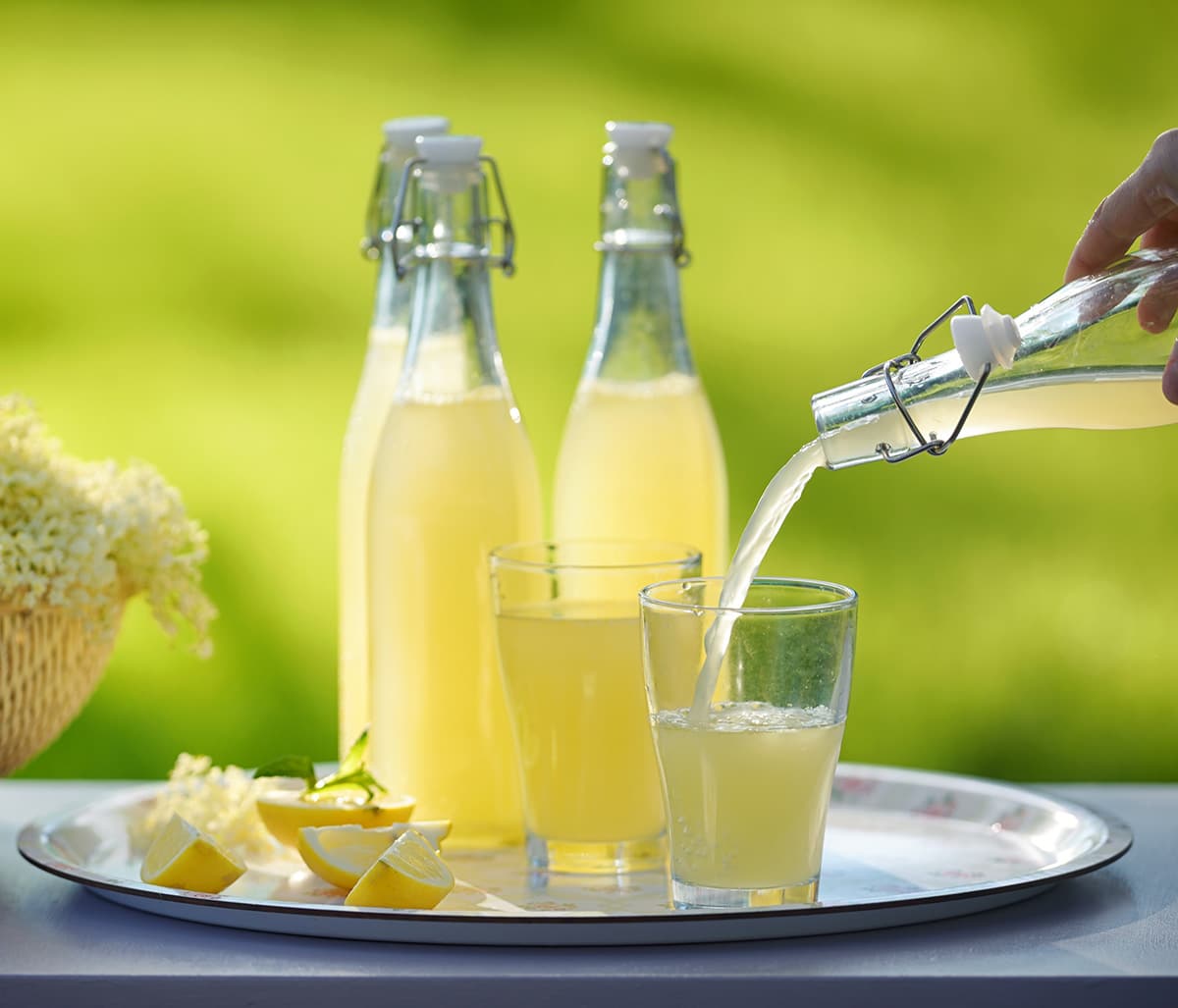
April is a wonderful month. Flowers are everywhere, fishing is getting into gear and the summer garden is laden with promise. Foraging can be a little thin in my neck of the woods, however, as the greens are starting to go as the weather warms. But there is one delight to be had: Elderflowers to make elderflower cordial.
Finding the buttercream flowers isn’t too tough: Elderberries grow everywhere near rivers, and Northern California is loaded with bushes big and small. I’ve never seen them before April here, but they bloom even earlier in SoCal, and in the Southeast.
I’ve seen elderflowers all over the place in Georgia and Florida in early spring. The farther north you live — or the higher in elevation — the later you must wait. And keep in mind you are looking for blue or black elderberries, not red elderberries. You want Sambucus nigra or S. mexicana.
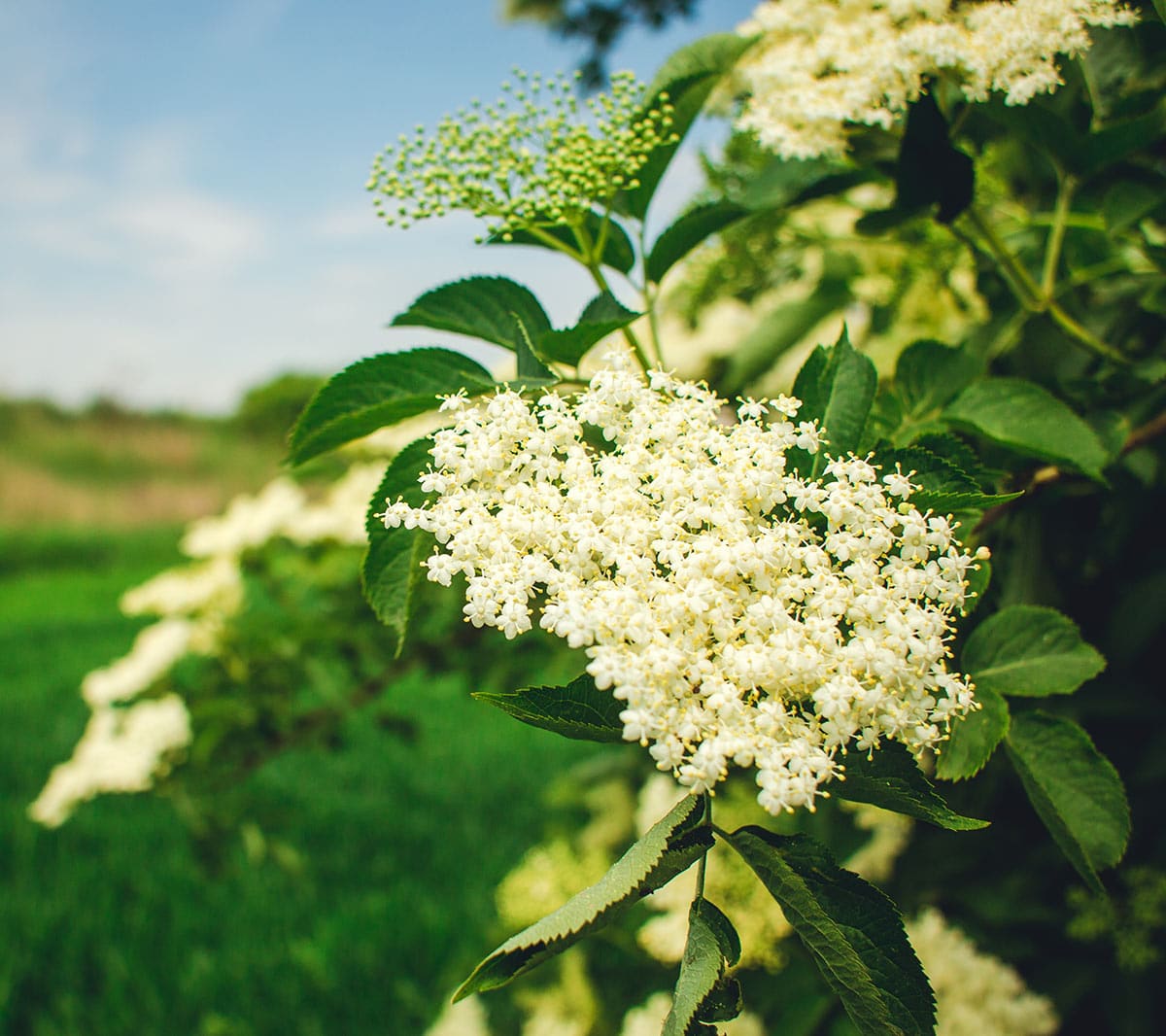
Collecting Elderflowers
Keep in mind that an elderberry bush is a large plant, and can even grow into a small tree. Study the leaves in the photo above: They are a lush dark green, slightly serrated on their edges, and form on stalks; each leaf should be opposite to another. The flowers are cream-colored, not white.
Sometimes over-eager foragers fail to look at the plant they are picking from and grab hemlock by mistake. This can be fatal. But hemlock looks nothing like elderberry, so I have a tough time figuring out how this mistake happens…
A good rule to live by is to not take more than a few flower heads from each elderberry bush: This ensures that the bush will have enough to spread itself, it makes you find more bushes — it’s never a good thing to have only one spot for anything you forage for — and, most importantly, selective picking means you can come back in a few months for the berries.
Only choose the most beautiful flower heads; you don’t want flowers that have yet to open or are past their prime. Collect them in a paper bag so they can breathe. Plastic will make them wilt and sweat.
You will need a lot of flowers to make cordial, so grab a big grocery sack full.
Making Elderflower Cordial
Keep in mind that elderflower cordial is not alcoholic. It is anything from a light, ready to drink concoction to a syrup that can keep a year or more and is used as a base for other things, like elderflower champagne.
If you want to make elderflower liqueur, this is my recipe for that.
Elderflower cordial has a subtle flavor. What does it taste like? It is more of an aroma thing, although the elderflower “lemonade” I am drinking right now has a certain tannic backbone to it that says it is not just lemonade.
You make the base for elderflower cordial by preparing a simple syrup (1:1 sugar to water), bringing it to a boil and pouring it over lemon zest, a little lemon juice, lots of elderflowers, and a little citric acid, which adds flavor and keeps everything stable. You let this sit at room temperature for 2 or 3 days to macerate, and the result after you strain it through cheesecloth is this lovely-looking syrup.

NOTE: If you just want to make an elderflower simple syrup, which will ferment very fast if you don’t keep it really cold, skip all the lemon and citric acid. For a quart, boil 3 cups sugar and 3 cups water. Let it cool enough so you can stick your finger in it, then pour it over a quart Mason jar full of elderflowers. Steep 24 to 48 hours, then strain. Use within 3 weeks.
Using Elderflower Cordial
I add about a tablespoon of the syrup to a pint of water to make an elderflower cordial with the level of flavor Gatorade has; add more syrup for a stronger drink. It tastes a lot like an Arnold Palmer (50-50 iced sweet tea and lemonade), but as elderflowers are known to be seriously good for you, I like this better.
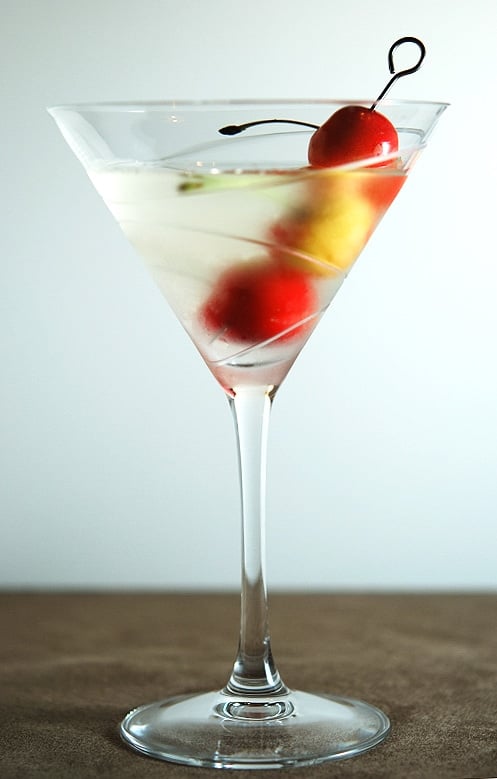
Holly added some syrup to vodka to make an “Elder-tini,” which, when added to some cherries, make a damn good cocktail. Elderflower cordial is also excellent mixed with Champagne (a classic), and its Italian cousin Prosecco. My friend Heather makes a drink called a Caddisfly Nymph, which is elderflower syrup, Prosecco and a touch of Peychaud bitters.
Elderflower cordial makes a great glaze for chicken or pheasant breasts, or, when mixed with a champagne vinegar, a helluva gastrique (sweet and sour sauce) for poultry, rabbit or fish.
Elderflower Cordial
Ingredients
- 1 quart water
- 4 cups sugar
- Juice of 2 lemons
- Zest of 2 lemons
- 1 teaspoon citric acid
- 25 elderflower heads, about 2 cups flowers, stems removed
Instructions
- Snip off the flowers from the stalks into a large bowl or bucket that will hold everything. Try to remove as much of the stems as you can; they are toxic. A few stray bits of stems will not hurt you, but you want to minimize it.
- Zest the lemons and add it to the bowl, then the citric acid and lemon juice.
- Bring the sugar and water to a boil, stirring occasionally to dissolve. Let the syrup cool enough so that you can stick your finger in it without getting burned; you can leave it to cool to room temperature, too. Pour the syrup over the flowers, lemons et al and stir to combine. Cover the bowl or bucket with a towel and leave it for 2 or 3 days.
- When you are ready, strain it through a fine-meshed sieve lined with cheesecloth or a paper towel into a clean Mason jar. Seal the jar and store in the fridge.
- To serve, pour 1 to 3 tablespoons of the syrup into a pint glass and add water or seltzer. Or you can add a tablespoon to a glass of sparkling wine, or to a couple shots of vodka or gin.
Notes
Nutrition
Nutrition information is automatically calculated, so should only be used as an approximation.




I have been using this recipe for years and everyone loves it! It makes great cocktails and mocktails and it’s always an adventure finding the bushes—best to search in a canoe here in NY! Thank you for all the great info!
I would really suggest removing your comment about it not being safe to use red elderflowers. They are what grow in my area and they are absolutely fine to use. There are slightly higher toxic levels to the berries than black (however it is well documented that native peoples used them for food) but the flowers are interchangeable with the black or blue. Local universities and knowledgable authorities confirm this. It would be a shame to spread false informed when so many could be using them.
I absolutely agree. Red elderflowers have the same culinary and medicinal uses, and while the berries are toxic raw, they are safe cooked, and as mentioned, have a long history of traditional use amongst indigenous peoples.
Thanks … I’m originally from Sweden where we have Sambucus Nigra everywhere and drink the cordial year around. I wanted to plant some here in the PNW and was trying to determine if I had to get the European version. It seems like I can go with an American (Canadiensis) subspecies. Thanks again.