
As an Amazon Associate I earn from qualifying purchases.
This is the mother of all Italian mustard, an ancient Roman recipe that combines mustard with nuts and vinegar for a unique flavor and texture.
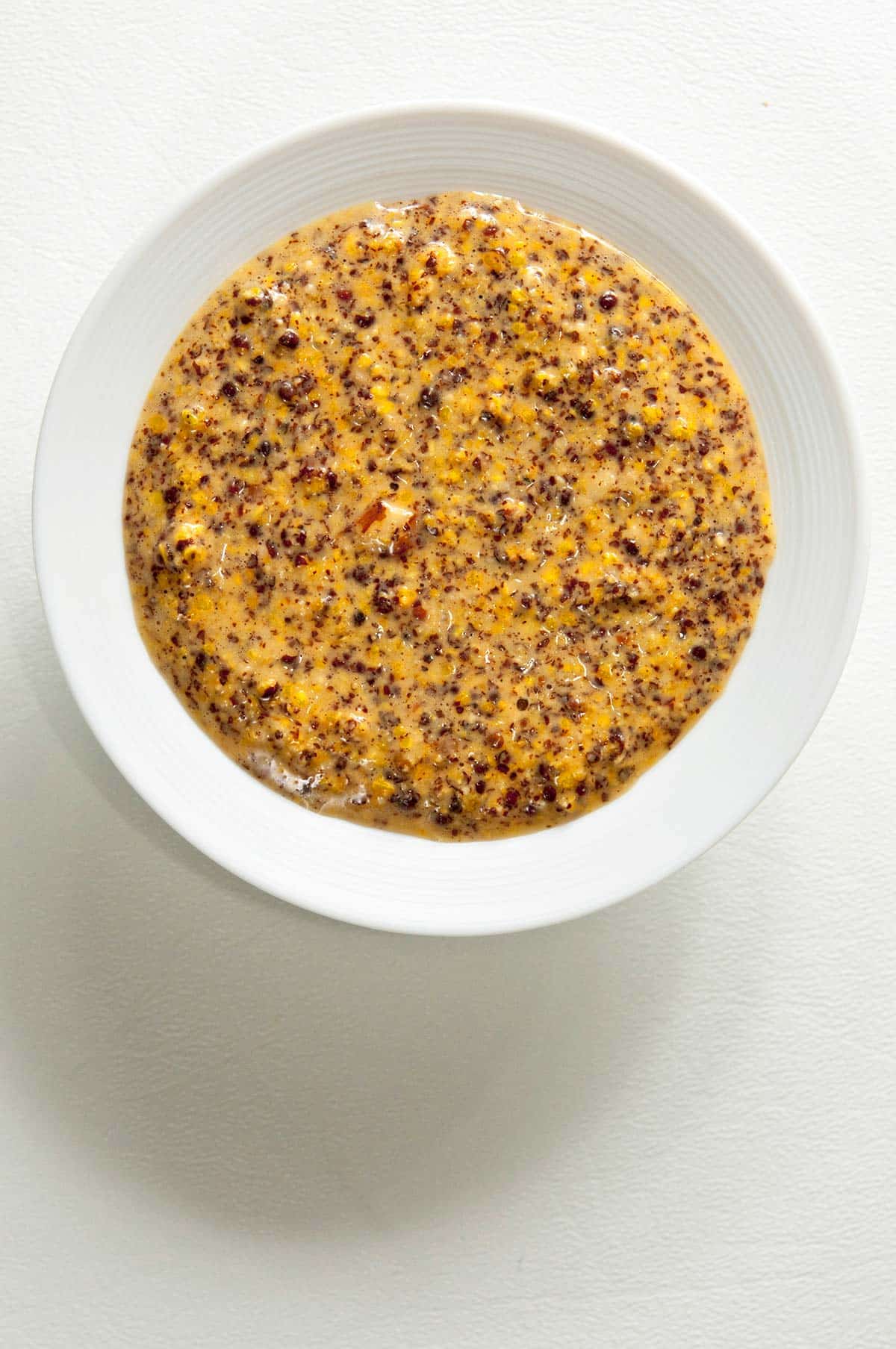
The Romans are the first to be credited with making mustard in the way we know it today. Earlier civilizations, notably China and Egypt, used mustard seeds whole as spices.
This recipe is adapted from Apicius, and it is said to be about 2,000 years old. Keep in mind that this Italian mustard is very much not mostarda, which is a modern Italian mustard-like condiment with fruit.
The result is a heady mustard — I used black mustard seeds, which are stronger than normal American mustard — balanced by the richness of the nuts. It’s almost like a peanut butter-mustard mix, with a little vinegar tossed in. It is excellent with roasted or cold meats.
There are three main types of mustard seed. From mildest to strongest, they are yellow, brown and black mustard seeds.
(If you want to learn more about the science and practice of mustard making, I have a whole article on mustard here.)

As with all homemade mustards, this one will start out runny and bitter-hot. It will mellow and thicken overnight, so it’s best to make mustard the day before (or more) you want to serve it.
Once made, this Italian mustard will keep a long time in the fridge, but if you keep it at room temperature, the fats in the nuts will turn rancid eventually.
Ancient Roman Mustard
Ingredients
- 1 cup black or brown mustard seeds
- 1/2 cup almonds, chopped
- 1/2 cup pine nuts, chopped
- 1 cup cold water
- 1/2 cup red wine vinegar
- 2-3 teaspoons salt
Instructions
- Grind the whole mustard seeds for a few seconds in a spice or coffee grinder, or by hand with a mortar and pestle. You want them mostly whole. Add the chopped nuts and grind into a paste.
- Move everything to a bowl and add the salt and cold water. Mix well and let stand for 10 minutes.
- Pour in the vinegar and stir well. When the vinegar is incorporated, pour into a glass jar and store in the fridge. Wait at least 24 hours before using. Mustard made this way will last several months in the fridge.
Notes
Nutrition
Nutrition information is automatically calculated, so should only be used as an approximation.




is the nutrition info based on the whole 2 cups or is it per tsp of condiments?