
As an Amazon Associate I earn from qualifying purchases.
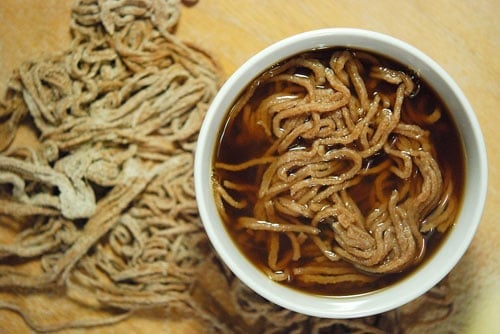
Making stocks and broths are among the core skills of any good cook, and it is a labor or love I embrace wholly. As a hunter, angler and a gardener, I can often make a first-class stock solely with ingredients I’ve grown, caught or shot. This to me is deeply satisfying. Venison stock is one of my mainstays throughout the year.
While some will make a stock without vegetables, I am not among them. They add so much to the final flavor of a stock and can transform it from an additive into a full-fledged broth suitable for drinking on cold days. Incidentally, while I use stock and broth interchangeably, technically a stock is a base and a broth something you can serve on its own; generally a broth is more flavorful and better seasoned than a stock.
Other than the venison, my essentials are: Onions or leeks, carrots, celery, bay leaves, parsley. I will add other herbs as appropriate, most often rosemary and thyme, and sometimes juniper berries. Secret weapon for venison stock: parsnips. Their sweetness brings a lot to the party.
First step is roasting the bones. I like darker, fuller stocks and this is what does it. I roast my deer bones at 400°F for an hour or so, until they are yummy-looking. Incidentally, meat makes better broth, so add some if you can. Secret trick: Save all the gnarly, sinewy bits and trim not even fit for the grinder and roast them along with the bones; don’t include bloodshot meat, though.
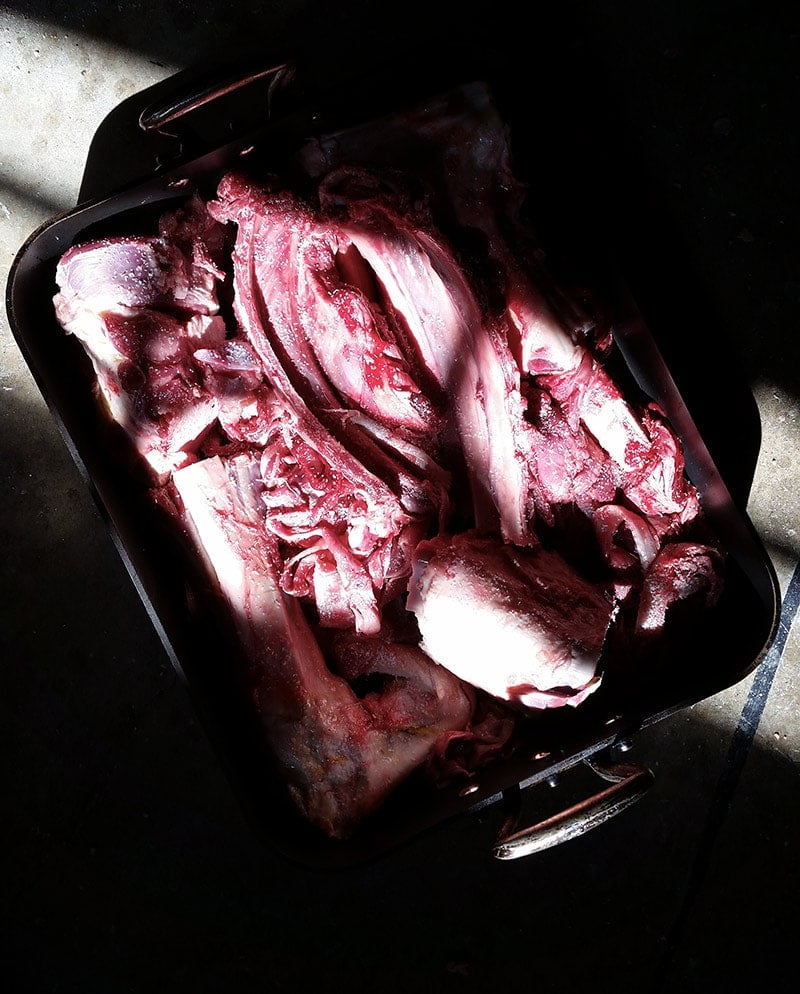
Next cram your bones and trim into the stockpot and cover with cold water by several inches. Cold water will you produce more collagen, and it’s collagen from the joints and cartilage and skin that builds body in your stock by making it thicker than water. You only get this by letting the water heat gradually. Secret trick: Go to the butcher and buy a calf’s or pig’s foot and add it to the pot (don’t roast it, though). It will add a huge amount of body to your broth.
Bring the broth to a boil and skim off any scum that floats to the surface. After the surface is clear, reduce the heat to a bare simmer. You want it to shimmy, not roil, not even bubble too much. A boiled stock will turn cloudy, and the higher temps can extract bitter flavors from the bones. Let it do this for several hours. How long? Up to overnight.

After the meat has infused the water to your liking — 4 hours is a minimum for me — add your veggies, roughly chopped. Remember that old, crappy veggies will not improve by cooking them. That said, the ends of things make great stock, as do onion skins, which will help turn a broth a lovely brown. Stir in your nice vegetables and let it cook for another 90 minutes to 2 hours. No more.
After this, strain everything out. Grab all the big stuff with tongs first, then set a paper towel into a fine mesh sieve. Ladle your venison stock through this into a large bowl or plastic bin. Is all of this necessary? Yes. Unless you want a mucky, cloudy stock. And it is more than aesthetics: The impurities are just that – impure, and add off-flavors to your otherwise wonderful brew.
Once your stock is strained, clean the stockpot or pour the strained liquid into another one. Now you can reduce it if you want to.
This is also the time you can salt the stock. Stock gets saltier the longer you cook it down because salt does not evaporate with the water. So add it close to the end and you will know what you’re getting. If you’re doing demi-glace, don’t salt at all.
All of this takes time, but not a lot of it is active. And the process is comforting to me, as much so as the reward.
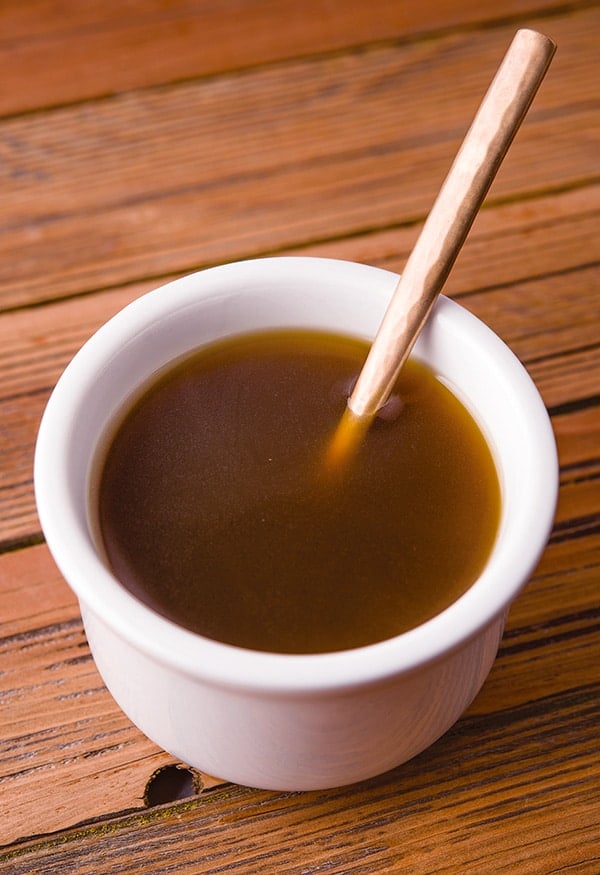
Venison Broth
Ingredients
- 4 pounds venison bones, with some meat on them
- 4 tablespoons olive oil
- Salt
- 1 tablespoon crushed juniper berries (optional)
- 2 tablespoons fresh rosemary
- 1 tablespoon crushed black peppercorns
- 1 tablespoon dried thyme
- 4 bay leaves
- 1 medium onion, chopped
- 2 large carrots chopped
- 2 celery sticks chopped
- About 1/2 of a bunch of parsley chopped
Instructions
- Coat the bones with olive oil and salt well, then roast in a 400°F oven until brown. If you can stand it, keep some meat on the bones — trim and shanks are ideal for this. It will make a better broth. Put the bones in a large stockpot. I saw the bones into large pieces with a hacksaw; this lets me fit more bones into the pot, again, making a richer broth. Cover with water and bring to a simmer over medium-high heat.
- Skim the froth that forms on the surface and simmer very gently for at least 4 hours; I let it go overnight. You want the broth to steam and burble a little, not roil.
- Add the remaining ingredients and simmer for another 2 hours.
- Using tongs, grab out all the bones and large bits and discard. Set a paper towel in a fine-mesh sieve that is itself set over another large pot. Ladle the venison broth through the cheesecloth-lined sieve. Discard the dregs in the broth pot, with will be loaded with sediment and other bits.
- Add salt to taste to the clarified broth and pour into quart jars and freeze (or pressure-can — you cannot can broth in boiling water). If you freeze, leave about 2 inches of space at the top of the jar or the jars will crack when the broth freezes. Use within a year.
Notes
Nutrition
Nutrition information is automatically calculated, so should only be used as an approximation.




Do you skim the fat off the stock (once it cools)?
Can you estimate salt amount per quart?
Amanda: I tend to skim the fat, yes. As for salt, not really. It’s up to you. I add it pinch by pinch, stirring in between, to the whole batch after straining, then jar it.
Just wondering if adding trimmings with silver skin should be avoided so it doesn’t negatively affect the flavour? Only add meat that’s clean with no silver skin? Also, how do you find it tastes compared to beef bone broth?
Janelle: I’ve added silverskin trimmings for 20 years. It’s great. You absolutely don’t need to add just “clean” meat.
Hey Hank,
Have you ever used the stock for a French onion soup?
It makes THE BEST French onion soup.
Hey Hank, I basically double this recipe by saving mine and my family’s femur bones from this past season of Whitetail hunting. I’m going to cook them on real low (barely bubbling) for a very long time. Does it matter if it is covered or uncovered? I’m thinking a couple days to really loosen up that marrow. Thanks in advance .
Making this for the 2nd time! I LOVE it!! Quick question though… other recipes call for roasting the bones 1-2 hours at 400°… its only been 10 mins and my bones are browned and sweating. Should I pull them, or continue roasting for another half hour +? Thanks so much!!
Sarah: I always roast bones for an hour more or less. They should not burn at 400F even after 90 minutes.
Followed video class and recipe….came out terrific and will be a big hit in the Thermos ice fishing!!!
Question on the timing of adding the veg: how does the flavor change if you add veg at the beginning vs towards the end? Gearing up to make this recipe for the first time later in the week; usually with chicken or turkey stock I add everything to the pot at once, so I’m curious if there’s a difference in technique with game (or maybe I’ve been making stock incorrectly this whole time!).
Marissa: Yes, it does, although it’s more of a preference thing than an iron rule. I like that you can get hints of the vegetables’ flavors when they only simmer for 90 minutes to 2 hours.
I made venison stock from the bones of a deer that a friend bagged, I helped him butcher it (it was his first deer) and he did not want the bones. It is wonderful. From there, I made the stock into a demi-glace. Using the same idea, I made a demi-glace from mushroom stock (from white button and creminis that I parcooked in the microwave and saved the liquid and then cooked the stems in a little more liquid, until I had the demi-glace.)
Today, I browned ½ cup ground venison in olive oil, added some chopped scallions, and some sautéed mushrooms, heating it though and set it aside.
Using the same pan, I made a roux, saving all the brown bits, added the mushroom demi-glace, a bit of milk, and a good portion of my venison demi-glace until it had the right consistency. I seasoned it with salt and pepper, and added some chipotle powder, and served it over biscuits.
It was wonderful! Thank you for these directions. I will never discard deer bones again. In fact, I made some more stock and demi-glace with the deer I got a week or so after my friend did. I cannot recommend this enough to those who are on the fence about the work that it takes. It does take time and effort but the rewards you get as far as flavor and the satisfaction of a job well done is out of this world.
Thank you so much for this! My husband is a hunter and every year I’ve wanted to try the bone broth. I finally did it this week.
However my broth turned out looking more like chicken broth, very light golden brown. Is that normal? Did I do something wrong?
Amy: Nope, it’s normal. For a darker broth, roast the vegetables as well, or add a little tomato, or onion skins.