
As an Amazon Associate I earn from qualifying purchases.
For some of you, the fact that black bear can be good eating is no great surprise: The hunting and eating of bears has been going on long before we out-competed the horrific (and thankfully extinct) cave bear for the best places to shelter ourselves from the rigors of the Ice Age. Bear hunting has been part of American life since we arrived in the 17th century, and roast bear has been on the menu for more than a few state dinners during our nation’s youth.
Bear regularly made its way to market before the sale of wild game was outlawed in the early 1900s, and it retained a place in the American palate right through the late 1950s. One of the best-selling cookbooks of all time, Meta Given’s Modern Encyclopedia of Cooking (first written in 1947) includes a section on bear with helpful butchering tips, such as how to remove the scent glands behind the animal’s hind legs.
Even more telling is that the 1957 edition of the Gourmet Cookbook includes three recipes for bear. Gourmet magazine has never catered to the redneck hunter crowd: Putting bear in their cookbook means it was a legitimate facet of haute cuisine.
So why have I (and, I daresay, many of you) always felt ambivalent about eating bears? Was it watching Grizzly Adams as a kid? Winnie the Pooh?
Maybe it was because I clutched a teddy bear every night when I was tucked into bed as a toddler. Hard to say.
My personal experiences with black bears have been fleeting, and mostly annoying; they routinely pillaged my father’s garbage when he lived in the Watchung hills of New Jersey. When I’ve seen them, bear mostly have been an ink spot looking at me from a distant meadow, or a fading crash through the underbrush as the beast ran from my approach. I have never seen a grizzly bear.
But something else is at work here, a cloudy notion that bears are somehow different from deer or ducks or upland birds. Bears manage to be cute and cruel all at once — most of us balance, uneasily, the mental image of the fuzzy, huggy bear of childhood with the knowledge that at least some bears will happily tear you apart and eat you alive, if given the chance.
It’s worth noting that the only land animal that routinely hunts and eats humans isn’t the lion, or the alligator, or the tiger: It’s the polar bear.
Then there is the biological fact that bears a) are omnivores like us, and b) are said to look a bit like people when skinned; I happen to think they look more like pigs. The American Indians put bears in a different spiritual place in part for this reason. Of all the things humans eat with any regularity, bears come closest to being us.
Finally, there is the practical consideration that bear meat is insanely variable. Eat a bear that had been dining on berries and manzanita and you are in for a feast. Eat a bear that had gorged on salmon and it’ll taste like low tide on a hot day.
What to do with the meat? In the kitchen, the most important thing you need to know about bear is that it is the single biggest vector for trichinosis in North America. Very few people get trichinosis from domestic hogs anymore, but they sure do from wild boar, bear and, oddly, walrus.
To kill trichinae parasites you need to hit at least 135°F and hold it there for a long time, at least an hour. Safer to get the meat up to 145 to 150°F, which is medium — still pink, by the way. Ignore the old warnings about 180°F and such.
Oh, and freezing won’t help you if you are north of about where I live, in Sacramento. Canada, Alaska and most of our northern tier states are home to a variety of trichinae parasite that doesn’t die in the freezer. Just keep this in mind.
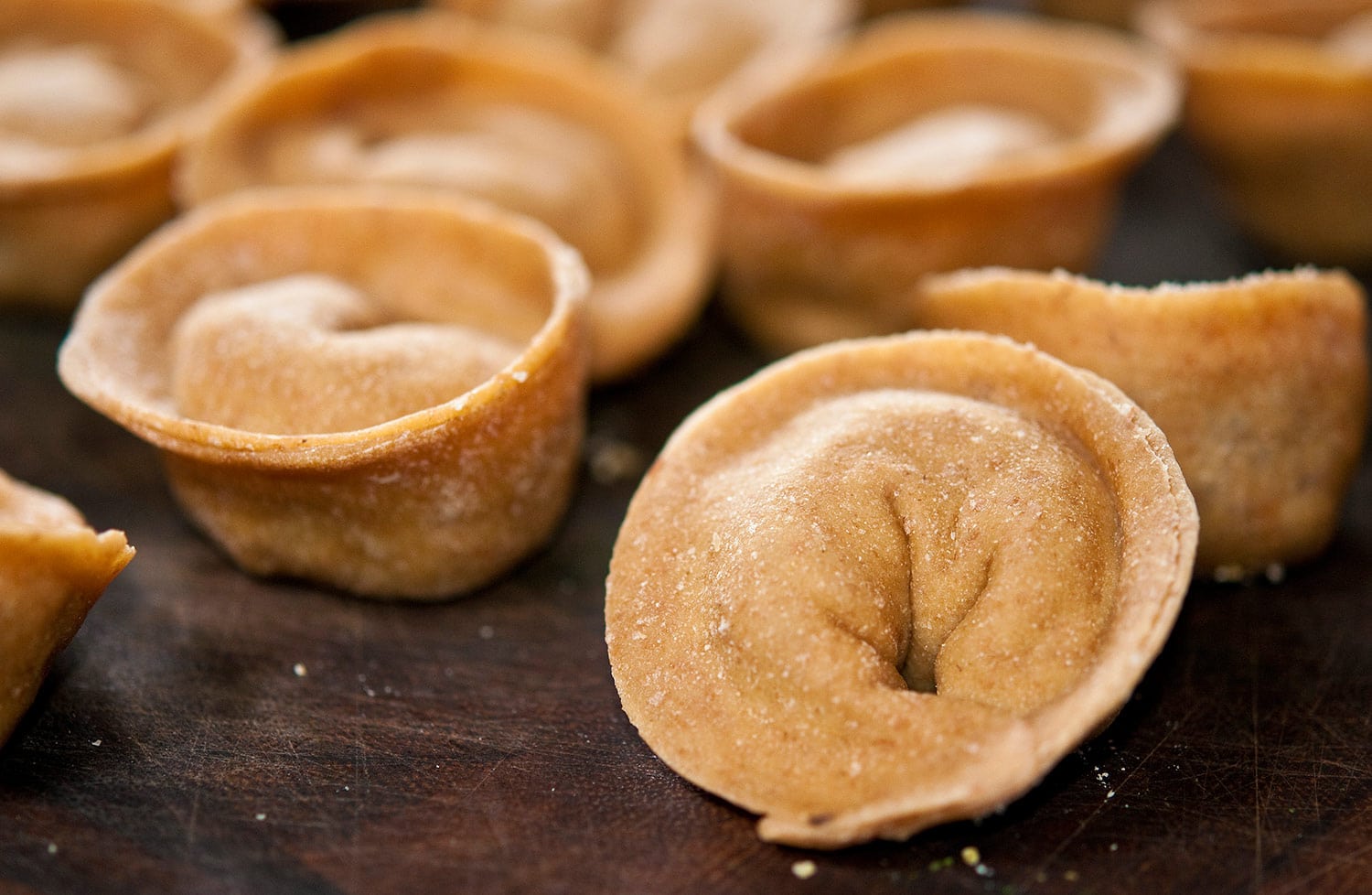
All this brings me to Siberian pelmeni, pretty dumplings widely eaten all over Russia.
To me, no culture screams “bear” more than Russia. A look through the 1935 edition of The Derrydale Game Cookbook turns up Bear Steak Czar Alexandre, Breast of Bear in Sour Cream, Russian Braised Bear Liver, and the memorably named Fillet of Bear a la Zinoff. Apparently the original pelmeni were made with onions and bear meat (or venison) and frozen outside in the snow to be eaten on the trail by, you guessed it, bear hunters. Perfect!
I used this recipe as a guide, although lacking whey I used buttermilk instead to make the dough. I also used a mixture of King Arthur white-wheat flour and spelt flour because I wanted a rustic, rough-hewn look to the dumplings. I mixed the flour and buttermilk, covered it and let it sit on the counter for 48 hours. It could have probably sat for another day, but it was reasonably sour nonetheless.
As for my pelmeni filling, I ground two pounds of the bear meat, mixed it with a pound of my basic bacon, added pepper, a little salt, a little garlic and lots of onion. Onion seems to be a constant in pelmeni filling.
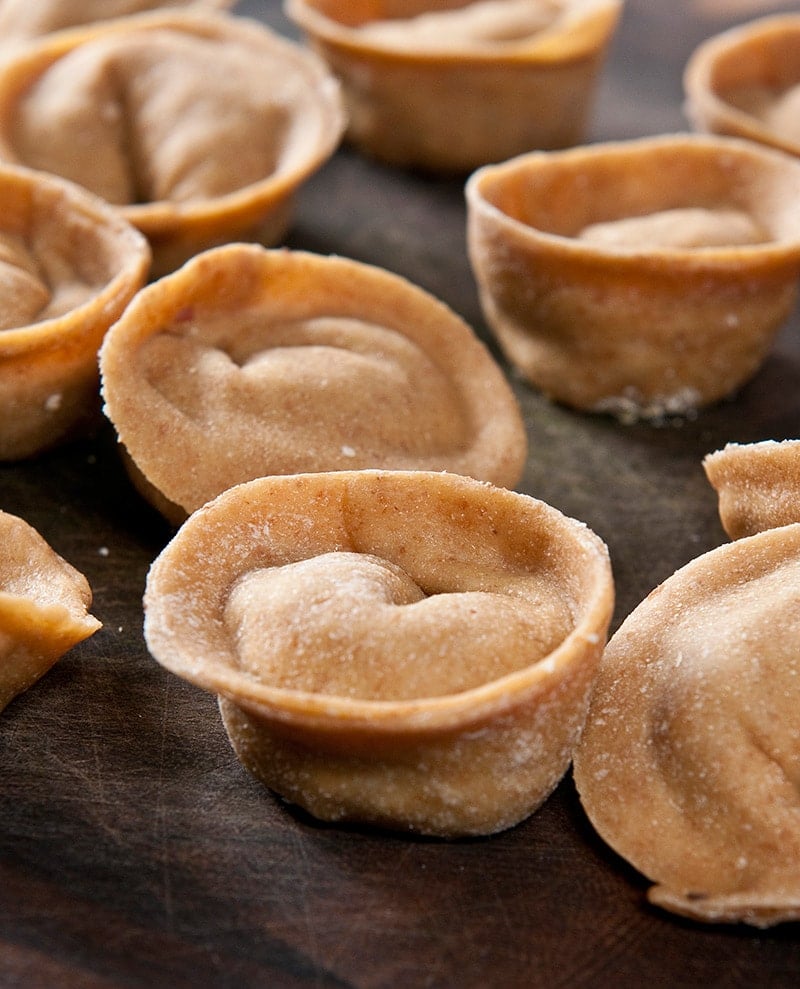
The dumplings are traditionally made by rolling the dough into a snake, then cutting off a walnut-sized piece and rolling it flat with a pin. I used my pasta maker instead. Way easier. I cut 2-inch circles from the dough with a cutter and in went a scant tablespoon of the filling. You fold the circle over into a fat half-moon, then pinch the edges to make a gigantic tortelloni. They were very, very good.
A few dumplings cannot wash away a lifetime of ambivalence, but I feel differently about bear now. We all hold food prejudices — I won’t be eating dogs or cats anytime soon — and most are based on culture, not flavor.
Some people lump bears into the dog-and-cat category, but growing up I’d read so many stories about early Americans eating bear that it seemed more antiquated than obscene; in my mind, bear had always teetered on the edge of acceptability.
These dumplings pushed it over the edge for me. Eating the last dumpling, I thought of one of my favorite Swahili sayings: Wanyama ni nyama tu. All meat is meat. Even bears.
Pelmeni, Russian Bear Dumplings
Ingredients
FILLING
- 2 pounds bear meat, or any other meat
- 3/4 pound pancetta or bacon
- Salt
- 4 cloves garlic, minced
- 2 tablespoons black pepper
- 2 tablespoons butter, lard or bear fat
- 1 large onion, chopped
DOUGH
- 2 cups spelt, whole wheat, farro or einkorn flour
- 2 cups all-purpose flour
- 1 teaspoon salt
- 1 cup buttermilk or whey
- 6 egg yolks
Instructions
- If you are making the sourdough version, start 3 days in advance. Mix the spelt flour and salt with egg yolks and the buttermilk or whey into a batter, cover with plastic wrap and leave on the counter. Every day add 1/2 to 1 cup of regular flour, mixing well. Keep the dough covered.
- To make the filling, slice the bear and bacon into 1-inch chunks, making sure to remove all silverskin from the meat. Toss with the black pepper and garlic. If you are using uncured pork, like pork fat or pork shoulder, add 2 tablespoons kosher salt. If you are using bacon, salt pork or pancetta, add a teaspoon. Put the mixture in the freezer.
- Heat the oil or butter over medium-high heat and saute the onion until it just begins to brown, about 5-6 minutes. Move the onion to a sheet pan or large plate to cool.
- While the onion is cooling, you can make the quick dough or finish the sourdough. Mix the remaining flour with the rest of the dough ingredients and knead well. If you are doing a sourdough, you will need to punch the dough down before kneading. Add enough regular flour while kneading to make sure the dough is no longer sticky. Knead at least 5 minutes.
- Coat the dough with a little oil and cover with plastic wrap. leave it for at least an hour.
- Take the meat and fat mixture from the freezer and mix it with the cooled onions. Grind everything through a meat grinder fitted with the fine die. Alternatively, pulse everything fine in a food processor. Do not make a paste. Mix the meat well with your (very clean) hands and set in the fridge. Clean up before proceeding.
- There are two ways to roll out the dough. Traditionally, you roll the dough into a long snake the diameter of a walnut. Cut off pieces and roll them flat with a rolling pin; you want them to be 1/16 of an inch thick. Or, is you have a pasta maker, roll the dough out to a medium setting. My Atlas’ thinnest setting is No. 9, so I went to No. 5. Cut out 2-inch circles with a cutter or wineglass.
- Fill each dumpling with a scant tablespoon of filling. Fold over the circle into a half-moon and, if you want, pinch the ends of the half-moon together to make a circular dumpling that has a rim.
- Boil the dumplings for 6-8 minutes to make sure the bear or pork has fully cooked. Serve with sour cream mixed with dill and black pepper.
Notes
Nutrition
Nutrition information is automatically calculated, so should only be used as an approximation.



Just a followup on your recipe. I recently ran across a recipe for Russian Meat Dumplings, also called Pelmeni, that was almost identical to the one you posted. The only difference? It used beef instead of bear. It wouldn’t surprise me if venison worked equally well.
Okay, these are the meat dumplings George Gregori’s grandmother made every time someone in his family got a bear! I remember a lot of onions, garlic, some fatback or salt pork and bear meat scraps went in the filling–and she used sourdough discard (the sourdough starter she took out when she renewed the starter) to make the dough. Absolutely tabletops full of these went in the freezer to be cooked later. (Dad and I wished so many times that she spoke English!) George had a bad habit of sneaking raw meat scraps whenever his family butchered something and I can remember his grandmother smacking his shoulder and scolding him whenever they did a hog or a bear. Dad always told me that bear might taste somewhat similar to beef but you had to treat it like pork–and cook it to the well done stage. (Dad preferred his steaks rare but he cooked pork through and bear meat was cooked slowly at slightly higher heat.
The first time we actually had bear that we butchered ourselves was when a young hunter asked if we could do one for him. He had gotten a young male but had no idea what to do with it. Dad said he’d cut it up for the guy for a portion of the meat (he came from a poor family) and the kid agreed. Dad did steaks, roasts and both Italian and Breakfast sausage for him, then rendered out the fat he didn’t want. The meat was good and we wished we had more of it. Dad had kept back a roast, a couple of sirloin steaks and a package each of the sausage we made. Because the kid (and his family) really needed food, we didn’t keep the quarter we usually charged for this arrangement and we wished we had. Two months after he picked up his bear, we learned that he gave some of it to a couple of aunts and uncles who raved about how good it was and put the rest into the chest freezer he shared with his father. His father cooked some of the meat, declared it unfit to eat, and took the rest of the meat to the dump while his son was at work. (It’s one of those cases where the father is ‘disabled’ and lives off his children when there’s nothing actually wrong with him.) Dad was furious when he heard and the whole valley soon knew that he would have gladly made a pound for pound trade of bear meat for beef. (We’d just butchered a steer we bought from the dairy farm across the road.) The joke of the whole thing: the kid’s wife had managed to keep at least some of the steaks and sausage by putting it in a taped shut box she labeled chicken and hid in the bottom of the freezer! (No, she didn’t like her father in law.) By the way the bear lard we rendered out had no taste and lasted us two years just using it for pastries and pies.
Question: I’m on day two of making the sour dough, using whole wheat flour, …and it just seems really dry. When adding the regular flour I need to add water. Even when the recipe stated that mixing the dough ingredients would form a batter, mine immediately formed a dough because there wasn’t enough moisture. Is there something I’m missing? Something I’m doing wrong?
Dan: This sort of thing is more art than science, since humidity and your flour can affect things greatly. I’d just add more water until it’s loose.
Thank you! Everything worked out well, just added water when needed…and you weren’t kidding, these are truly amazing. I got close to 100 from the recipe. Already looking forward to my next batch!
The best bear I ever had was in Alaska where the black bear had been feasting on blueberries and crow berries for a month. The camp cook rubbed it in garlic and braised it low and slow for hours. It tasted like prime beef with one of those subtle tuna sauces from Italy that they use on braised beef over there. Delicious! To this day I want to go bear hunting again.
Bear grease was an important part of the diet of many American Indians. It was also common for them to rub it on their skin in winter time to help stay warm. (Remember: they didn’t take hot showers on a regular basis like we do today.) Rendering down a bear for its fat was common practice. Bear grease was used in many ways.
We supplement our moose and buffalo freezer stash with a black bear about every 2-3 years. The bears on blueberries are the best. Meat in Alaska is super expensive so hunting is the traditional lifestyle.
I’ve had beer- jerky and roast – and enjoyed both a great deal.
I too am ambivalent towards bear tho. I don’t see them in the wild and think “yum” like I do with elk, deer etc. I don’t look at them and think of them as food for some reason, which is why I don’t hunt them.
I ate bear for the first time this summer while interning with MN DNR Fisheries. We had a volunteer out on the lake with us who was a usual volunteer. For lunch break he invited us into his home which was decorated with mounts of every subspecies of caribou in North America. After the grand tour and stories of bow hunts he brought us over to his slow cooker and within was the bear. It was absolutely everything I’ve heard bear wasn’t. It was delicious and hardly anything that would make you associate it with something other than beef. You could only tell it wasn’t beef because there was a subtle flavor of wild in the mix but it was good. Just like Hank said above,”This was some damn good bear”. Again I recently also had the opportunity to eat bear when my classmate shot one about a month back. We simply pan fried the bear chops in butter and didn’t season it with anything overly special. Once again the flavor was great and more akin to the best steak you could ever have. This time we couldn’t tell we were eating something wild. There was a complete absence of game flavor it was purely beef and I like a hint of wild because it lets you know you’re eating something from nature. I also just really like that wild flavor so it was almost a disappointment in that aspect but amazing still.
I think Either fear or respect is inherent in any interaction with bears, whether it’s observation, hunting, or just living around bears in general and you pretty much end up having people subscribe to one or the other…. Either fear… or respect…its pretty hard to just ignore bears.
When it comes to hunting/eating bears, you end up with folks that either kill them out of fear (often under the cover of wanting a trophy) or ones that kill them with respect and with the lure of either excellent meat (depending on the season) and/or functional hides that have been used for survival/religious reasons by so many cultures.
I was lucky enough to live for 6 years in Aniak, AK and had the fortune to catch a perfect sized and perfectly timed black bear. It was late spring and he was full of nothing but grass and berries. It was probably one of the tastiest things I have ever shot… much better than any moose I have eaten.
I also had the fortune of learning about local cultural practices from people that I respected. One person that ended up making a significant impression on me told me a story or a version of a story about bears and their importance in hunting as a whole. This story involved (I guess I would say) spiritual beings that resided in the local hills that ultimately were the ones that decided how much game to release from the hills to be used by people and who based that decision on how respectful people were to the animals that they took. Bears being the animal that they are, can really put to test ones hunting philosophies/ethics (for the reasons I mentioned above about fear and respect) and so bears were the ones that these beings put their ultimate faith into when listening to reports of how respectful hunters were.
And so after I took whatever I could from the bear that I shot alongside the longest free flowing river in the United States (the Kuskokwim River), even though that once powerful skull would have been an excellent keep sake for memories of those days, I did as instructed by this individual.
We took the skull by boat up river to a place where there was nothing but tundra and open land between us and the mountains, where the ones that judge our respect for hunted animals reside. We dug into the peat and placed the bear skull in the hole, facing the mountains. We did it with respect, with the hopes that he would go to those hills and report well on us so that we would be blessed with more animals in the future. And I did feel blessed.
As far as memories, I got a lot more out of burying that skull than I would have from keeping it.
I’ve been looking for cookbooks that give odd recipes for bear, such as making stock with bear and using the intestines, liver, heart, etc… Do you have any favorites other than what you listed?
Very cool, I’m very interested in hearing more about bear, awaiting bacon post 🙂 I’ve had whole cuts several times and also found it sweet, but not in a delicious way, yet not unpalatable either. I just haven’t had whole cuts cooked properly, I think.
A friend of mine thought the roast resembled brisket too, so he did a slow smoke and that didn’t turn out so well, very tough and sweet.
The best bear I’ve eaten has been sausage and burger. I’m pretty sure both were mixed with pork and both were delicious.
I’m not ready to make 250 pounds of dumplings, sausage & burger, so I won’t be hunting ME black bear yet, but you’re getting me closer, thanks.
I’m Russian, and my great-grandmother was from Siberia, and she made pelmeni with moose meat, dill, onions and bone marrow from the moose. I do the same with wild fallow meat and marrow, which is similar. For the dough, I just use my sourdough starter; I like to keep my whey for souring grains for porridge, or making pickled herring. 🙂
I loved reading your piece after just having had pelmini filled with bear and elk in a small restaurant just outside the Red Square in Moscow, Russia. Bear not being a native animal to my home country the thought of Winny just quickly came up but as you stated: all meat is meat.
They served it without the broth (optional) but it came with a delicious sour cream/ butter mix and some chives. The meat was fleshy and very tasty and the whole meal was finger licking good.
You say that traditionally Siberian pelmeni are made with sourdough. I have lived in Siberia and done food research there—and I’ve never seen pelmeni made with sourdough. Could you please tell me where you got that information? I am currently doing research on pelmeni and would like to know more about the sourdough angle. Thanks!
Very Interesting. Like the idea of the dish, perhaps with boar or venison. I’m afraid I’m a sentimental Brit, so I can’t quite get my head around bear or even dog meat. Additional to that, possibly a little difficult to get my mits on some bear. Look forward to more of the russian bear recipes, that I perhaps can try with what I do have available…..( though I do have to dispute the plar bear as the worst land born maneater, plenty more deaths due to lion attacks in Africa per annum, many perhaps going unreported….)
Just ran across your comment that lions killed more people per year than polar bears. Not true, well over half of all human deaths by polar bear go unreported or unconfirmed because there are no witnesses or the body is lost and cannot be recovered. From the last figures I saw, one quarter of lion kills are not reported or confirmed. Also, polar bears regularly stalk and kill humans, often over days if not weeks, while lions don’t exhibit this behavior. I’m not saying that lions are not dangerous, they are if you interfere with them. What I am saying is that lions won’t go out of their way to kill humans; polar bears actively hunt humans for days to weeks, often traveling long distances (we’re talking up to hundreds of miles here) to kill a human being.
Nothing wrong with bear!
The two spring hunted bears I have eaten here in Alberta were very good. In fact after hearing how bad it could be I found the meat to have less taste than deer. Most of my non-hunting friends relish it and I have made them umpteen bear meatballs and burgers. I have also used it quite a bit in Bolognaise and Vindaloo.
I normally grind it, only because even in a slow-cooked Vindloo I cant seem to get it tender – its always tough.
However, edible it certainly is (I have heard coastal bears in the fall that eat salmon, can be foul tasting).