UPDATE: 8/23/11 I went to a local Mexican grocery today and found chiltepin chiles! They were about as expensive as at Gourmet Sleuth, which made me feel better — usually things are much cheaper at the Latin markets. The brand was Rene’s Mexican Products, for what it’s worth…
I’ve always wondered about who makes money on all those hot sauces arrayed in the condiment aisle of the supermarket. I mean really: My local Raley’s carries several dozen, and there are thousands of brands of hot sauce out there, ranging from the venerable Tabasco (the only hot sauce I still buy) to the ridiculous Dave’s Insanity Sauce, which is so hot it really ought to be a controlled substance. It’s simply a case of too much choice, and not enough difference in the sauces to matter.
I think one of the reasons there are so many hot sauces on the market is because it is so easy to make. I am imagining all these inspired home cooks in Texas or Florida or New Jersey who were happy making their own sauce, when someone said: “You oughta bottle that!” They do, hemorrhage money, then promptly go out of business a year or so later. Mercifully, I’ve never been tempted to sell my own hot sauce. But if I did, it’d be this one.
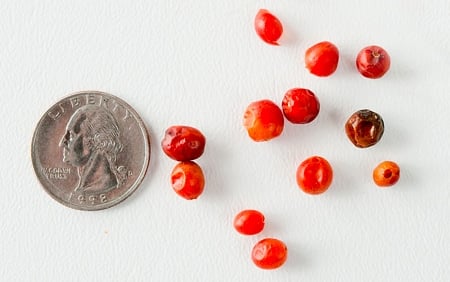
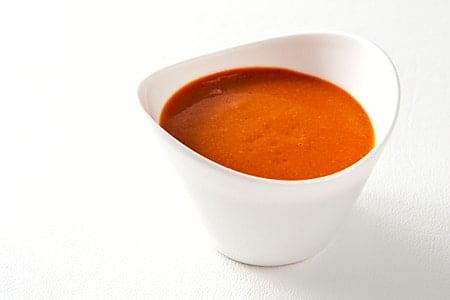
And since I am about to give you my recipe, I guess I won’t be making my fortune (or bankrupting myself) on Hank’s Cray-zey Hawt Sauce anytime soon. What makes this sauce so special is the chile — I use wild chiles for this recipe.
Yep. Wild chiles. They exist. Known mostly as chiltepin, pequin or bird’s eye chiles because, I suppose, they are small and round like a bird’s eye, these grow wild in much of Central America — and have the distinction of being the only chile peppers native to the United States. You can forage for them in southern Arizona, New Mexico and Texas, and they reportedly live in southern Florida as well.
I’ve known about chiltepins for years — I used to be a serious chile head — and have always wanted to forage for my own. But alas, I was in Arizona this year in May, which is not chile season. I’ve vowed to return to Arizona, however, and maybe I’ll find some when I come back to hunt jackrabbits and quail there this winter, but then I might be too late; fall is harvest time. Chiltepins typically grow intertwined with other shrubs, so they are supposed to be tough to locate. We’ll see.
For this sauce, I bought my chiltepin chiles through Gourmet Sleuth. Apparently when the harvest is on, locals drop what they’re doing to gather the little chiles because they bring such a high price — up to $30 a pound in some years. My little jar cost me $9. You can also buy seeds online and grow your own, although the seeds are really hard to germinate; I’ve failed twice. Anyone out there successfully grow chiltepins?
As for flavor, it’s smoky, hot and rich all at once. The closest store-bought equivalent I can come up with in flavor is Cholula hot sauce, which is another of my favorites. The chiltepin chiles whack you right up front, but then go away — it’s the opposite of a red jalapeno, whose heat can sneak up on you a few minutes later.
I use this hot sauce on pretty much everything: Eggs, Mexican food, cold chicken or pheasant, in tomato sauces, on clams… you get the point. use it wherever you would use any normal hot sauce.
chiltepin hot sauce
While I use wild chiltepin chiles in this recipe, you can use any small, red, hot chile. Thai and cayenne are good substitutes. Smoked salt is not strictly needed, but it does add a lot of flavor, so try to find it in your supermarket, or buy it online. Ditto for the xanthan gum in this recipe. Again, not strictly needed, but it really helps the sauce hold together. Xanthan gum is, oddly, becoming very easy to find in places like Whole Foods, because the stuff is used in gluten-free baking. Bob’s Red Mill makes it.
Makes 1 1/2 to 2 cups.
Prep Time: 10 minutes
Cook Time: n/a
- 6 garlic cloves, chopped
- 1/2 cup chiltepin, chiles, or 2/3 cup Thai chiles
- 1 teaspoon smoked salt
- 1/2 cup water
- 1 cup cider vinegar
- 2 tablespoons sweet paprika
- 1/4 teaspoon xanthan gum, mixed with 2 tablespoons cold water
- Put everything except the xanthan gum (if using) into a blender and puree for 1-2 minutes. You really want everything blitzed here, so if your blender heats up too much in 2 minutes, stop, let it cool, and continue.
- Pour the xanthan gum that’s been mixed with the water into the blender, cover and buzz for another 30 seconds.
- Pour into a bowl or large jar and let this settle for 1 hour to allow all the trapped air you introduced into the sauce while blending to escape. If you skip this step your sauce will not hold together as well. Bottle and store in the fridge for up to 9 months.


They get collected. I use Frank’s but I’ve a bottle labeled Pain and Suffering with a picture of a Dominatrix, and one picked up in an Indian spice shop on Manhattan, labeled Colon Cleanser.
Something to bring home to give people something to talk about.
I love chiltepins.
I grow a chiltepin called McMahon’s Texas Bird Pepper….short easily managed plants with well flavored fruits.
Seeds are available from Seed Saver’s Exchange…..
http://www.seedsavers.org/Details.aspx?itemNo=1478%28OG%29
I always learn so much from reading your blog! Had no idea hot sauce was so easy to make!
I’ve wanted to make my own hot sauce because I love Siracha but want something with the heat but not the garlic. I’ll try this with thai chiles…thanks!
I agree there are so many hot sauces out there and most of them have a funny or different label which makes them more easy to sell.
I saw these sold in Central Market in Austin Tx just yesterday as pequin peppers. They were in small packages the size of an orange. Now I wish I’d bought some.
Can dried chiles be used for this and, if so, would the amount change or preparation be needed?
Have you tried canning this? I’ve got a ton of peppers coming of age right now but we easily have a gallon of Tapatio.
My family is from outside of Monterrey, México. We make dry beef or machacado and sell it in several stores of our own, along with local typical candies, breads and preserves, among which is this chile. We call it piquín. Sell it in vinegar whole, or in sauce form, very similar to the one you make, except for the paprika and smoked salt.
They usually start flowering after the rains and many people make a living of foraging them in the woods and orange orchards and sell them at the side of the road. Sometimes you can see little pick up trucks with the tailgate lowered and inside a little 2 feet tall hill of these chiles. Depending of the season, can be quite expensive.
There is also another variation, which I think is also chiltepin, but the fruits are elongated instead of espherical, and it is called japanese chile (go figure), and although it sells well, is less apreciated.
About germination, you need to get rid of the chemical dormancy on the seeds, either by blancheling them a few seconds in boiling water, or feeding the whole chiles to your canary and collecting the seeds later when you change the newspaper from the bottom of the cage. that´s the way most chile plants appear all of themselves sooner or later in our gardens under the trees. They like shadow, and if you take care of them and it doesn´t freeze, they can live for several years. When we go hunting some times find a lot of plants near the water ponds and along fences and get loaded for all the year´s worth. Can put it to dry, make a sauce like yours, put them in vinegar, freeze them, or just put them in a jar mixed with a lot of salt and they will stay moist and edible a long time.
Greetings
Ricardo, what a great description of your part of the world and how you handle pequines!
Other peppers: out in the Galapagos Islands, (which I visited 8 times but only once on pleasure), the local pepper is a perennial bush about two or three feet tall. The peppers themselves are tiny, but pack a wallop you’ll never forget. Took some back to Quito where we were living but could not get the seeds to germinate either. Some form of stratifying like passing seeds through canaries must be the answer. I remember in a plant phsyiology course I took we submerged black locust seeds in sulfuric acid to get them to germinate
Warner: Colon cleanser? Yikes. I’ll pass on that one…
Digging Dog: Any special germination tricks? I’ve seen that pepper, which is similar to the chiltepin. I think its a pequin.
Kristin: Go back next week – they ought to still be there, right?
Cindi: Yes, the chiltepins I used were dried, so you’ll be good to go.
Rachel: Yeah, I suppose you can can it. It has enough vinegar in it to seal the jars with a water bath, but I would not go more than 10 minutes – you don’t want to cook the stuff.
Ricardo: Comments like that make my day! Lacking a canary, I will blanch the seeds next time.
In South Texas , they are always found where doves tend to congregate and roost.
Barbed wire fences are prime spots and easy to follow looking for them.
Thank you, Hank! I’m glad, as the only chiles I can find up here, aside from the ubiquitous jalapeno, are in their dried form. I’ll be trying my hand at hotsauce now!
I’ve never had to do anything super special to get the to germinate well.
I place seeds in a moist paper towel inside a plastic baggy at a temperature of 85 degrees.
I have made hot sauces for 7 or 8 years. I abhor Franks and just barely tolerate Tabasco.
There is lots of good sauces out there. With a PH meter you can tone down the Vinegar to a acceptable level . I have found that Roasted Fermented red peppers Taste the best. Green peppers taste better to me Roasted and not fermented. Try using some fresh roasted red peppers with your dried chilies and I think you may like the flavor even more.
One of the top 2 or 3 I make has anchovies in it typically I don’t use starch but I am experimenting with arrow root. Xanthian gum just looks wrong on a hot sauce label
Jeff, do the doves eat them? That’d be one spicy dove!
is there another chili that might be close second to these?i live in a small town in central cali and they don’t sell those here and the closest city is 50 miles away with no car so not an option.
All Birds and especially the Doves eat the heck out of them.
I assume that is why they are called Bird Peppers .
I was somewhat surprised to learn that they can be easily grown from seed. Like Ricardo, I thought they had to pass through a birds intestinal track to make germination possible.
Learn something new everyday I guess.
I love a crushed pepper or two in a bowl of Pinto Beans.
Mike: Good tip on the roasted fresh chiles. I like that. And I don’t always use xanthan gum, but it really does help the sauce stay together. Skipping it is fine, though.
Spiritrunner: Any small, hot chile will do. A Thai chile is a pretty good substitute, as is a pequin. Look in Mexican markets for dried ones. Cayenne will work, tabasco will work, as will a datil.
Just made this with an assortment of Thai bird chilies, jalapenos and Hungarian wax peppers. I’ve been a hot sauce fan my whole life but can’t imagine ever paying for another bottle after this. I’m off to the market to round up as many different chilies as I can find to play around and make as many different kinds as I can. Thanks for the recipe and tips!!
Thanks for the comments.
I just talked with a friend from my shooting range who has a nursery, and chated a while about these chiles. Seems that piquín or chile del monte (wild chile) tends to be a little special about handling, so very few people grow it, most is collected directly from the wild. that´s why the sauce makers that have bigger operations rely on some variety also called piquín, but that is growed in Chiapas, in the southmost part of México. It is spherical but is slightly pointed, and you can also pick it out because when green one side is slightly purple. Piquín connoiseurs despise it as not the same as the real thing.
Another substitute can be the japanese chile, which looks just like the ciltepín, except in the long form of the fruits, and also grows wild, but it can be cultivated more easyly and yields more. Thats why you can see it frequently at the supermarkets in dried form.
Supposedly the real wild chile is more forgiving with the stomach, and is not hot at the way out like other chiles.
Cheers.
I have a small bag of pequin peppers (more oblong than the chiltepin you picture) that I bought on a whim from a local spice shop that I’ve never known quite what to do with. Thought I’d throw them at random into a roja sauce with other dried chiles, but a hot sauce sounds more fun.
Just made this tonight with Thai Bird Peppers that were picked from our garden on Sunday and a few roasted red peppers (as suggested in another comment). I am leaving it in the refrigerator overnight to rest. My question is: Should this be strained to remove the bits of seed that didn’t puree? Otherwise it looks, smells and tastes great
I successfully grew mutton peppers (Central American pepper passed along in my family), which are also hard to germinate, by using the suggestions on this website: http://www.ecoseeds.com/Pepper.growing.tips.html
Your blog is wonderful. I cook a fair amount of game, and love learning about edible wild plants.
I tried growing chiltepins from seed before with not much success so this year I bought seedlings from a nursery. http://www.vinlandvalleynursery.com/
They arrived as 6″ plants which after they had a chance to recover from the 3 day shipping process I transplanted them into pots as I plan on bringing them in before the first frost. I live in south central Pennsylvania. The 6 seedlings I bought are producing like crazy and have been since the middle/end of July when the first flowers appeared. But with 80 days for the fruit to mature I’m figuring till the beginning of Oct. to start harvesting them. I also used some fertilizer when I transplanted them and when they began to flower. Something made for hot peppers. I put up netting around them because where I live I didn’t think they’d do well having the birds eat them and distribute the seeds.
Thanks for sharing the recipe I’ll give it a try when the peppers are ripe.
Hello again!
Just to let you know, there will be heldm, in Monterrey, Mexico, the first Festival of kid goat and chile piquín, from Sep 15th to 18th. There will be a gastronomical sample, folkoric music and dances, artisan market and conferences about the raising of goats and the growing of chile piquín.
http://www.festivaldelcabrito.com
What we call Bird Pepper in South Florida is described and pictured here:
http://www.regionalconservation.org/beta/nfyn/plantdetail.asp?tx=Capsannuglab.
I’ve gotten plants of it from native plant raffles and grown it and gotten very few peppers from it – birds really do like it! Will try your sauce recipe with other garden chili peppers – sounds good. Wonder if it would work with the smoked chilies I have in the freezer, since it’s all getting pureed anyway?
Landed on this site today by searching “Chiltepin red pepper”. We found a pepper plant in our new backyard in Corpus Christi and soon discovered it’s a chltepin! It’s completely LOADED right now, and one little guy has turned nice and red…we are excited to see the rest follow along! We’ll try this recipe out as soon as we’ve harvested the first batch. Thanks for the recipe!
Hello,
I’m a native southern Arizonan. My dad working on a local ranch we get Chiltepins every year…from the wild. We are addicted to them. This year I tried growing them with success. I have 9 plants about 1.5 feet tall. They are currently blooming and giving chilies…purple at the moment.Once they ripen I am definietly going to try this recipe!
I have been growing chiltepins this year here in Middletown, PA. I just used a modified version of this recipe for my hot sauce. Instead of using xanthan gum I used some frozen okra as a thinkener.. I also add carrots to mine for a sweeter flavor and some slightly cooked onions. I’ve been growing my plants outdoors in pots and before we had snow a few weeks ago I brought them inside. They are still producing lots of ripe peppers. I have enough each week to make another batch of sauce from 6 plants. The largest of these plants is 4 feet tall. I’ve made 2 batches of sauce in the last 3 weeks. I figure with all the peppers still ripening I’ll make at least 2 or 3 more batches before it’s done for the season.
Thanks again for sharing your recipe with us!
Rich
Here in Tucson I’ve had a plant for about 10 years that readily propagates itself in the spring. Seedlings everywhere!
It was bought originally at the Botanical Garden sale as a Baboquivari Chiltepin. The fruit is oval and HOT. It goes from green to orange to red. No purple.
With the final harvest today I’m going to make your salsa, but also try pickling some, then steeping in simple syrup to use with appies, or in cocktails… Ooh la!
Hi All;
I wish people would learn, ALL HOT PEPPERS are from MEXICO & Central America, through the trade ships of old is how peppers got all over the world. There is no such thing as a Thai Chile, or Japanese Chile, Italian Chile. Just like where are Potatoes or Pineapples From, they are both from Mexico, not Hawaii or the Philippines or Ireland! Thanks to trading ships again & the Dole company stuff gets shipped around the world! See you learn something every day!
Roberto: While I get your point, these other chiles are now substantially different from the original chiles, which, as you correctly point out, are indigenous to an area from south Arizona and Texas down to the Andes. Five hundred years of plant breeding makes a difference.
But you are wrong about pineapples and potatoes. Neither is from Mexico. Pineapples are from an area around Paraguay and Brazil, potatoes are from the Andes, mostly Chile and Bolivia.
[...] Hank Shaw’s hot sauce recipe, a wholly different preparation than mine, directs the cook to add spices, which would be great next time. The recipe also icludes two particularly good tips: using a binding agent called xanthan gum to prevent the sauce from separating, and letting the sauce de-aerate. For about 2 cups of finished hot sauce, he advises using 1/4 teaspoon of xanthan gum, mixed with 2 tablespoons cold water. Without the xanthan gum, expect the pepper mass to float atop some briny water in your jar. Nothing dangerous, but not the most visually appealing thing in the world. A good stir fixes the problem. [...]
I was given a plant years ago and it self-propagates quite easily in my garden here in Houston. If I had known they were so pricey, I would have saved more of the plants! This year, since I’ve installed an automatic watering system and it gets daily watering and a little more sun, it has gone CRAZY! I will try your recipe, among others, for my son-in-law, who loves hot sauces.
I have had two of these plants, for 3 or 4 years now, a gift from my neighbor. Central Texas. They must be chiltepin, small rounded oval peppers that go green, orange then red, no purple. I only get a few ripe at a time, my suspicion was birds and after reading a few of these articles I can see why, we have many many white wing dove that roost in the area. I certainly want to try to propagate them and in the future cover with the netting I use to keep the birds from my tomatoes.
I made this recipe with pequins I ordered on line, and it’s delicious with a no-joke heat level.
Try this:
Roast dried chile pequins in a 300 degree oven for about 20 minutes.
Cool, then grind into a fine powder in a spice grinder. If you like, sift through a wire collander to remove the seeds.
The aroma of these roasted pequins is unbelievable and the taste is awesome – gopod heat and more flavor than cayene ever dreamed of having.
Sprinkle on food instead of adding hot sauce. Heat & flavor without the vinegar.