As an Amazon Associate I earn from qualifying purchases.
When I decided to create a recipe for duck ravioli, I knew I wanted to do something besides substitute duck for beef in a standard meat ravioli recipe. So here you go, a swanky duck liver ravioli.
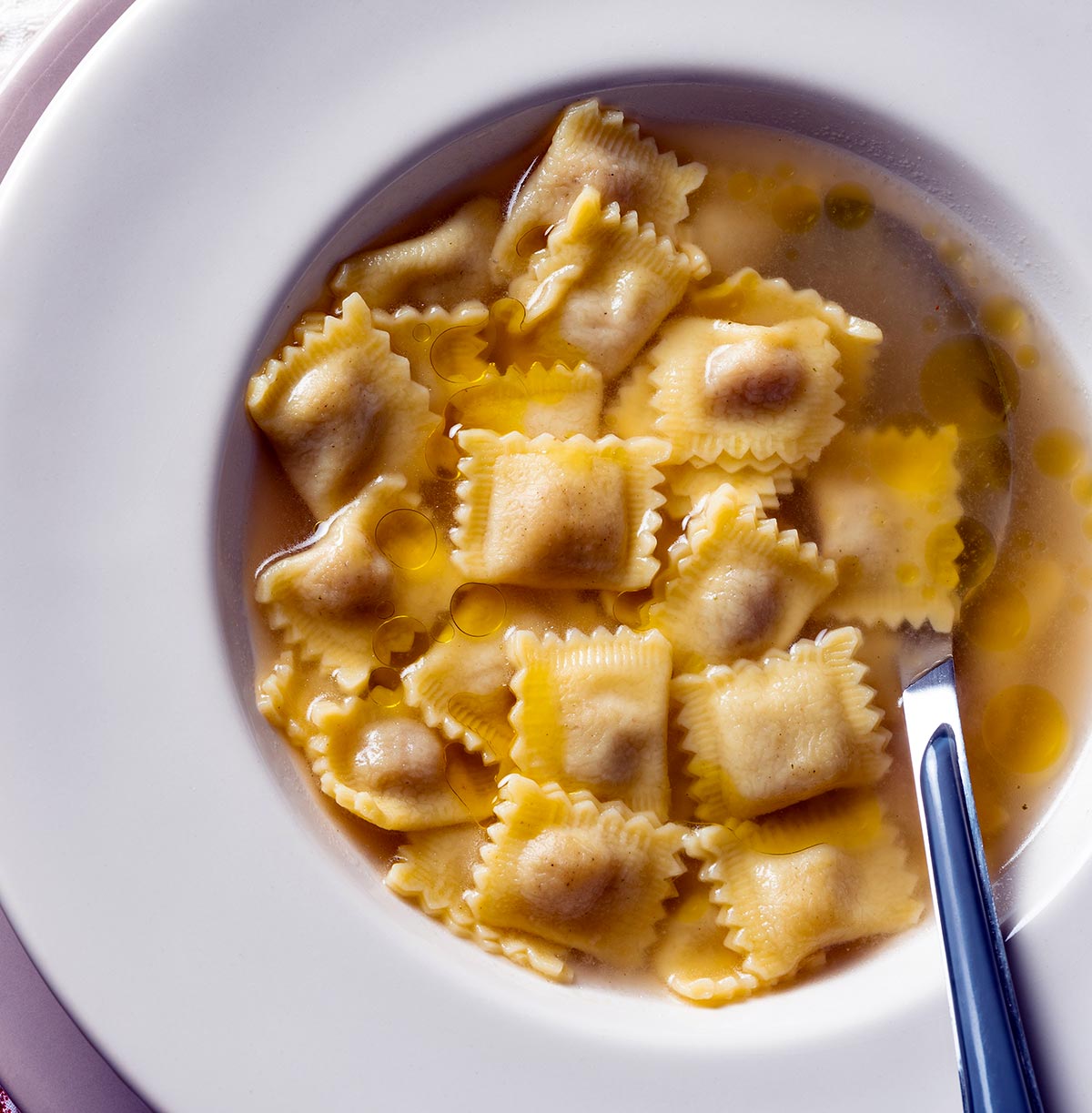
I got inspiration for this recipe years ago, from from Mario Batali’s The Babbo Cookbook, which has a similar recipe for duck ravioli. I normally don’t like the texture of liver, but I do like the taste, so the ground-up filling made spicy with red pepper does me fine.
My recipe calls for butter as the additional fat — and it works fine — but if you can afford it, use foie gras instead. It’s better. All you need is a small tin of the stuff, available online.
For hunters, use only fatty livers. They’re tan, not burgundy. I wrote a piece on “wild foie gras” here.
If you substitute and make these chicken liver ravioli, which works fine, store-bought chicken livers are fatty enough so you won’t need much, if any, added butter.
Sometimes instead of using “00” or all-purpose flour, I will substitute in some chestnut flour, acorn flour or spelt or barley flour. The key is to get an earthy flavor going. Other times I will switch up the shapes and make these into tortellini or cappelletti.
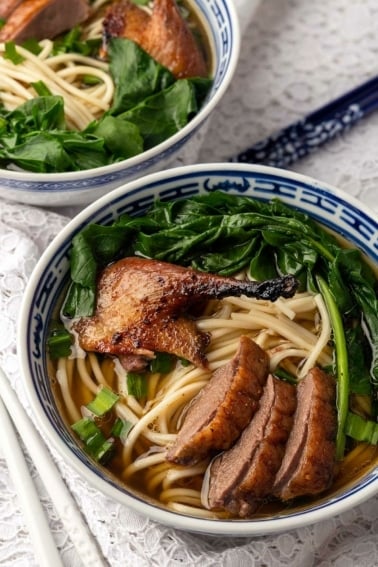
How to serve your duck ravioli? Either with the simple sauce below, or as I did in the picture above: In a clear consommé made from my rich duck broth. Either way is wonderful.
I have several other ravioli recipes on Hunter Angler Gardener Cook, notably mushroom ravioli and nettle ravioli. If you are looking for a duck ravioli that uses meat, not liver, use cooked, chopped duck meat in my meat agnolotti recipe.
Duck Liver Ravioli
Ingredients
FILLING
- 1/4 cup olive oil or duck fat
- 1/2 medium onion, sliced thin
- 1 1/2 pounds duck, chicken or turkey livers
- 1 cup red wine
- 1/2 teaspoon chile flakes
- 1 tablespoon oregano
- 1/2 stick of butter, chilled and cut into cubes
- Salt and freshly ground black pepper
PASTA
- 4 cups all-purpose flour
- 4-5 eggs, lightly beaten
- dash of olive oil
SAUCE
- 3 tablespoons duck fat
- 4 tablespoons balsamic vinegar (use the good stuff)
- minced parsley for garnish
- grated parmigiano cheese for garnish
Instructions
- Make the pasta. Put the flour in a large bowl and make a well in the center. Pour the beaten eggs and the olive oil in the well, then stir from the center to begin incorporating the flour. Do this until you get big clumps, then switch to kneading it. Once it's a big ball, knead vigorously for at least 6 minutes.
- Wrap the dough in plastic and let it rest for at least a half-hour; an hour is better. Or you can vacuum seal the dough and it will hydrate instantly.
- Make the filling. In a frying pan, heat the 1/4 cup oil or duck fat. Add the sliced onion and sauté over medium heat until it's soft, about 10 minutes. Turn up the heat to medium-high and add the livers and the chile flakes. Sauté until nice and brown.
- Add the red wine, bring to a boil and reduce for 8 to 10 minutes until it is down to about 4 tablespoons. Add the oregano, then transfer everything into a food processor and buzz until it's well-chopped but not a smooth puree. Add salt and pepper to taste. Let this cool to room temperature.
- Once the liver mixture is cool, add in the chopped butter and mix well until it is incorporated.
- Make the ravioli. Roll out your pasta dough in a machine or by hand with a rolling pin until it is the thickness you want; I go to No. 6 on my machine, which is an Atlas.
- Place a teaspoon of liver mixture at about 2-inch intervals on your pasta, then fold over the other half of the sheet on top of the filling, working gently to create an even seal with no air bubbles. Alternatively, you could roll another sheet of pasta out and place it on top of the first one. Cut the ravioli into shape with a sharp knife and place on a floured cookie sheet.
- When you are done, you can freeze them individually (you can then bag them up once they are frozen – skip this step and you’ll have a monstrous glob of ravioli in your freezer) or refrigerate them for a day or so.
- Make the dish. Bring a kettle of heavily salted water (it should taste like the ocean) to a boil and boil the ravioli for 2 to 3 minutes.
- In a frying pan, bring the three tablespoons of duck fat and the 4 tablespoons of vinegar to a boil. Add the ravioli, turn the heat down to medium and shake the pan to coat them. Serve at once, garnished with the cheese and parsley.
Notes
Nutrition
Nutrition information is automatically calculated, so should only be used as an approximation.