
As an Amazon Associate I earn from qualifying purchases.
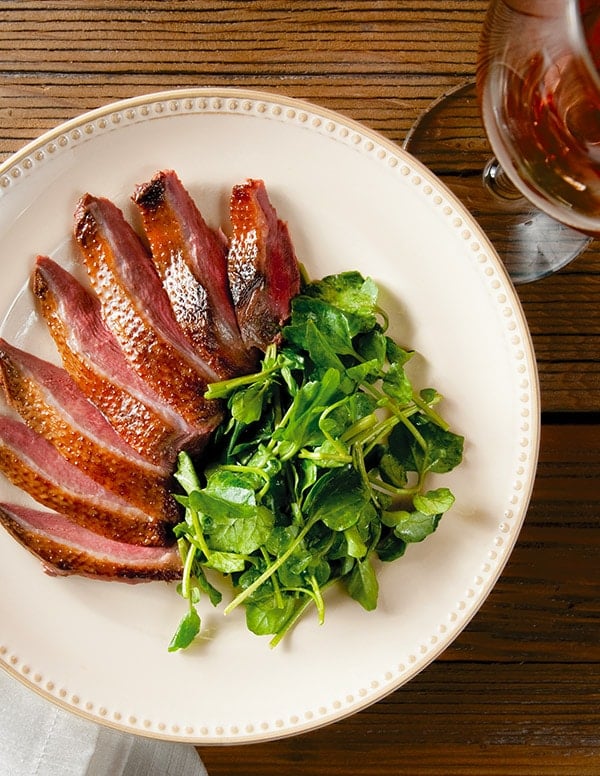
Smoked duck is my favorite way to save our hunting season’s bounty for the warmer months.
Holly and I spend most of our winter days hunting ducks and geese, and we eat them several times a week over the winter months. In that time I do a lot of preserving: Mostly confit, salami, cured goose “prosciutto.” But I will also smoke duck and goose and freeze them for the rest of the year.
Those who know their way around a smoker know that fat is a critical element in the process. Fat absorbs the smoke’s flavor better than the meat itself. This is why you see lots of recipes for smoked pork and salmon; both are fatty animals. So are waterfowl. Domestic ducks and geese are essentially avian pigs, and even wild ducks will have enough fat on them to make it worth some smoke time.
I smoked a flock of ducks and geese to get to this post, so here are my thoughts on what to do, and what to avoid.
For starters, if you are using domestic ducks and geese you will want to remove as much of the fat inside the body cavity and around the neck as you can. Save it, though, and render the duck fat for cooking later.
You will want to prick the skin of a domestic duck or goose all over with a needle — be careful not to pierce the meat, though. This helps rendered fat escape. I’ve even done this on fat wild ducks such as pintail and gadwall that had been gorging themselves on rice.

If you have wild waterfowl, follow these guidelines:
- Don’t smoke sea ducks, divers or shovelers you think might be fishy. Smoking will not help you. Skin these birds and do something else with them.
- Avoid smoking snow geese or any other wild bird that is über-lean; you need some fat to make this work. Even a little is OK.
- Only smoke plucked birds. Remember, the smoky flavor lingers in skin and fat far more than meat. If you smoke a skinned duck it will be more like jerky and less like a proper smoked duck.
- Smoking whole birds give you better results than pieces. Smoking a whole goose or duck will keep the meat more tender and juicy.
- Big ducks smoke better than small ducks, although there is no reason you can’t smoke a teal.
To brine or not to brine? I’ve done both. If you want to eat the smoked duck for a Sunday dinner or whatnot, you can skip the brining — unless your duck is pretty lean, in which case the brine can help the meat stay moist. But brining a duck, especially if you use pink salt, will help preserve the bird longer in the fridge and will let you smoke it longer without drying out the meat.
So, if you choose to brine, do this:
- Mix 1/4 cup kosher salt with 4 cups water and submerge your duck in the fridge overnight.
- If you want to cold-smoke (below 90°F) or smoke for a very long time or if you want that pretty pink color, add 1/2 to 1 teaspoon of pink salt, sodium nitrite, a/k/a Instacure No. 1.
- When your duck is nicely brined, take it out of the water and pat it dry. Set it in a cool, drafty place for a few hours to dry out a bit. If you want to go the extra mile, put a fan on the ducks. After it is dry, then you can smoke it. if you skip this step and put a wet duck in the smoker, the smoke will not adhere as well to the skin or meat of the bird.
If you are skipping the brine, simply pat the duck or goose dry, let it dry out for a few hours and salt it well before smoking.
As for flavors, I am in love with the combination of smoke, duck, salt and maple. And not just any maple: I prefer the thick, super-premium maple syrup from Blis, which you can buy online. If you don’t want to bother with fancy syrup, boil down regular maple syrup by half; it’s close, but not the same. I need no other flavors in my life, but honey would be good, as would a Cajun rub, something vaguely Indian, chiles, French quatre epices, etc. Use your imagination.
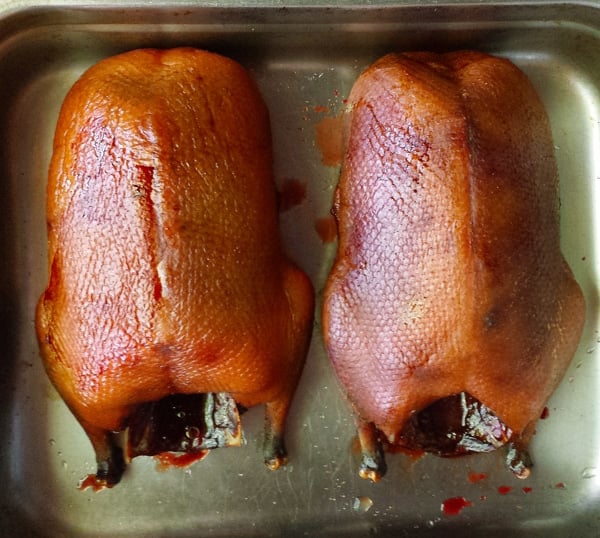
Wood is another choice you will need to make. I am a big fan of fruit or nut woods, like apple, pecan or walnut. Oak is OK, mesquite too weird.
How you place your duck in the smoker doesn’t really matter. I’ve stood them on end like a beer can chicken, with a glass jar jammed up its butt, and it worked well. But I’ve also just set the duck down on the rack, breast side up, and it went fine, too. You will always need a drip pan under the birds, as they will drip fat.
Your final issues are temperature and time.
If you plan on serving the smoked duck for dinner, go with a hotter temperature, between 250 to 275°F. This renders fat pretty well and gets you closer to a crispy skin. As for time, I prefer 2 1/2 to 3 1/2 hours at this temperature.
To crisp the skin, get your grill or oven ripping hot — 500°F or so — and put the ducks in with a drip pan underneath for a few minutes, until the skin crisps. Check after 5 minutes, and in no circumstances let the ducks or geese sit in this temperature more than 15 minutes.

If you want to have a traditional smoked duck, served cold as a luncheon meat or as an appetizer, keep the temperature closer to 200°F, and not hotter than 225°F. This will still render some fat, but will not crisp the skin — duck skin will lose its crispiness anyway once you put the cooled duck in the fridge. As for time, at least 3 hours and up to 6 hours. If you go to the long end of this scale, you will need the pink salt.
Allow the duck to cool before carving. Sliced thin and on the diagonal, smoked duck is fantastic as part of an appetizer plate or in a sandwich. You can also carve a whole breast, sear the skin side in a frying pan until it crisps again, and serve it with lentils or polenta. Again, use your imagination.
And for God’s sake save that carcass! It becomes the base of some of my all-time favorite soups, from smoked duck soup, to classic North Dakota knoephla soup, to a German duck broth with dumplings.
Smoked Duck or Goose
Ingredients
- 1 large duck or small wild goose
- Salt
- 1/4 cup thick maple syrup
Instructions
- Salt the duck well inside the cavity, then paint the outside of the bird with the maple syrup. Salt the outside well.
- Set the bird in your smoker with a drip pan underneath. Smoke between 200 and 225 degrees over apple wood for 4 hours. Baste the ducks with the maple syrup every hour. When smoked, allow to cool completely, then carve. Serve cool or at room temperature as a cold cut or appetizer, or carve the breast whole and sear in a pan. Slice and serve with lentils.
Nutrition
Nutrition information is automatically calculated, so should only be used as an approximation.



What’s pink salt?
Hank,
We smoked a bunch of goose yesterday. How long will it keep in the fridge?
If I freeze it, when we’re ready to eat do I just thaw and serve (I like it chilled or even room temperature).
Sweet! We served duck for a pre-Thanksgiving dinner party and I ended up braising them in mulled cider, then roasting a bit for crispy skin. It worked, but I really want to try them smoked next.
Mark: Yes they do! One smoked duck carcass has become a required ingredient in my wild duck stock these days…
Not only is this smoked duck fantastic (thanks again for the tips on this technique with my wood ducks), the carcasses make amazing stock.
That’s killer. Just another thing that makes me wish I lived outside NYC. I’d follow your blog and hunt and smoke stuff. happy new year’s.
I love smoked duck … my absolute favourite way to do them though is to brine the breasts exactly how I’d brine pork for ham and hot smoke them with a simple rub of salt and pepper with a drizzle of maple syrup.
Dan: I am talking about excess fat, from morbidly obese domestic ducks or fat pintails and such. You’re right – you want a nice layer of fat on the bird, but all that body cavity fat and the fat on the neck is too much.
And on domestics, you want some of the body fat to render out because they are just so damn obese….
Hank. Why is it so important to remove the fat? Isn’t fat what holds the smoke flavor?
Thanks. I am just always worried about overcooking and getting the livery taste. I will be smoking a Pintail, Gadwall, and Spoonie today that we got at Sacramento NWR on Wed. for a New Year’s Day party tomorrow.
Bob: I am not really worrying about internal temperature with this method, because even at 200 degrees a 3-hour smoke will cook the bird to at least 150 degrees internal – pink but cooked. The longer smoke times are more for piling on smoke flavor than for cooking.
Hank,
When you are smoking for the slower low temperature version, what internal temperature are you trying to achieve? 3-7 hours is a pretty big window.
Great tips, dude. I now know why my skin didn’t get all crispy last couple of times I’ve tried smoking.
A few nights back, I smoked up a mallard, a cannie and a speck the other day for me and a buddy for dinner. The cannies were heavenly, though the other two were good. The best part, however, was the leftovers. I chopped the meat up cold and mixed it in with red-leaf lettuce, a homemade balsamic vinaigrette and some salty green olives.
Pure bliss.
Just finished smoking a mallard and a wood duck with this recipe. I used both cherry wood and pecan hulls for the smoke. Modified the glaze and used about 1/4 maple syrup and the other 3/4 boiled cider. Fantastic! Looking forward to cooking the carcasses down into stock. Thanks for the inspiration.
Steve: I generally use a half teaspoon of pink salt and it works fine in a brine. And I shot a ringneck just this morning! Only here in California they are never so fat and lovely as they are in the Midwest.
Rachel B and Diana: I use a Bradley Smoker, so I use wood pellets for it. When I used to smoke with logs, I’d start a fire with charcoal, then add a few branches of apple or nectarine or almond wood at a time. You want smoke, but not a raging inferno of heat.
Steve: Absolutely. Smoked turkey is awesome, but be sure to brine it first – less fat.
Bob: The legs come out nicely done! Still a little red, but tender. It’s the long smoke time that does that, I think.
Which smoker do you use? I have never bought one, but a vendor at the farmer’s market sells a whole duck and I’d like to try your recipe.
I smoke ducks unbrined, salted the day before, left to dry in the fridge overnight, seasoned simply with salt and peppers and some aromatics on the inside. I let them cook until completly tender throughout at about 215-225 for around 5-6 hours. I dont mind eating the overcoked breast because they stay moist. My question is how do the legs come out with your preparation? The breast looks great in your pic though. Cheers
This sounds wonderful. Could you smoke a turkey? We have a turkey awaiting harvesting and I’ve wanted to smoke it. The last one was 40 pounds and this will push 30. I was thinking the longer smoke would be a nice way to savor this bird.
My husband and I disagree on the amount of wood you use to smoke with. How much do you use?
Just a couple of suggestions: I would lean strongly towards only a half teaspoon of the Pink salt. A little goes a long way, but then I start with a gallon of water. I would also brine it a lot longer if it was a bigger duck.
Good Lord, I am salivating at my desk! Smoked duck is close to heaven!
Here in the Midwest, we get a small ‘diver’ that still goes to puddles called a ring-bill. They are obviously coming from north of us; they are well fed, easier to pluck, snowy white skin with no pin feathers, and a consistent layer of fat that makes them a favorite.
But I will also pluck a teal and be perfectly content. There are not many ducks better than these little morsels!