For me, the idea of a perfect dessert is a bowl of fresh summer berries, covered in sweet cream. I am not a fan of cake, sweets don’t send me, and the concept of a composed dessert has always been alien to my way of thinking. When I watch the antics of the chefs on Top Chef: Just Desserts, I do more eye-rolling than note-taking.
Leave it to a savory chef to change my ways. Paul Bertolli is a chef I admire deeply, and his thoughts on pasta, on charcuterie and on food in general have been hugely influential on my own culinary journeys. His book, Cooking By Hand, is a prized possession, and I chose Rodale as the publisher of my book because I would get to work with Pam Krauss, who was Bertolli’s editor on his book. Cooking by Hand is mostly a savory cookbook, but one of its many relevatory chapters concerns desserts.
If you are to design a perfect menu, Bertolli says, you start with dessert: It is the last thing your guests eat before they leave. Dessert is a punctuation mark on a meal. A master creates a memorable dessert, then works backward. One key is to ensure that the flavors in the dessert work with what has gone before. Another is to make sure the portions of all your earlier courses are small enough so your guests are still hungry for dessert — this is where most restaurants fall down. The split between sweet and savory in most kitchens almost always ensures that dessert is an afterthought: Savory chefs are so eager to please they kill you with food, leaving you reeling when it’s the poor pastry chef’s turn to shine.
It was with these thoughts in mind that I designed a six-course dinner party for my friends last weekend. The dishes ranged from wild game consomme to Spanish shark with pine nuts and tomatoes, to wild foie gras and crispy duck tongues (more on those later). Of all that, the dessert was what most excited me. It was a total experiment, and it worked.
The dessert is inspired by one I saw in Chef Rene Redzepi’s NOMA: Time and Place in Nordic Cuisine. I’ve written about how much I love this book before, and, now as then, I completely altered the ingredients to suit my time, and my place. I call this dessert Icehouse, after the area in the High Sierra where I found almost all the ingredients.
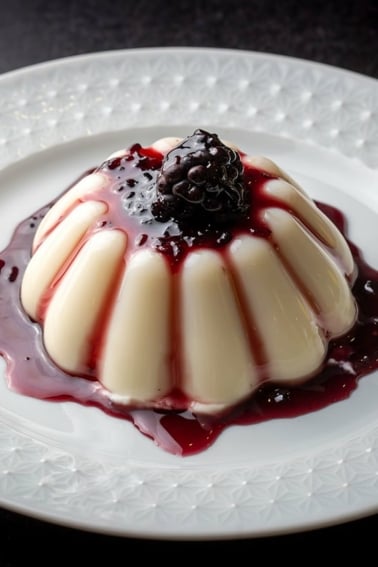
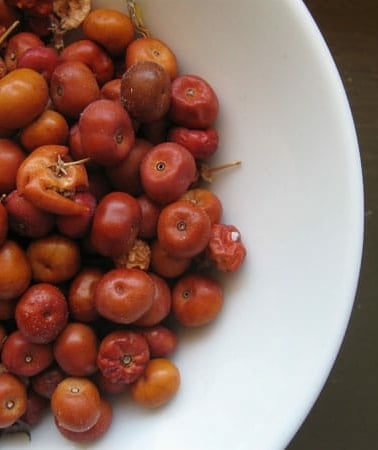
Icehouse is this: Elderflower ice cream, elderberry-buttermilk sherbet, Sierra red currants (ribes cereum) and a brioche made with acorn flour and manzanita sugar (more on that one later, too). It is dusted with dried mountain pennyroyal (monarda odoratissima), a kind of mint.
The dessert is many things at once. Uber-creamy elderflower ice cream, which is an absolute dream, tangy elderberry-buttermilk sherbet, the tart-sweet currants, which have a sweet-funky aroma a little like highbush cranberries, crunchy-soft broiche (the cubes are fried in butter), and a final zing from one of the most powerful wild mints I’ve ever eaten.
I am writing about this dessert not because I expect anyone to actually make it — it is virtually unrepeatable outside my part of Northern California, although you could make pieces of this dish elsewhere (and the elderflower ice cream recipe is below). I am really writing about it to push those of you who cook to make food that speaks of your time and your place. New and wonderful ingredients are all around us. All we need to do is look for them…
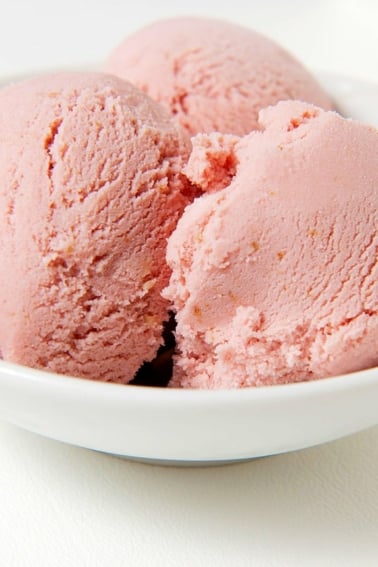
elderflower ice cream
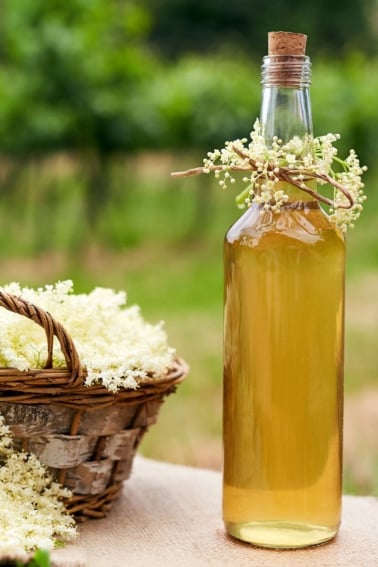
Elderflower ice cream is a subtly flavored ice cream that you have to smell to really appreciate. It is equally good with fresh or dried elderflowers, although if you use dried elderflowers you should make sure they are not too old — old flowers begin to smell musty. I also add a little elderflower syrup, too, but you can skip this if you want.
Make sure that if you use fresh elderflowers to remove all the stems. Most dried elderflowers already have their stems removed.
Makes about 1 quart
Prep Time: 12 hours, most of it inactive
Cook Time: 20 minutes
- 2 cups heavy cream
- 2 cups whole milk
- 1/2 cup dried elderflowers, or 1 cup fresh
- 1/4 cup elderflower syrup (optional)
- 3/4 cup sugar
- 4-5 egg yolks
- Heat the cream, milk, sugar and elderflowers in a heavy pot set over medium heat. Bring to 160 degrees — steaming, but not simmering — and turn off the heat. Stir in the elderflower syrup, if using. Cover and allow to cool to room temperature, and then pour into a container and allow to steep overnight, or at least 6 hours.
- Pour the cream mixture back into a pot and bring back to 160 degrees. Put the egg yolks into a bowl and get a whisk and a ladle. Temper the eggs by slowly whisking in a ladle of the hot cream mixture, then another. Pour the tempered egg yolks into the cream mixture and allow to heat for 5-10 minutes. Do not let this simmer.
- Strain through a fine-meshed sieve and cool once again. Pour into your ice cream maker and follow its directions.


I love Paul Bertolli’s book, Cooking by Hand. It’s nice to see you write about dessert. For some chefs, it seems that dessert is an afterthought. When I dine out, it makes me so sad to end a beautiful meal with a crappy dessert. Your Icehouse dessert looks fantastic! Thanks for sharing it.
Dessert is most definitely not an afterthought for me
.
Is that a monardella? It’s got the same popcorn-like flowers but different looking leaves to the ones down here…
And also, I couldn’t agree with you more about using what’s local. Not just going to farmers markets but using what’s under our feet. It’s important. In so many ways.
I live right down the road from Icehouse and Desolation Wilderness. I would be very much interested in knowing all the recipes for this dessert. I was intrigued by your use of Madrone bark, especially since there’s a huge grove of them within walking distance from my house. Needless to say, I already have my modified milk jug for harvesting!
Great post Hank.
I’m curious, would older elderflowers work with a reduced port syrup?
(I’m rooting for you on your mondo readtrip!)
oh they’re currants! at first pass I thought they were those nasty maraschino cherries uhh huh huh huh huh (that’s involuntary shuddering).
your dessert looks yummy, and the dinner menu sounds pretty awesome, too.
Mmm. This looks wonderful!
Wow, nice dessert. The Sierras are special, for sure.
I’m in awe of Shaw! I thought I was so “eat local” this week by making three kinds of pestos from stuff from my backyard garden…but you are the real deal! I need to take a foraging class and figure out what I have in my own wooded NJ rural area so I can grow up and be like you! THANKS…love your posts.
Is that what that stuff is? Pennyroyal. I was hiking up aove Highland Lakes the other day and the aroma was overwhelmingly fresh minty and indescribably appetizing. Ken
Oh, wow! That looks so good…sounds so good. Very inspiring!
I too am not a dessert person…but this sounds great! I love fresh colorful light desserts and would love to scoop into this one! Well done.
holy cow! “icehouse” as in between placerville and tahoe? I’m very impressed! I live only 20 minutes from there, and am going to try to re-create this dessert with some foraging of my own! thanks!
Dinkey Creek wilderness was full of Sierra currants this year. During mountain spring time there are tiny plants that look like miniature onions, but smell strongly like garlic. I tried them but somehow the taste didn’t convince me. But I often find minty plants of great smell. Just not sure if I can use them. Tea would be simple. Do you have a recipe for collecting a set of plants to get a nice Sierra herbal tea? I assume currant leaves could be used if they are any similar to European.
Love the photos on this post, Hank. Currants are some of the most underrated fruit — thanks for showing them off with your Icehouse creation.
Wow. That’s just stunning, both visually and conceptually.
Rebecca: Yep, that’s monardella.
Desiree: Well, you have the elderflower ice cream recipe here, and the elderberry sherbet recipe is dead simple: Equal parts elderberry syrup and buttermilk, put into an ice cream maker.
GregK: I don’t think elderflower and Port goes together. I’d use a white sweet wine instead. Maybe a white Port…
IF: I would make an herbal tea from the pennyroyal.
I used to work for Paul Bertolli. He’s a magnificent mind, and a lovely man. It still stands as one of the most wonderful times of my life, in his kitchen. Although, we cannot discount Paul Canales, who was at the helm during the writing of the book along with Bertolli. The two of those guys together in the kitchen…you have a serious force to be reckoned with. It does not surprise me that his book is an inspiration to you. They both remain an incredibly strong inspiration to me, even though I am no longer cooking professionally.