Bulrushes and Flyway Fried Rice

Apr 3rd, 2011 | By | Category: Asian, Ducks and Geese, Foraging, Recipe | Comments | 10 Comments |
edible bulrush shoots

Photo by Holly A. Heyser

Cattails, called the “supermarket of the swamp” by many foragers, aren’t the only water reed worthy of a place in the kitchen. Scirpus acutus, the common bulrush or tule, is also almost entirely edible. Like the cattail, it’s roots, pollen and seeds can all be eaten, although they’re not quite as good as those on a cattail. But bulrushes are superior in one respect: their young shoots.

I’ve been playing around with cattail and bulrush shoots for a while. It only seemed natural considering that Holly and I are surrounded by them all winter long during duck season. Nice to know that even if we don’t shoot any ducks, we can still come home with some food.

edible bulrushes

Photo by Hank Shaw

Look for smallish bulrushes among the dead reeds from the previous year. They can be collected as early as January in Northern California, and as late as June in the Northeast. Reach down to the muck where the shoot springs from the plant’s creeping rhizome (which would be a great name for a band, don’t you think?) and pull straight up: The shoot should pop right out, sometimes with a little bit of root.

The shoots get stringy and fibrous the greener they get, so cut off all but the lightest green part; the shoots will oxidize a little at their edges, so keep lengths a little longer than you need so you can cut the brown parts off once you get back to the kitchen. Always wash the shoots well, as you don’t necessarily know how clean the water was where you pulled your shoots — and don’t pick from areas that are obviously polluted or stagnant.

A bulrush shoot is made up of long, water-filled vertical fibers that run straight up the shoot. This is what makes them strong enough to weave into boats and baskets, which is how the Indians used tules. Once the reed matures, no amount of chewing will get through it, so you really only want the first 3 inches or so of the shoot.

You can eat them raw, although there is an odd tannic, felty thing going on with them that makes a raw bulrush shoot feel a little like you’ve eaten some foam packing popcorn. Not pleasant. But, cut bulrush shoots into 1/4 inch or even 1/2 inch thick cylinders and stir-fry or saute them, and they become lovely. Do not cook them more than a few minutes, or they will release their internal water, flatten out and become tasteless.

Cooked shoots taste a little like bamboo shoots. They are crunchy, refreshing and bland, tasting a little like watery cucumber. There is a whiff of sweetness to bulrush shoots, too. Is this a food to center a meal on? Maybe, but I think the shoots are far better as back-up player in a larger dish.

So… what sort of larger dish?

The inspiration hit me all at once: Bulrushes live in marshes. What else lives in marshes? Ducks! Ducks love marshes, and we have lots of wild duck in the freezer. What else lives in marshes? Wild rice does! And I happened to have a small amount of real Ojibwe wild rice my friend Chris gave me.

So began what I first called Swamp Fried Rice, but which Holly rechristened Flyway Fried Rice. Her name sounds more appetizing, I think.

wild duck fried rice recipe, done with wild rice

Photo by Holly A. Heyser

If you have never cooked with real hand-harvested, hand-parched Indian-style wild rice, you have never really eaten wild rice. This stuff is magical, and bears only a passing resemblance to the typical wild rice you can buy in the store — most of which is cultivated, mostly grown in California, not along the Great Lakes where it is native.

Real wild rice is lighter in color, lighter in flavor, cooks twice as fast as regular wild rice and has a mouth feel closer to basmati rice than it does to cultivated wild rice. It is expensive, at about $13 a pound, but it is worth every penny for special occasions.

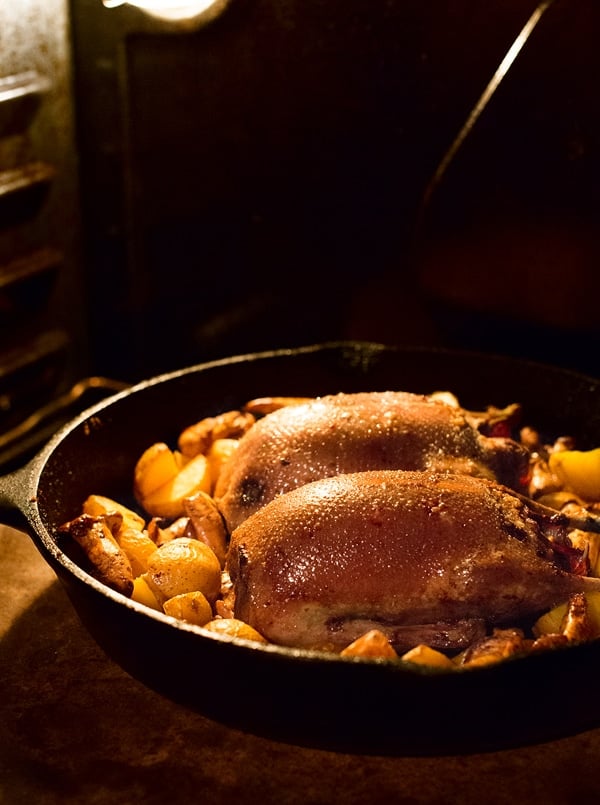
So I cooked the rice in some homemade duck broth, then spread it out on a sheet pan to cool. This would become the basis of the fried rice. I knew I would fry the rice in wild duck fat, and add thinly sliced duck breast to it. The bulrush shoots I’d slice into 1/4-inch cylinders.

What else? Duck eggs! A pair of duck eggs scrambled in duck fat sounded perfect; I love eggs in my fried rice. Add to that some chopped wild onion I’d found in the Bay Area the week before, wild black walnuts for crunch, some native California white sage from my front yard, and a little dried chile — chile peppers are native to the Americas, after all.

The dish came together beautifully, only it needed… something. Acidity. So I “cheated” and used some lemon juice from our backyard lemon tree. Without the lemon juice, everything tasted good. With the lemon juice, however, Flyway Fried Rice is an absolute triumph. One of the best dishes I’ve made in months. A definite keeper. 

I am still bothered by the fact that I needed to go outside North America for a component of the dish; lemons are native to Persia. What did the Indians do for acidity? I did a little research and it seems that northern Indians fermented maple syrup and let that become vinegar — real maple vinegar! Then Holly, who has really been a on a tear lately when it comes to good ideas, suggested that this fall I gather lots of wild grapes, ferment them and make a real California wild vinegar. Bingo! Already have that project down on my calendar…

fried rice with wild duck and wild rice recipe

Photo by Holly A. Heyser

fried rice with wild duck and wild rice

Making this dish exactly as I did will not be easy. Unless you are a forager and a hunter, don’t even try. But you can make something very close with a combination of regular supermarket ingredients and a few things bought online. The one thing you will really want to seek out is the hand harvested wild rice. Yes, you can use regular wild rice, but it is very different from this stuff. You might also want to buy duck fat, as it adds a lot to the flavor.

I designed this dish for wild duck and wild goose, but you could do it with domestic duck or goose breast, too.   

Have everything prepped and ready to go before you start, as this recipe comes together very fast.

Serves 4.

Prep Time: 45 minutes

Cook Time: 10 minutes

  • 2 cups wild rice
  • 1 quart duck broth, beef broth or water
  • 3 tablespoons duck fat, butter or oil
  • 2 duck eggs, beaten
  • 1 pound duck breast, sliced thin
  • Salt
  • 1 cup bulrush shoots or bamboo shoots, chopped
  • 1/3 cup black or regular walnut pieces
  • 2-3 dried hot chiles
  • 1 tablespoon white sage or regular sage, chopped
  • 6 large wild onions or green onions, chopped
  • 1 tablespoon lemon juice

  1. Cook the wild rice in the broth or water until it is tender, then drain (you can reserve the broth for something else), spread out on a cookie sheet and let cool.
  2. When the rice is cool, heat the duck fat in a wok or large saute pan over high heat for 1 minute. Add the beaten egg and stir it around constantly until it sets. Shred it in the wok as it cooks.
  3. Add the duck and stir-fry 2 minutes, then add the rice, bulrush shoots, walnut pieces, chiles and sage. Sprinkle salt over everything and stir-fry 1 minute. Add the onions and stir-fry 1 more minute.
  4. Turn off the heat and toss in the lemon juice. Serve at once.

More Duck and Goose Recipes

Tags: , , , , ,
Print This Post

________________


Subscribe to comments for this post

10 comments
Leave a comment »

  1. Creeping Rhizomes–brilliant name for a band! The rice sounds amazing, and I’m glad you didn’t go with the swamp fried rice title…although it also has potential as a great band name.

  2. Hmm, I wonder if you could pickle bulrush something like menma ( http://en.wikipedia.org/wiki/Menma ). Or even a simple vinegar pickle like one often sees with asparagus and green beans.

  3. Other than the real native wild rice, I think I have all the ingredients for this within about a block of my house. Score!

    Did you like cooking with those wild onions? I still have some in a vase on the counter – they’re so pretty with their delicate white blossoms, and seem perfectly happy just hanging out in water (even though it’s been nearly a month)! Our walking onions are coming up like crazy this year, too.

    I am going to be gathering a lot of wild grapes this year. I meant to last year, but life happened and we never got out for them. I’d never thought of making vinegar from them – I look forward to hearing how it turns out!

  4. Thanks for the overview of bulrush shoots Hank. That definitly confirms my experience with them. They do taste vaguely cucmuber-like when raw. Now I need to use them in a dish.

  5. I’ve got some mallard fillets in the freezer (traded for chanterelles) that have been waiting for a recipe like this. Doubt I’ll use the cattails along Lake Washington, though. They’re probably fine, but I’m picky when it comes to aquatic plants and water quality. Thanks for the inspiration!

  6. I wish your site had been around when I was in College. I had a spring Natural History course that involved plant identification. Our final was to create a wild foods potluck, each bringing a dish. We had to forage everything, including spices. We could use no additional ingredients. I think the deal was if we lived through the meal, we passed the class. I remember how hard it was to find recipes at that time. There were maybe two wild food publications in print.
    That meal was one of the best I have ever had in my life. The thing that really stands out was how terrible cattails were. I swore I would never eat them again. Seeing your post makes me realize that we probably had not harvested or cooked them correctly. They were as you described quite stringy. The next time I get back to Wisconsin I will have to give this recipe a go.

  7. I love when you do dishes that feature foraged foods. I got the book “Stalking the wild Asparagus” but I’m so busy here on our hobby farm that I never got to read it all. I feel like I learn so much from you. Around here (used to be a swamp) every housing division has a drainage area just PACKED with cattails. I think the McWives would look askance at me delving through the mud picking at the rushes, but who knows. I may just do it anyway one of these days. :)

  8. This sounds just wonderful. I am not sure we have ever come across bulrush here in southern Connecticut, but broadleaf and narrowleaf cattail are very common and we love the tender shoots. I did make some grape vinegar “by accident” one year while attempting peasant wine- without added commercial wine yeast.

  9. I don’t know if you have sumac in California, but some of the berries swished in a little water can make a perfectly acceptable lemon substitute. Not the season for them now though, unfortunately.

    This dish sounds amazing!

  10. Hank, just out of curiosity, do you suppose this dish would work with burdock in lieu of the bulrushes? I don’t think they’re native to eastern NA, but we’ve got both wild and the cultivated varieties growing here. Realistically, my alternative would probably be canned bamboo shoots. Also, what would you say to smoking the duck breasts before preparing this dish? There’s a nip in the air here that makes me want smoked meat, and I usually prepare burdock with bonito flakes, which are also smoked. I think the subtle smoke adds a lot to kinpira gobo, but if you think smoked duck breast wouldn’t work, I’d welcome that feedback.

Leave Comment

*