Sassafras and Homemade Root Beer

Jul 4th, 2010 | By | Category: Foraging, Recipe | Comments | 41 Comments |
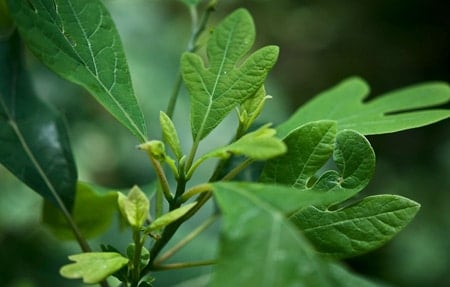
sassafras leaves

Photo by Holly A. Heyser

On Independence Day, what better wild ingredient to feature than Sassafras? The aromatic bark, leaves and roots were believed to be the first plant exported from North America to Europe, back in the late 1500s. All parts of this little tree make for delicious — and different — teas, sweets and other confections, and sassafras commanded exorbitant prices in Europe… until everyone started drinking sassafras tea to cure their syphilis. Soon no one wanted to be seen sipping their syphilis cure in public, and the sassafras trade withered. 

More recently, sassafras has been getting a bad rap by the folks at the USDA, who say that the active component of sassafras, safrole, is a “known carcinogen.” Why? They gave tons of pure safrole to rats and they got cancer. Later researchers noted that, like the whole saccharine scare in the late 1970s, safrole seems to cause cancer in rats — but not people. 

Still, many people still think that sipping sassafras tea or eating sassafras ice cream will doom you to a date with your oncologist. Just know that there are many times more “known carcinogens” in a bottle of beer than there are in any homemade sassafras product you might make. By one calculation, you’d need to drink 24 gallons of sassafras root beer a day for an extended time to get the amount of safrole fed to those rats. And if you drank that much soda, you’d have lots of other problems to deal with…

Armed with that knowledge, I was determined to collect some sassafras on our recent trip to New England. As we were walking around Cape Ann, I soon spotted the telltale mitten leaves of the tree. Sassafras is unmistakable: It is a spindly, shrubby tree that lives beneath larger trees. Its upper bark is green, and the leaves come in three varieties, often on the same branch — a mitten, a three-lobed leaf, and a simple spear-shaped leaf. 

Photo by Holly A. Heyser

The way you collect sassafras is to pull seedlings right out of the ground. I know, it sounds destructive, but it isn’t. Sassafras grows in clumps, and the parent tree sends out suckers under the ground, which then become seedlings; it’s a lot like mulberry. You find a clump — look for at least 8-10 treelings scattered about — go to one about 2-3 feet tall,  grasp the very base of the tree and yank it straight up. You should come away with the seedling and about 10 inches’ worth of the root. 
You did not get all of the root, you know, and this is a good thing. It will regrow later. So what seems a little wanton is actually good for the sassafras cluster — it lets the surrounding seedlings grow with less competition. 

All parts of this tree are useful. Notice I did not say “edible,” because the leaves are the only part you actually eat. You know them as file powder, and without sassafras leaves your gumbo would not be gumbo. 

I left the leaves of the seedlings I pulled with my sister and brother-in-law. They can make either tea or file powder from them. I took the twigs and roots back to California. 

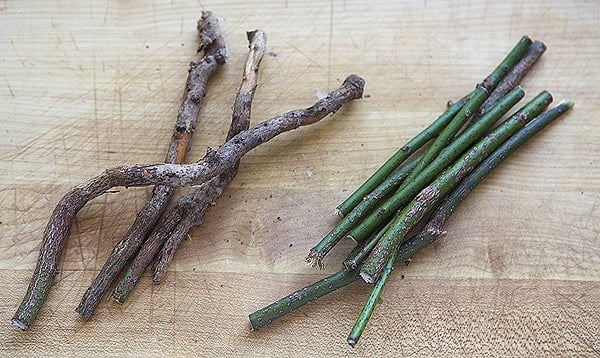
sassafras twigs roots

Photo by Elise Bauer

What’s the difference? They make very different teas. The twigs have a lemony-floral flavor and aroma that one author has compared to Froot Loop cereal — not exactly a selling point in my book, but they are lovely. The roots, however, are the “root” in root beer. 

I am not a tea drinker. Coffee is my breakfast drink of choice. So I was not about to switch for sassafras. But I do like using flavored syrups from wild ingredients; I recently made a delicious fir tip syrup from the young tips of a Douglas fir tree. I then use these syrups to glaze meats, make homemade sodas, sorbets or ice creams. Sassafras is a prime candidate for this treatment. 

So the first thing I did was chop some twigs, peeling back the green bark a bit to expose it — the bark is what has most of the flavor — then simmered them in hot water. The brew quickly turned a pretty amber, a little like cola, if you mixed it half-and-half with water. I let it steep overnight and then strained it through cheesecloth and mixed it 50-50 with sugar to make a simple syrup. It was outstanding. I mean, really outstanding. Think root beer with a lot of lemon in it. 

Here’s how to make sassafras twig syrup

That was easy enough. But what I really wanted to make was homemade root beer. Root beer is my soda of choice, although I am also a big fan of good ginger ale. And I know how to make root beer at home, and it traditionally involves yeast and a small amount of alcohol — that’s the “beer” in root beer. I did not want to do this. Homemade ginger ale and root beers made with fermentation are tricky. I wanted a stable, non-alcoholic base flavoring I could then make into a soda by adding seltzer water. 

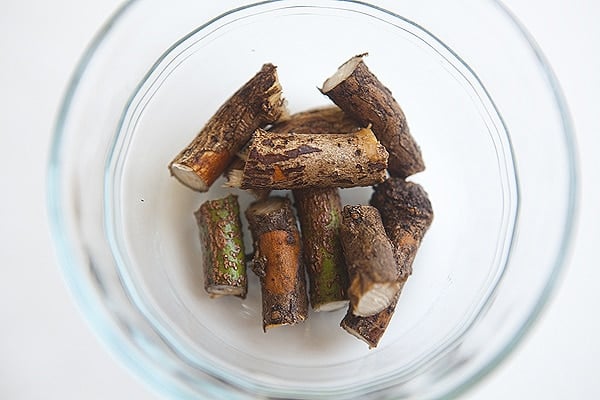
The first thing I knew I needed was to chop the sassafras roots. 

sassafras roots

Photo by Elise Bauer

But root beer is not just sassafras, it is a concoction of many things. So I began poring through my old cookbooks, and on the interwebz for recipes. So many variations! After reading and reading, I decided to just go with things that a) were in lots of the recipes, b) I knew I liked, and c) we had available. 

I went heavy on the sassafras roots, plus some burdock root (it’s actually in a lot of the recipes!), molasses for color, one clove, a star anise, some coriander seed and one drop of peppermint extract. I’d wanted to use wintergreen but could not find it, and, while I thought about using some of my toothpaste, I thought better of it… 

I boiled the tea, strained it, then added the sugar to make it into a syrup. With some trepidation I sipped a spoonful. Holy crap! It actually tasted like, like… root beer! Maybe not the root beer you get in a can now, but then that no longer has any real sassafras in it. This was warm, and zingy, and, well, deliciously rooty! 

If you live near sassafras trees — and you do if you live east of the Great Plains, south of Quebec and north of Orlando — by all means make this syrup. If you don’t live there, or don’t feel like foraging, you can buy sassafras root bark online. You’ll never go back to store-bought root beer again. 
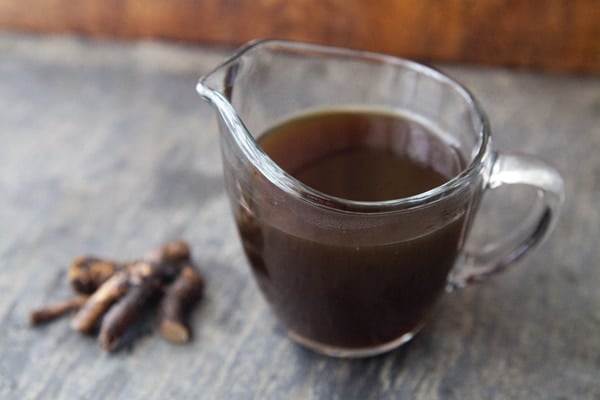
homemade root beer syrup

Photo by Elise Bauer

HOMEMADE ROOT BEER SYRUP


Now I know this is not a traditional root beer. Traditional root beer is brewed with yeast, is mildly alcoholic — and can be tricky to make. This recipe will give you a root beer flavored syrup that tastes amazing, is stable in the fridge for a year, and needs only seltzer water or club soda to become a wonderful homemade root beer.

You will need some unusual ingredients to make this, notably sassafras roots. If you happen to live in the United States east of the Great Plains, you are in luck: Sassafras grows everywhere in that region. If you don’t live there, or don’t feel like foraging for your own sassafras, you can buy sassafras root bark online.

The burdock in the recipe grows all around you, or at least a cousin of it does. It’s called curly dock. Use it if you can, as it’s free. Otherwise, many good supermarkets have burdock in the produce section: They are long pale, skinny roots often sold under their Japanese name “gobo.” If you absolutely cannot get your hands on burdock, skip it. The root beer will be different, but still fine.

If you can find it, get wintergreen extract. If not, use peppermint extract.

When you make your root beer, start with a tablespoon of this syrup to a pint of seltzer water. You can adjust the strength of your drink from there.

Makes 2 quarts.

Prep Time: 5 minutes

Cook Time: 25 minutes

  • 6 cups of water
  • 3 ounces of sassafras roots
  • 1 ounce of burdock root
  • 1/4 cup molasses
  • 1 clove
  • 1 star anise
  • 1 teaspoon coriander seeds
  • 2 drops wintergreen extract or peppermint extract
  • 6 cups sugar


  1. Chop the sassafras and burdock roots into small pieces, about 1/2 inch or smaller.
  2. Put the roots in a medium-sized heavy pot with the clove, star anise and coriander seeds and cover with the water. Cover the pot and bring it to a boil. Simmer this for 15 minutes.
  3. Add the molasses and simmer another 5 minutes.
  4. Turn off the heat and add the wintergreen or peppermint extract. Put the cover back on the tea.
  5. When the mixture cools, strain it though cheesecloth to remove any debris.
  6. Return it to the pot with an equal amount of sugar. Stir to combine. Bring it to a simmer and cook it for 5 minutes, uncovered. Pour into quart mason jars and seal. Keeps a year in the fridge.

More Sweets and Syrups Recipes

Tags: , , ,
Print This Post

________________


Subscribe to comments for this post

41 comments
Leave a comment »

  1. [...] kill someone with an unexpectedly poisonous leaf—Hank Shaw at Hunter Angler Gardener Cook has a homemade root beer recipe on [...]

  2. I wish this was kicking about here, but sadly, I do not live where you describe. Those photos of Elise’s are fan-tastic!

  3. I never knew file powder was just sassafrass leaves dried. you learnt me yet again. :)

    This was a very informative post and I’m excited to try the recipies. I’m going to have to try to find a tree (or a few) to transplant near my house now.

  4. I just have to chime in here. This root beer that Hank made is OUTSTANDING. Really really really good. Hank made a batch at my house (hence the photos) and left me with a quart of the syrup. My dad came over later and I served him a homemade root beer with the syrup mixed with some soda water. He drank three glasses. Everyone I’ve served this to has looked up with amazement in their eyes at how good it is. I’m headed to Massachusetts in a few weeks and can’t wait to forage around for some sassafras so I can make this root beer for friends out there. If you have access to sassafras I highly recommend giving this one a go, especially if you’re a root beer fan.

  5. You can find sassafras in Central Park in NYC. I went on a foraging tour there and got to sniff a bit… I love the idea of root beer from scratch… perhaps in the interest of leaving the park its trees I will buy some… thanks for the recipe!

  6. That homemade rootbeer was crazy good, Hank. Now I just need to find a place that sells sassafras and burdock roots online.

  7. Kevin: You are too far north, sadly. But, you can buy it online. Or make cool stuff from up there. I just ordered a copy of a book about Canadian wild food called “The Boreal Gourmet.” Looking forward to it!

    Hettar: Good luck with the transplanting – lemme know if it works.

    Deana: You live in Jersey, right? It ought to be all over the Watchung Mountains, which isn’t too far from you. You might even find it at Palisades Park.

    Garrett: You’ll need to buy the sassafras online, but Whole Foods has the burdock.

  8. Amazing! Just found your site through a link on Simply Recipes, and I am loving your style.

  9. FYI: The FDA banned the use of sassafras oil not just for being carcinogenic, which I agree with Hank, anything in that large amount is bound to be carcinogenic including black pepper. But sassafras also causes liver damage which has been researched and found to be the safrole component of sassafras oil. http://www.ncbi.nlm.nih.gov/pmc/articles/PMC2504026/?tool=pmcentrez. This is an article that summarizes the research well, just scroll down to Sassafras oil. Then you can make an informed decision for yourself. I happen to be from Louisiana and make gumbo and thus use file powder (ground sassafras leaves). Using it now and again, I don’t consider to be that bad. But just be aware of the dangers before you drink alot of homemade root beer on a regular basis, especially if you have other risk factors for liver damage such as certain prescription drugs and heavy alcohol use.

  10. I’m really excited because I live in Massachusetts. I’ll be on the hunt for sassafras very soon. Thanks for posting this. I’ve been reading about the possible harm from them and you’ve calmed my fears.

  11. sgeddings: Thanks for the link, I read it and it is good information to have out there. But again, the poison is in the dose. The safrole in the essential oil of sassafras is the bad actor here. If you’ve ever tried to make an essential oil, you know that it often requires huge amounts — 100+ pounds is not uncommon — just to distill 1 ounce of essential oil.

    Now my root beer syrup recipe requires 2 ounces of sassafras root — not just the root bark, which holds most of the safrole — to make 2 quarts of syrup. That syrup is then further diluted, because you need only about 1 tablespoon to make a full pint’s worth of root beer. The mice were fed pure safrole. For me to get even within an order of magnitude of that dosage, I’d need to drink many, many gallons of my root beer every day.

    All this said, the Greeks are correct: All things in moderation.

  12. You know when I was a young girl ( I am 52 now) my Grandmother had us drink sassafras tea just about daily in the spring because she said it was a good tonic for the blood. Grandmother must of been right, we were healthy as can be as kids hahah. My Father would get branches but more often the roots as they are a bit more intense in flavor.
    Pam

  13. WOW, I never realized how hard times were in the Shaw household – having to resort to cooking up trees? Blimey..

    Seriously though, your blog is unique mate. I don’t know another site out there with such culinary diversity as yours. I am just wondering to get said ingredients up here in Seattle. I would love to give this one a try.

    Great photos by Elise BTW.

  14. Okay, I’m sold. I tried to do root beer the old-fashioned way, with yeast fermentation. Like you, I was astonished to find that my mix tasted just like root beer (we have sassafras and wintergreen on our property). Then the yeast ate the sugar and it tasted like really bad cough syrup. I’m doing it your way from here on in.

    Re: safrole. The first rule of toxicology is that the dose is the poison. All the research on safrole involves giving a great deal of it to rats. To draw conclusions about the the impact of the occasional root beer on human health is virtually impossible, but I’d bet we all do riskier things every day.

  15. I love all of this great info! I always wondered what was in root beer… now I know!

  16. Howdy Hank,

    Just brewed up the twig syrup from some trees in Maryland. Ironically enough, I’m spending this summer on the Sassafras River, so the syrup made sense. Made filé powder a little earlier in the year and had excellent results again. Thank you for maintaining such a wonderful blog on this kind of stuff.

    All the best,
    Nathan

  17. Wintergreen wild grows in the same area as sassafras.
    It’s a little hard to spot during the summer but once
    the undergrowth has turned brown in the fall it’s
    easy to spot. The leaves need to be dried before
    use, or so I’ve read. And the berries are eatable.

  18. That’s it! You’ve got to make Dr. Pepper syrup somehow. Keep blowing my mind.

  19. Wow my Bro used to bring it home to our apartment
    when we lived in Dinwiddie Co, VA…..1968.

  20. Wow! Thank you so much. I have a Sassafras tree and didn’t have a clue what to do with it. The yard of this house that we bought is full of useful plants, but the Sassafras had me stumped. We have children and it will be so much fun to make rootbeer for and with them. Thank you again. ?

  21. Hi Hank… I enjoyed this blog post and I had fun making the syrup with items purchased from Amazon. (There are no sassafras trees in Arizona!) For an alternative use for the syrup, check out my post for making Root Beer Marble Ice Cream. http://www.salvationsisters.com/2011/07/root-beer-marble-ice-cream.html

  22. My sister-in-law found another recipe and told me about it after she made a batch. I want to try this. Was wondering if it could be canned, or must it be stored in a cold place? I also learned about file’ during my research. I always thought there should be a use for the leaves. I remember chewing the leaves as a kid. I’ m originally from Ohio were sassafras grows good. It also grows where I live now. I have some on my property so I don’t have to look for it. Looking forward to try this. Glad it has a long shelf life uncanned.

  23. How much finished product does this base make? We usually make 5 gal. of finished product and keg it.

  24. Greenjeens7: It makes about 2 quarts.

  25. Thanks for the reply. I guess I misunderstood the recipe. I now see that it said 2 qts. My question now, is this 2 qts of concentrated syrup and if so how many gallons approx. will it make?

  26. Greenjeans7: Sorry, I have no idea – it all depends on how strong you like your root beer. I put about a tablespoon of syrup into my root beer, if that helps.

  27. Thanks, I’ll give it a shot and post the results!

  28. [...] roots for homemade root beer. Credit for the root beer goes to Hank Shaw who taught me all about how to make root beer from sassafras on one of his return trips from the east coast. Sassafras grows wild all over the eastern United [...]

  29. I made this today. I found the Sassafras root and the Burdock root at the Sacramento Natural Foods Co-op, in the bulk section.

    Thanks for the recipe!

  30. Hank, I’ve been looking for sassafras root or sassafras root bark, but am having trouble with discerning if there is a difference between “sassafras root” and “sassafras root bark.” Does the recipe call for the roots (like your fourth photo shows)? Or the bark of the root? The reason why I’m nit-picking over the details is that I’ve found a site online that sells sassafras root bark (amazon) as well as another (mountain rose herbs), much more inexpensively, that sells sassafras bark. Is there a difference? I am excited to try your recipe!

  31. Story: There is a difference. The bark has most of the flavor. So I imagine buying just the bark will give you more flavor for less weight.

  32. Hank great site, I teach wild edibles for many years now just want to let all our fellow wild free food followers that sassafras tea and all other recipes have been around for hundreds of years. even longer . modern man has no idea how to live after nature. I was once told by someone that if i taught all the people how to hunt for wild foods there would be nothing left in the wild lmasf . please keep up the great work people need to know theres more out there than the grocery stores

  33. I grew up in Maryland with sassafras all around me. I have lived in Missouri for the last 20 years and recently found a sassafras tree on our 100 acres. My kids cannot wait to try homemade root beer. We live off the land as much as possible and this will be educational for my kids….just like milking the cow, cheesemaking and baking sourdough bread. Thanks for the information you have provided.

  34. Hello Hank,
    Do you visit Cape Ann often? I live in Gloucester and would love to forage and break bread with you next time your in the area. In the meantime I will be walking across my street and gathering some sassafras, I can’t wait. I have to say thank you for the knowledge I like how you share multiple uses for one ingredient. thanks again.

    Best regards,

    Christian Collins

  35. Hank And Elise You 2 R Great, I’ve tried your rub for RIBS, will never eat out again, I will make them at home, And the Sassafras Root Beer Is out of this world GOOD, I live in Rhode Island. And do a lot of Foraging for Mushrooms, So as soon as I saw your Sassafras Recipe, I broke out the Camera and was out the door, Within 5 minutes I found plenty of Sassafras seedlings around one of my favorite fishing Holes, Now that I taught my grandson how to Forage and make it, We’ll have those Memories embeded for Life, while sitting back drinking this Delicious Treat. Thank You Both for sharing such Knowledge. Sincerely Kevin

  36. Hey Hank, Got the root beer syrup done — it’s fantastic! I posted it today (http://www.storyofakitchen.com/drink-recipes/homemade-root-beer-syrup/). I foraged around, looking for some sassafras in my neighborhood without any luck. I ordered my sassafras root bark online at Mountain Rose Herbs. Thanks for the recipe!

  37. Just returned from a trip to the farm in North Carolina for a Christmas visit with the family. Remembered sassafras from childhood when my Mom made tea for cleasing the blood and we drank it often. My nephew gathered the roots for us (I shared it with my step-daughter who is a naturalist). We both brought home sassafras roots for the tea. The root beer is an interesting alternative and we plan to try it. Thank you for the alternative uses for the plant. I will share the the recipes with my nephew. I’m sure that he will use it to make the file, as he makes gumbo and will love making the root beer. Thank you for sharing.

  38. [...] I get some more bottle space: apple, cherry, blueberry, orange, strawberry and if I can find it root beer This entry was posted in Uncategorized by andrew. Bookmark the [...]

  39. f.y.i. wintergreen oil is otherwise known as methyl salicylate. it’s an external analgesic, among other things. i mix up a killer “witch’s brew” for all kinds of aches and pains, even open wounds. i use it and camphor, menthol, DMSO, eucalyptus oil, aloe, lavender oil, & many other lesser essential oils. i have fibromyalgia, degenerating disc ‘s, costal chondritis, to name just a few maladys. and oh my does this stuff work wonders. my friends all love it too. anyhow, i order large amounts of the first several ingredients when making up a batch and all i did was type in (on the www) wintergreen oil or methyl salicylate and you’ll get many responses. i just looked for the cheapest, in this last case i bot 16 oz. for $26.95 incl shipping.

    thanks for your great information and responses from people who actually sound like they have a brain in their heads. most of these dialog sites i’ve happened across are pretty useless. i originally was looking for sassafras bark for tea making purposes, but you all have got me jazzed about making root beer now. can’t wait to try it! thanks again, the purple lady.

    p.s. i live in s.w. washington state so i won’t be foraging. too bad.

  40. Just brewed a batch. My syrup is cooling and I am on my way to the corner store for seltzer! The syrup tastes divine.

    Thanks Hank.

  41. I just made the root beer syrup for a living history program we’ll be doing in a few weeks at a gold mining camp. I was wondering what the ratio of syrup to sparkling water would be. A teaspoon or a tablespoon? I think the kids are really going to enjoy it. Thanks for sharing it.

Leave Comment

*