Pushing My Limits
May 14th, 2010 | By Hank | Category: French | Comments | 21 Comments |I consider myself a decent cook, but on my recent trips to Portland and New York, where Holly and I rubbed elbows with some of the best chefs in the world, I was reminded that there are a galaxy of cooks out there far better than I am — maybe better than I ever will be.
I’ve eaten some remarkable food recently, from the perfectly executed-but-familiar fare at Porter House to a whimsical meal featuring rabbit at Simpatica in Portland to a swanky wild game feast served up by some of the Pacific Northwest’s best. But no meal left as lingering a memory as the one we had at Public, served to us personally by the chef, Brad Farmerie.
Farmerie, as it turns out, reads this space on occasion. And the reason I know this is because he told me in Portland. And the reason I tell you that is because it was what Chef Farmerie was doing in Portland that got my wheels turning: He was making a pig’s liver creme caramel.
I wrote about my first attempt to make Farmerie’s creme caramel a few weeks ago, when I tried it with wild turkey liver. It was a failure, but not an epic failure. Despite its textural revoltingness, I could detect some bright spots. Ski fast, fall hard. Get up, ski again.
My first try was in a ramekin way too large for a rich little morsel like this, I used too much liver — and I used Worcestershire sauce instead of the soy sauce Farmerie used. Holly and I thought the increase in liver was the culprit, but when I went to make the dish again, this time with wild boar liver, I was smart enough to look at the ingredients of Worcestershire: Listed first was… vinegar.
Vinegar, apparently, does not play well with cream, milk and eggs. That was the cause of the textural disaster in the initial version, not the excess liver. So I bowed to Farmerie’s expertise and used soy in the second version.
Now mind you, before two weeks ago I had never made a creme caramel. Before three weeks ago I had never eaten one; I’ve had flan, but that’s a little different. Why this sudden obsession with a French dainty laced with hog’s liver?
Because I detest the texture of straight-up liver, yet, as hunters, Holly and I often find ourselves with a surfeit of livers: Turkey livers, pheasant livers, lots and lots of duck livers, a venison liver here, a wild boar liver there.
Most livers I grind into my Umbrian liver-pork sausage called mazzafegati, or they find their way into liver ravioli, or paté. But I can’t really live with myself knowing only three liver dishes I actually like. I know, it’s weird, but hey…
So when I saw Chef Farmerie demonstrating this dish, I had to watch. I kept thinking, “This is just going to be a stunt dish. It can’t be good.” Then I got a chance to eat it. It is soft, creamy, super savory and only slightly sweet. I could taste the liver, yes, but the overall effect was like the lightest liver pate you’ve ever eaten.
And then there were the garnishes. Farmerie went with pan-roasted grapes, pancetta and watercress. Sweet-tart-salty-crunchy-bitter-green. A brilliant, thoughtful balance.
Of course I could never actually bring myself to make his liver creme caramel verbatim. Not sure why, entirely, only it definitely has to do with making a dish mine, not anyone else’s – both out of deference to Brad and as a personal statement.
So I used wild boar liver (the last bit of Maximus, as it happened) and will use wild game livers from now on. I also switched Chef Farmiere’s Asian spices — curry, kombu, five-spice powder, shiitake mushrooms — with my European ones: French quatre epices and porcini mushroom. But, like I said, I stuck to soy sauce, which adds umami and salt without adding vinegar.
As for garnishes, I went with crispy-fried lardo, wild arugula that grows in my yard, dried figs from the yard that I’d soaked in balsamic vinegar, plus some of the first cherries to come to market here in California. as it happens, cherries are apparently a natural for creme caramel, but I did not know that at the time. Got lucky, I guess.
I am happy to report that I nailed this dish, which was a delicious as Holly’s picture suggests. Thanks to Chef Farmerie’s blueprint, I was able to make a liver dish I loved, venture into a format (creme caramel) I was totally unfamiliar with – and succeed on my second try! For those of you who make creme caramel often, you’re all like, “Duh, Hank, creme caramel isn’t that tough.” But it was intimidating to me, and I don’t get intimidated by food very often.
I spent some time carefully writing down my recipe for liver creme caramel, so if you are up to it, I’d love to hear how your experiments go.
With that success behind me, I decided to tackle a signature dish from another great chef: Thomas Keller’s duck roulade from his French Laundry Cookbook. I cook a lot of duck, and what struck me about his dish was that it was a very pretty way to highlight a skinless duck breast — not something I use often, but I know that many hunters do breast out their birds.
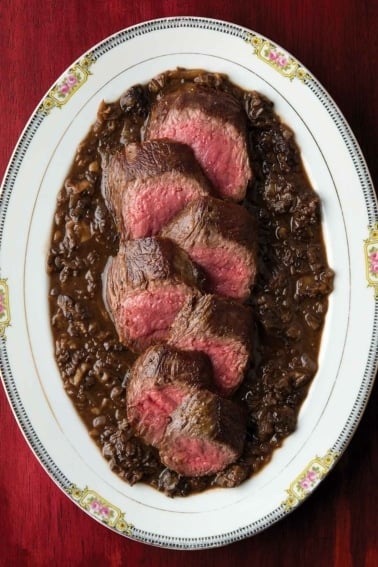
The basic form of Keller’s roulade is a cylinder of duck breast, wrapped in a leaf (chard or cabbage) set atop a vegetable that is sitting in a pool of concentrated sauce. Topping it all is a saute of mushrooms with some herbs thrown in.
It is a beautiful dish.
Making it, however, requires some delicacy and restraint I don’t normally employ.
The duck breast needs to be pounded a bit — not something Keller says in his recipe, but if you don’t, the breast will be of different thicknesses, making the resulting roulade uneven. Then you need to square it off; tossing those scraps of prime duck meat was tough. Wrap the breast tight, then place it in a strip of blanched chard leaf, then roll it all up. Wrap everything in plastic, roll that tight, then poach it for 8-10 minutes.
This basic technique is really cool. I could see doing it with all sorts of things, from pheasant to grouse to venison. You could use chard, cabbage, turnip greens, collards, grape leaves — maybe even fig leaves.
What I also realized is that this may be the fanciest way to prepare “trash ducks” like scaup or sea ducks or spoonies — when you strip away the skin and fat, you strip away the fishiness of the bird. I used the breast from a Ross’ goose here — if you’ve never heard of them, a Ross’ goose is a miniature snow goose about the size of a mallard. Like the larger cousins, Ross’ typically have no real fat on them and a bluish skin that looks unappetizing.
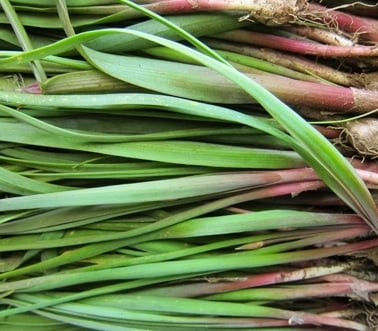
Keller uses creamed corn in his version of the duck roulade, but I really like the combination of scorzonera with duck. Scorzon-wha? It’s a root vegetable, also known as black salsify, and salsify is also known as oyster plant, which is a misnomer because it actually tastes a lot like artichoke hearts, not oysters. Mashed, its an interesting accompaniment to all sorts of meats.
To finish the dish, I used the last of the blonde morels I got from Earthy Delights (time to head into the Sierra for more… ) sauteed in butter with shallot and then simmered in homemade duck demi-glace. It was damn good, and I am really happy to have learned Keller’s roulade.
Here is my version of the duck roulade recipe; I hope you give it a go.
I cook nearly every day. And nearly every day, I get a little bit better. Sometimes it’s just a tiny realization, like that the best way to know when to move mushrooms that have been dry-frying in a pan is when the pitch of the sound of their sizzling increases — it means the water is almost gone and the ‘shrooms are now unprotected against the hot pan. Time to add butter.
Yet on other days, like this past week’s experiments, whole new vistas are opened to me. I never would have thought to make a savory creme caramel, although I’ve made savory sorbet before. And I had always been reluctant to dive into Keller’s roulade: It just looked too hard.
But it’s not. And neither was that creme caramel, once I figured it out. Thanks to Chef Farmerie and Chef Keller, I am a better cook now than I was a week ago. My limits are a little higher. And for that I am thankful.


Great post, you rock.
I honestly thought the liver creme sounded pretty bad for the past few weeks, and you know I’m not totally unadventurous about what I eat, but now that I’ve read your description, I think I’m down with it. Well played, Hank!
Wow, Hank! You really got my mouth watering with this post!
Your cooking is so inspiring, Hank. What about saving the duck breast scraps for a pate? Or sandwiches? (heresy??)
I had some of that liver cream caramel in Portland. Absolutely mind-blowing good. Can’t wait to taste your version!
Heather: No, not heresy. But if you thaw a duck breast and then save the scraps, you’d have to then thaw enough duck meat to make a second dish with them — you can’t re-freeze uncooked meat or the texture will suffer greatly. Next time I’ll plan on making both dishes together, as pate is a good option…
Stunning! I adore the look of the green-wrapped duck, and am deeply curious about the liver creme brûlée. Will have to take a stab at that methinks.
Hank,
You are a master. Seriously. The photos Holly took are also absolutely gorgeous. I love liver anything but I am the only one in my family so I dine on liver alone.
I have The French Laundry cookbook but so far the only thing I have made from it is tomato confit and the stocks. I bow down to you.
I go to Portland often…and we had a wonderful brunch at Simpatica. I am happy to hear it is still surprising folks.
Hank -
Long time reader, first time caller… Glad you had a go at the crème caramel – I do so love that dish. Great post and beautiful photos (as always). Look forward to going hunting with you guys in the not too distant future…
Sean: If you do and get into rouble, you know where to find me – happy to help!
Melly: Definitely try to cook from the French Laundry cookbook more often – the instructions are clear enough and comprehensive enough so that if you read first, then cook, you should be successful.
Brad: Very glad to hear you approve! And yes, the duck hunt plans are coming along…
I have many Keller cookbook, but have yet to cook a single recipe from any of them. Maybe I should get off my lazy/intimidated ass and give one a try?
Wonderful work Hank. Looks absolutely lovely. I so agree with you about challenging yourself and trying new and unfamilair techniques from top chefs. It makes us better cooks. That is why I try to cook from books like French Laundry, Alinea or Fat Duck. Well, I also enjoy doing that very much, that helps.
I will be trying your liver creme caramel soon. Possibly with chicken livers though.
[...] Pushing My Limits [...]
Hi Hank,
Just dropping by from Foodista.com. Your photos are beautiful and the way you described the creme caramel had me drooling! I havent tried this before, but Im bookmarking your recipe to make soon
I forgot to mention also, Paula Wolfert, in her book (one of your favorites if I am not mistaken) The Cooking of Southwest France has a recipe for duck liver flans with vinegar caramel sauce. That one is fantastic. Sounds familiar though. Right?
Sounds great – I love liver, and I love caramel!
As for the roulade… mallow leaves?
Both dishes are very appealing and I now have them on my list of items to try. The creme caramel idea with protein is new to me and fantastic at that. Although neither I nor the hubby are big fans of liver, I’m going to try it with liver first. As always, thanks for sharing wonderful things!
E. Nassar: Let me know how it goes! And I really need to get the Fat Duck cookbook. Yes, Paula Wolfert does do a liver flan in her book. Had forgotten about that!
Josh: Mallow leaves, definitely. Just not in May.
Lynn: It’ll still have a liver taste to it, but the creme will not have that texture that puts me off…
Good god, these both look incredible. Holly’s photos are gorgeous, and that duck roulade? I wanted to lick the screen. Curious where you found the salsify. Was it from your garden? Farmer’s market? I don’t recall ever seeing it, although perhaps that’s because I haven’t actively sought it out…
Beautifully cooked and presented recipes. Well done!
Dawn: I grow my salsify. It is indeed hard to find, even in good farmer’s markets. My advice is to buy it whenever it appears…
Your roulade looks a lot better than mine.