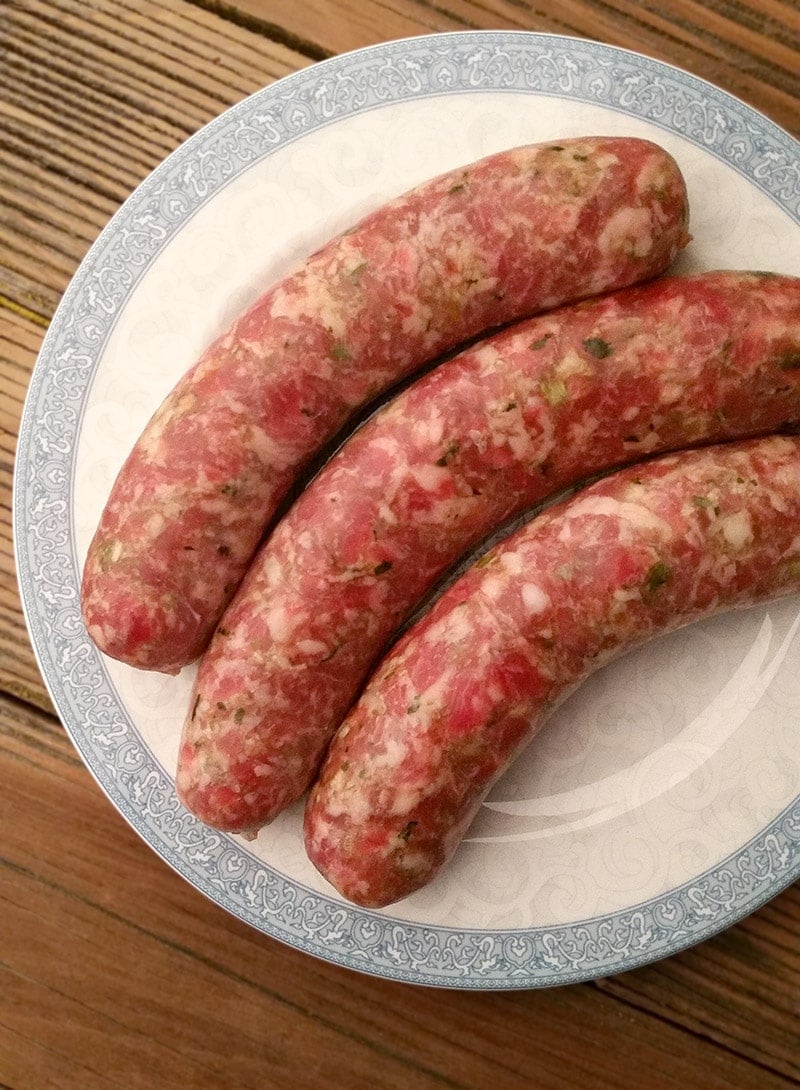
The first time I ever saw a Hmong person was at the farmers market around the Capitol in Madison, Wisconsin, many years ago. I was a young line cook at the time, and I gawked at the garishly bright clothes they put their children in. They did not look like any Vietnamese I’d ever met, and someone — I forget who — immediately let me know that the Hmong are most definitely not Vietnamese; they said saying so is like saying the Irish are the same as the Scots. Being a Scot, I understood that at a cellular level.
Then I learned that these people, the Hmong (pronounced “mung” or “mong,” sorta like the bean), had fought for us during the Vietnam War, that they were rural hill people, farmers, who did not much like the Communists. I studied military history as an undergraduate, so I knew all about the “Secret War” we fought in Laos and Cambodia, and even Thailand. I felt an odd rush of pride when I realized that my country had — for once — not dicked over a group willing to fight for us, that once we lost in Vietnam we let the Hmong come here as refugees; we’re not always so magnanimous.
Years went by after those first encounters at local farmers markets. When I began hunting in Minnesota, however, I learned something else: That the Hmong are also good hunters and anglers. Very few immigrant groups hunt, and I for one think it is a good thing to have an ethnically diverse hunting population out there.
Then, earlier this year, I heard that the first-ever Hmong cookbook written in English had been released: Cooking from the Heart: The Hmong Kitchen in America. I knew — just knew — there had to be wild game recipes in that book, so I called the publisher and asked. “You bet!” she said (the book is published by the University of Minnesota, so I reckon they say, “you bet” a lot there.) I asked for a review copy, and they sent me one.
Yes, there are wild game recipes in the book, but I will come to them in later posts. What really struck me was a) that one of the co-authors, Sheng Yang, lives right here in Elk Grove, and that b) there was a Hmong sausage recipe in the book. Asian sausage?
I’ve eaten Chinese sausages and hate their gummy texture; doubtless I’ve never found a good one. I’ve also eaten the Vietnamese sausages you find in a good bowl of pho: Very finely grained meat, almost pate-like, that takes some getting used to. But this sausage was right up my alley. It was country-style, coarse-grained yet super flavorful and served grilled. It is the epitome of what makes Hmong cooking different from Vietnamese. Think rustic Italian vs. refined French. I had to make this sausage.
The first thing I noticed in the recipe was a full cup of minced ginger for a three-pound batch of sausages. No way. Not going there. Ginger is super-fibrous and that much in that little meat would make it nothing more than a ginger link. It was then that I decided to make this recipe my own. Normally I try to make things the way the recipe says at least once, but I make an awful lot of sausages so I can just read a sausage recipe and see where things might not fit what I want to do. So I decided to grate the ginger and cut it down to 1/2 cup, for a five-pound batch.
I then added fresh cilantro and Thai basil — also not in Sheng’s recipe — because I wanted them in there. Sheng even says that no two Hmong cooks make this sausage the same, and not being a Hmong cook, I felt at ease taking the liberties I did.
In went black pepper, Thai chiles and the juice of three limes. Oh yeah, and wild boar meat. Why wild boar? First, because Sheng’s husband Leo hunts wild pigs, so I bet they’ve eaten this sausage that way, and second, Southeast Asian pork is far redder and fuller-flavored than “the other white meat” you find at Costco and such. Wild boar just fits the flavor profile better.
Click here for the full Hmong sausage recipe.

I was surprised how light-colored the mix was. Maybe it was the pound-plus of pure yummy pork fat I’d tossed in. I get my domestic pork fat from John Bledsoe, an excellent hog farmer from nearby Yolo County.
Pushing the sausage into links, I started to wonder what to serve these sausages with. Sheng and her co-author Sami Scripter don’t say. Maybe a Hmong bahn mi sandwich? In pho? Maybe a stir-fry?

I’d gone to the Citrus Heights farmers market that morning to buy the herbs and chiles from a Hmong vendor; I dunno why I didn’t ask her what she ate with these sausages. Brain fart, I guess. I did buy water spinach from her, however, and I decided to just saute it simply with garlic and chiles — a method Sheng and Sami write about in their book — and serve that, some rice and the sausages grilled simply.

The result? I love the flavor, but need to work on the texture, which was a little crumbly. I think I failed to get as tight a bind on the meat as I should have, either because of the acid in the limes or because I did not mix it enough, or the temperature was too high. No matter, they taste good.
It is an odd thing biting into a sausage that tastes like Asia. Sausages are such a Western thing to me that the flavors of ginger, chiles, cilantro, Thai basil and the like are jarring when stuffed inside a link. A country-style sausage is never a light meal, but the Hmong seasonings did their best to cut all that fat; it is the kind of push-pull in flavor and texture that make Southeast Asian cooking so good.
The way I see it, you ought to buy Cooking from the Heart if you live anywhere the Hmong do: This is how they use all those funny greens, the bitter melons and such. It is a worthwhile book just for that.
But better still, if you are a hunter or an angler, this book offers a look into the one exotic cuisine here in America that specifically targets wild game and fish. No need to shoehorn game into a recipe, the Hmong cook with it all the time and know the differences between beef and venison, pheasant and chicken. Hunters and anglers who cook from this book will gain an appreciation both for a new cuisine — and, hopefully, for a new set of hunters who they may only have known through news clippings, or through fleeting glimpses in the woods or fields. And that’s a good thing.

MORE ON HMONG COOKING
- A review of “Cooking from the Heart,” from Good Stuff NW
- Hmong Beef Stir-Fry, from Blue Kitchen
- Hmong Steamed Fish, from The Perfect Pantry


for a “crumbly” sausage, it sure looks bloody great. I too would have done a double take biting into a sausage, and hitting Asian flavors. I can safely say I have never had an far-east sausage before.
I cannot imagine what 1cup of ginger to 5lb of meat would taste like. Good idea to cut that back!
Love the simple accompaniments here. When you have something as good as a homemade sausage, why get tricky with the other stuff?
Sheng’s book is fabulous. I have been using the Hmong chicken soup and curry recipes for a bit now. I think I want to try the stuffed bitter melon soup next. =)
I live in Minneapolis and many of the farmers at the market are Hmong. I have been very intrigued but ultimately too intimidated by the bitter melons and weird looking greens; I think I’ll follow your recommendation and get this book.
The larb recipe is super good, too. It helps to have an army of small children to do all the chopping, as Sheng has. Sheng and Sami made me the stuffed bitter melon and it was delicious. The use of bitter flavors is something I love about Hmong cooking.
Hearing “you bet” in MN is a bit like hearing “eh” in Canada…
I grew up in WI in a rural town so the Hmong people were my first real experience with diversity.
I never did get a chance to try their food but have fished along side Hmong people often, although the only thing I saw commonly eaten was fresh fish (cooked the day of catch, over a wood fire, at the water).
Hunting and fishing is definately a major part of the culture (just like upper midwest as a whole)
I might just have to check that book out sometime…
This is a nice post, not only for the great looking sausage recipe, but also for the lesson on Hmong culture and how they came to be here. Some of you probably remember the 2004 incident in Wisconsin where 6 deer hunters were murdered by a Hmong man. Based on that trial and conviction, I had allowed myself to disregard the Hmong immigrants as violent people with no regard for private property, hunting ethics and human life – though I have never met even one. I find I have much to learn about their service to our country and how they justly came to be here.
Thanks Hank.
Sounds great! I can’t wait to try some.
Brilliant. You just made my blogroll!
h/t: Cowtown Cop.
We did not lose the war.
This was great stuff! Very flavorful, nothing overpowering.
As for the prickly pears (tunas in Spanish), candied is my favorite. Also, fresh.
[...] Here is the original: Making Hmong Sausages [...]
Growing up in Rochester, MN – I can vouch we do say “you bet” a lot but I also saw a lot of Hmong and was always curious about their food, and why of all the places they settled, they chose MN. I left for college, and before my questions got answered. Now at least some of my curiosity has been satisfied. I cannot wait to try this recipe – thanks for sharing
Hmong sausages rock. They are a staple of Hmong cultural and sporting events. If you don’t feel like spending the time to make them yourselves, you can find them prepared at local Hmong stores, sold in 18 inch 5 packs.
Hmong typically eat the sausage with sticky rice, pepper and fish sauce, and papaya salad (all recipes available in Sheng’s book).
Hank, thank you so much for taking the time and effort to explore all walks of life! While I love French, Italian, and Spanish cuisine, I often feel like Middle Eastern and Asian cooking is ignored.
I won’t comment on the war but suffice to say I agree with you. The Hmong people are too often forgotten in the discussion of that topic too. Cambodian sausage is similar to the above recipe I believe and the texture is always crumbly. Sometimes there is mint but the taste is a combination of herby, sweet, and spicy. As far as store bought (usually pre-cooked), the best are from San Jose. I will ask my mom for some tips and get back to you!
Arica: I would definitely like to hear tips from your mom — I love these sausages and want to get as much info on them as I can…
That sausage looks great to me so I’ll give it a try. I made some lop cheong once and it didn’t turn out so well.
The flavor was great but I had the same problem with the texture and that was because the mix was too lean.
Thanks for all the great cultural info as well. The first time I even heard of the Hmong was when I watched “Grand Torino”. I’m a bit smarter today than I was yesterday : )
Mike
[...] the lunch trip and we headed out, we all got a few different items and shared them. I had some Hmong sausage, Papaya Salad, Bubble Tea, Rice Sausage and Pig Uterus. The Pig Uterus was actually not bad, very [...]
Hmong people eat the sausage with rice or sticky rice. Yum!
Hmong sausages are usually eaten with sticky rice “sweet rice”. But if you know how to make a nice spicy tomatoe dip, that’s puts everything over the edge. Grill those tomatoes and green onions next to the hmong sausages on a grill (just a couple of minutes for the tomatoes and green onions). Then once you take the tomatoes and green onions out, add cilantro, thai pepper, and any of the herbs you wish into a bowl. Crush everything giving it a good mix. Cool the sip in the fridge and serve it cool with the hot hmong sausages on a Summer day…We make this every week during the Summer. The dip works well with chicken quarters too.
I am happy you love Hmong sausage. I do too.
- – - – - – - – - – - – - – - – - – - – - – - – - – - – - – - – - – - – - – - – - – - – - – - – - – - – - – - – - – - – - – - -
I just wanted to comment on your sentence: “I felt an odd rush of pride when I realized that my country had — for once — not dicked over a group willing to fight for us, that once we lost in Vietnam we let the Hmong come here as refugees; we’re not always so magnanimous.”
I’m sorry to disappoint you, but Hmong people didn’t come to the US right after the Vietnam War. From what I heard as a kid, the US only cared about the high military officials at first. Thousands of Hmongs had to flee Laos into Thailand and live in refugee camps for years before having a chance of coming to the US. I and all of my older siblings were born in such camps. I also read that the first families that came to the US were supported by the churches here, which, I assume is to get more believers than actual altruism.
Also, I read that the US government finally acknowledged the Secret War in 1997 but it was the Hmong who bought their own plaque to be placed in the Arlington cemetery, is that right?
There are many Hmong people all over the world today, from the jungles of Laos, still being hunted down, to the ones in Thailand which either are still in camps or had slowly became Thai citizens, to the ones better off in the US, Australia, Canada, French Guiana, to France. In other words, only a portion of the Hmong came to the US.
I would be more proud to be an American if more Americans actually knew about the minorities that helped build it. Instead, I grew up with Americans telling me to “Go back to where you came from!” to “Are you Chinese? Japanese? Korean? Etc.”
As a Hmong, I feel like a child out of wedlock, of the marriage between the United States and the Vietnam War. There’s whispers of how I came about, a little knowledge of paternity, but nothing much else. It’s sad that for the rest of my life, I will have to explain to those I meet about who I am, how I got here, and why I belong here. What have I done wrong? Did I not listen enough? If the Vietnam War was won, would the United States accept me? Is this my punishment for losing? For now, I am nothing more than just a child out of wedlock, an embrassesment to the US and a mystery to most of its citizens.