
As an Amazon Associate I earn from qualifying purchases.
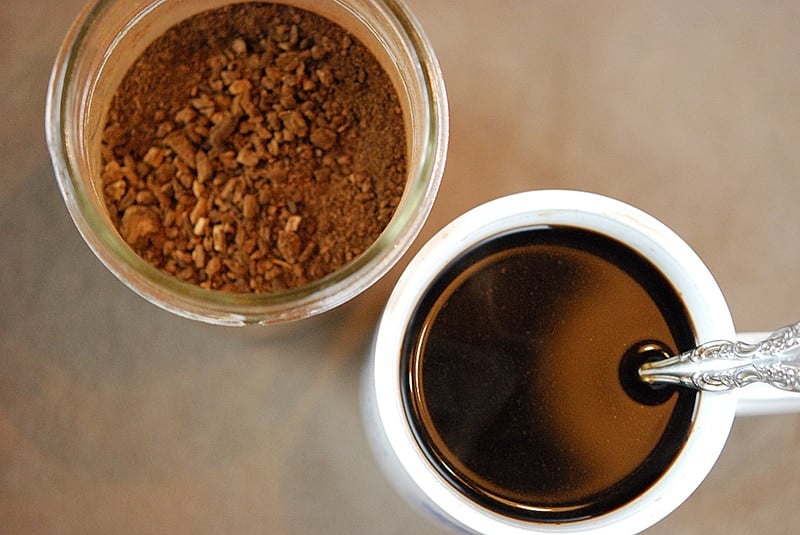
For a time, my favorite coffee was New Orleans style, where the coffee is cut with roasted, ground chicory root. Chicory coffee is smooth, a little more acidic than normal coffee, with a taste and aroma similar to a mocha — and it makes a drink darker than the inside of a cow.
I used to Ozark it up even more by drinking it black, sweetened with molasses, not sugar. Definitely a manly drink, and probably the reason I have so much hair on my chest. I imagined lumberjacks or pioneers drinking this between cutting wood or fording wild rivers.
I was not in the habit of doing either, so I ultimately switched back to straight coffee. Actually I stopped because the canned chicory coffee I’d been buying grew pretty grim on my tastebuds over time; stale and dusty tasting. I never found anyone who made a premium version, so I left chicory coffee by the wayside.
I knew I could make my own by digging up the raggedy sailors — chicory is that weedy azure-blue flower that grows on a roadside near you. But I’d never bothered with it, as you need to dig in fall, and I only really notice this plant in summer when it’s flowering, or in early spring when I eat the greens.
But then I bought some “root chicory” seeds and planted them. Now I had absolutely no intention of making chicory coffee from them. I have a thing for crazy root vegetables, and it is my contention that if more locovores living in Northern climates grew a wider variety of roots, their winter menus would be far more interesting. I wanted to test this root out as a vegetable, so I planted it in my root bed next to the scorzonera I experimented with this year.
And then, as typically happens, life got in the way. I looked up and it was May already — while the chicory roots had not yet sent up flower stalks (except for one), they would be far too bitter and “hot” to eat as a veggie. Damn.
What to do with these things? I pulled one and was astounded at how large it was: A good 30 inches, with a base about two inches across. Christ, that’s a big root. And then I remembered my lumberjack coffee. But just how do you make chicory coffee?
I’d read a few sets of instructions that say just wash and dry the roots, then roast them in a moderate oven until “ready,” then break into pieces and grind into coffee-like grounds. I knew intuitively that this was false. I could not imagine breaking a root that was two inches broad into pieces small enough to not kill my grinder.
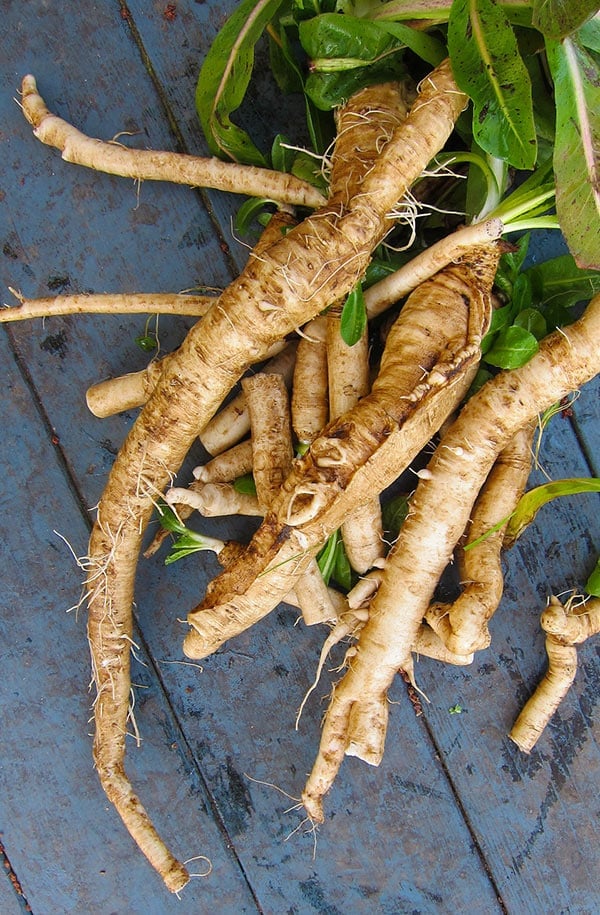
Other sets of instructions, mostly for making dandelion coffee (basically the same thing), call for slicing the roots into thin discs, then drying them, then roasting them, and then grinding them. This sounded more sane.
So I began slicing up the 20-or so large chicory roots I’d managed to pull. I ate a few raw, and they weren’t terrible: If something can manage to be sweet and bitter at the same time, these roots achieved that feat.
When I was doing this, it was 104°F outside. Not ideal oven drying weather, but perfect weather to dry things outside. And my “drying rack” of choice is the hood of my pickup. So I sat these sliced roots out in the sun, and they dried nicely in two days.
When it came time to roast the chicory, I found even more misleading instructions on the internet; yes, I know — misleading information on the internet?! Heavens! Everyone seems to say roast dandelion or chicory root in a 350°F oven for 10 to 15 minutes. Uh, yeah. You then have slightly warmer dried chicory roots. Nope, instead of 15 minutes, try 90 minutes, or even two hours. I might try 2 to 3 hours at a lower temperature next time.
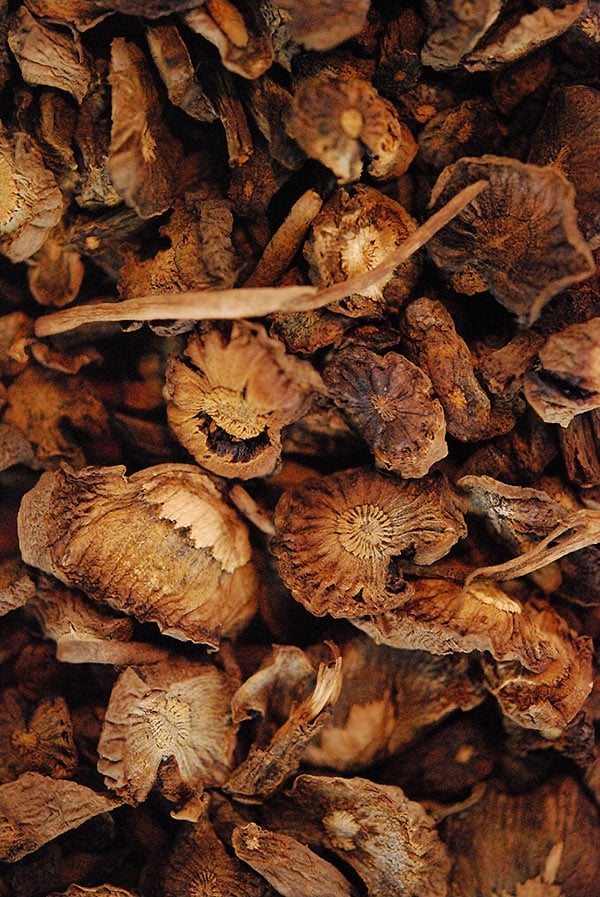
I’d just like to say that even if you have no intention of actually drinking chicory coffee, it is worth roasting the roots this way. The whole house smelled wonderfully malty, chocolatey, warm. So lovely.
I let the roots cool overnight and ground them. Unfortunately they don’t seem to grind evenly, so I have powder mixed with chunks. But I use a press pot for my coffee, whose filter is enough to strain it all out.
I decided to brew myself a straight cup of chicory coffee. I put about a 1/4 cup into my press pot, the same amount I use for coffee, boiled some water and steeped the inky brew for about 5 to 8 minutes. I drank it black, with sugar.
Straight chicory coffee is some powerful stuff. it tastes like it is loaded with caffeine, but it isn’t. It looks a lot like motor oil, has that malty-chocolate aroma, a brighter acidity than coffee and a flavor I really am having trouble describing as other than with the cliche “earthy.” Guess that’s what I get for roasting a root.







Everything I have read about grinding chicory mentions it grinds unevenly. I assume that’s in an electric or modern grinder. I still use my grandmothers cast iron & wood manual coffee grinder and it’s perfect for a smooth uniform grind!
Hi! Can I roast chickory that is flowering? It’s everywhere right now and I’m dying for some chicory coffee.
Thank you!
Whitney
Whitney: Yes, but digging the roots will be tough in hot, dry soil. If it rains, you are good to go.
A grain grinder might work better than a blender. My father-in-law picked several old dandelions, roots, stems, blossoms closed and all. I would toss the bitter stems. He took a cast iron skillet and saved bacon grease, about enough to coat and leave a layer of melted bacon lard, then put the entire plant, leaves, closed bloom heads and roots and fried it. The crisp crunchy leaves had a bitter but bacon sweet taste, flower heads sweetish, very good!
I have early non-alchoholic fatty liver disease and avocado prompts your liver to expel excess fat, dandelion is a powerful liver detox and root hormone of dandelion is being investigated for possible cancer inhibiting action. I’m no doctor, so only saying. Do your own due diligence. Asparagus appears to keep arterial lining smooth(which makes it hard for plaque to stick), I had read a study showing that people who ate beans 3 times a week had much lower plaque in arteries, due to saponins in the beans. Too much is toxic, which is why we soak beans and drain. At one time companies made detergent from waste water reserved from soaking beans, boiling them (the frothy substance contains saponins) and draining.
I ended up here after searching for how to harvest chicory. There is some amazing stuff here – and I will end up down a rabbit hole if I keep opening all the interesting links at once. I have a pond to adjust and chickens to clear out – but I will be back to read more. I live on the West Coast of Ireland so I have no idea what 104 degrees is 🙂
Wondering if you could dehydrate the roots in a dehydrator first and then toast and grind them when needed for coffee? Would this work/has anyone done it like this? Wondering if they store well in the dehydrated state? Possibly in a vacuum sealed bag?
Would be nice to be able to store enough for a year if this were possible…. thoughts?
Thanks again for the article. I know it’s an older one but I still value the info today.
Darrick: They do store dried very well. Like for years.
This is exactly what I do. Dehydrate and roast them, then store in mason jars with well sealed lids until I am ready to grind the root to use as tea.
Hi! I loved this article. I’m from Argentina, today I tried to make chicory coffee. At this time, we are in winter and it is very difficult for the roots to dry out in the sun because the temperature is 14 degrees. I put the root in the oven, and then toasted it. When I drank the coffee, I only felt a burning taste. What recommendation could you give me for drying and roasting? Thank you so much!!!
Hey there, I harvested chicory root for the first time this morning in July. I have found the center of the large roots to be very woody. I chopped up the fleshier parts of the roots which I intend to roast tomorrow but I’m also wondering if I can do something with the hard center. Im reviewing info this eve but sounds like I should have waited till fall.
Philecia: I generally include the woody part when I roast and grind for coffee.
This is cool, thanks for sharing the info..i dug up my first ever wild chicory root, a bit early so I have now discovered, plant in flower….but will give it another go in autumn..thanks again
Teresa NZ
i have been growing and roasting chicory and dandelion for a few years. i found dry frying is a lot better than the oven . I slice the roots and let dry for a day until they are about 1/3 dry then i put them in my blender and chop into small pieces, 1-2 mm i then spread it to finish drying. at this point it stores well.
I mix half and half dandelion and chicory and dry fry in my trusty cast iron pan. it only takes a few minutes. I stir it constantly with a fish slice. it caramelises and gets sticky, keep stirring. then when the fine bits are beginning to smoke tip it all into a sieve. stir and let the small stuff fall through into a bowl. then put the bigger bits back in your pan until they are just beginning to smoke. this makes a nice coffee.
Is it necessary to cut the roots up to dry them out to store them?
Angela: Yes. Because they are impossible to grind as a whole root.
This has been a fun article to ready. I too am enjoying my chicory coffee right now and was just browsing to find some articles on roasting it better. I have cut my chicory with some chopped and broken, but to pulverized cinnamon sticks. Its wicked good! I am almost craving it constantly. I have been adding a hint of heavy cream to mine and its a pure delight!
Is there a reason they have to be harvested in the fall? I am interested in this, but I can only recognize the chicory when it is in flower. It sounds from your article like you harvested them in May (and it was 104 degrees outside?) and the coffee did not poison you. What’s up?
Jennifer: I harvest garden chicory that had overwintered. When harvesting wild chicory, you need to identify the plants when you can, normally in flower, then come back later when the roots are well developed. If you dig them in flower you can still make chicory coffee, but it will be of lesser quality than if you wait for the roots to fill out in fall.
Did the same. Picked about 5 lbs worth of nice, fresh, moist and huge roots. They took about 10 hrs. at 300° to fully dry out. Roasted another hour at 350° to get them nice and brown. Grind them up with the coffee grinder and your all set.
I’ve been drinking hot brewed chicory in lieu of coffee for a couple of years. I use no sweetener, just a bit of cream or half & half. I love it! I’ve been purchasing mine roasted and ground from the Frontier Co-op. They have it sealed in 1 lb packages with a Best Buy date, and available as organic or not organic.
Just found your blog, love it as it is very informative and you write in a manner that is very readable and instructive. Thank you!
About how much did you get in grounds from those 20 roots?
Nice article. Thank you. I appreciate the photos.
I can’t thank you enough for this article. I’m diabetic and just discovered that caffeine makes me insulin resistant. So, I stopped drinking coffee, which was my only caffeine intake. Immediately, my medication started working much better. Now, I’m considering growing some chicory and roasting it.
Have you ever roasted green coffee beans in an air popper? I have and it’s an incredibly simple way to quickly roast coffee beans. I’d like to try it with chicory and dandelion roots. I bought my air popper on ebay for a total cost of $20. It’s a small appliance from the 70’s and is used to make popcorn. If you decide to do this, get the one from West Bend; it has 1200 watts. The newer ones only have 1000 watts. However, if doing large batches of chopped root, then an oven is probably better.
Thanks, again, for your article!
I just read that you’re supposed to use only a very small amount of chicory root for coffee, 1 tsp to 1 T max, so 1/4 c was serious overkill,. The article said if you brew it like coffee, you will wind up being a chicory coffee hater, so try it again with a small amount of chicory root for experiment’s sake and let us know how it is!
Tripping: Nope. I like it as is.
I wonder could you chop roots finely and then dry and roast?
Margbooth: I think you can.
Hey, I was wondering how you grow these things/find them? I haven’t seen chicory root at any store or farmer market 🙁 Definitely want to start drinking chicory coffee though!
This was fun to read, thank you! I bought my chicory already roasted online but love the adventure of doing things by scratch! I will seriously consider this. Thanks!