On Cooking Wild vs. Domestic Meat

Mar 23rd, 2009 | By | Category: Cooking Basics, Wild Game | Comments | 15 Comments |

I get so many notes from visitors who read this space and enjoy the recipes, but who have never picked up a gun and have little or no access to hunters generous enough to share some true wild game. So I get questions like, “Can I substitute chicken for pheasant? I can buy domestic ducks at the store – will they work in your duck recipes?”

The answer is yes. To a point. A wild duck is not a domestic duck, and while we call pheasants “ditch chickens,” they are different enough to not really be chickens. My recipes are designed for wild game and can be modified for domestic meat; most recipes are the other way around.

Modified how? Again, it depends on the critter. So I thought it might be useful to run through the domestic equivalents of the game animals I hunt most frequently. Funny thing is, most actually do have barnyard cousins. My hope is to make this a useful guide for those cooks interested in some of the wild game recipes on this site, but who can’t get their hands on venison or a mallard.

SOME UNIVERSAL TRUTHS

There are some universal constants about cooking wild game versus domestic meat. In general, wild game is…

WILD GAME DOMESTIC MEAT
Denser meat More tender meat
Harder connective tissues Softer connective tissues
More difficult to crisp skin Easier to crisp skin
Leaner Fattier
Smaller size per animal Larger size per animal
Older animal Younger animal
More flavorful Less flavorful
Variable animal to animal More consistent animal to animal


This gets at the “wild game is tough” thing you hear all the time. Wild animals work for a living: Think of them as athletes, not cubicle hamsters. As a function of work and age, game meat muscle is denser, that muscle is linked by connective tissue stronger than that of its barnyard cousins — and will be covered by less fat.

All this can make cooking game tricky. How old is the animal? Is this one fatty, relatively speaking? Is that fat clean-tasting? Many questions. You eliminate a lot of guesswork and buy yourself some insurance by cooking with a domestic animal. What you lose is depth of flavor.

Here are some specific tips that might help when you’re cooking the lazy cousins of wild game:

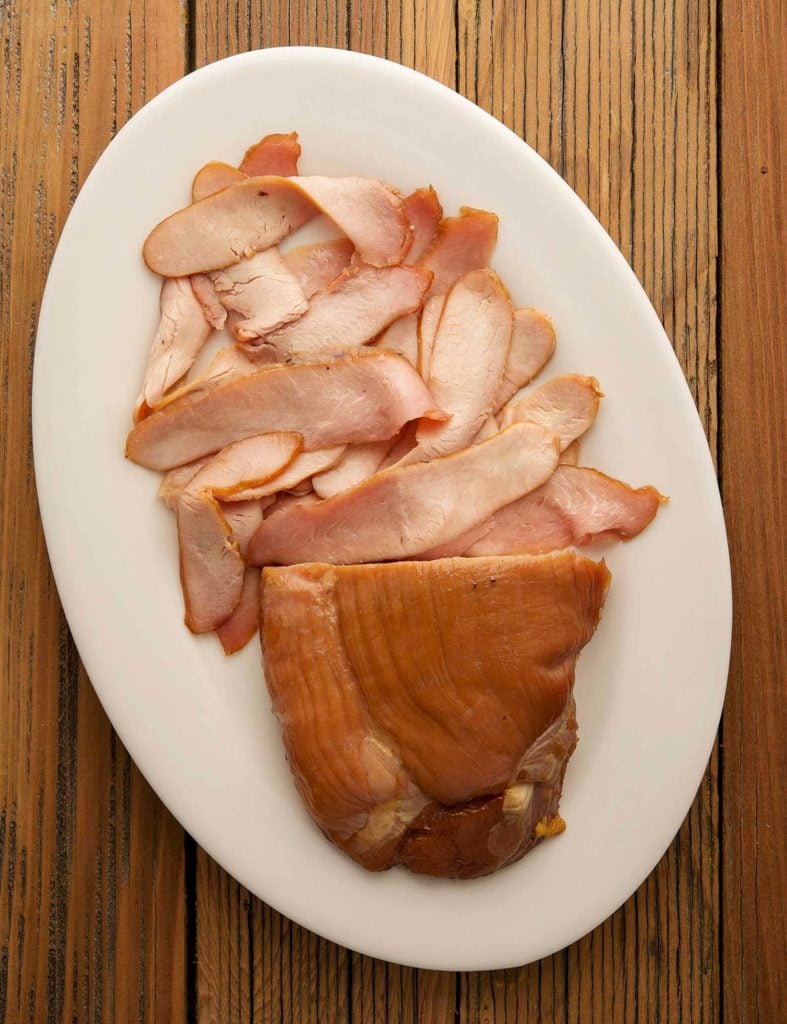
TURKEY: I thought I’d start with this one, as the wild and domestic species are the same, and because wild turkey season starts here in California on Saturday. Both birds are equally large — a wild tom turkey can run 25 pounds — and both are walking birds, meaning the legs will be full of tough sinew. This is easily worked around with a domestic (think King Henry VIII), but with a wild turkey the tendons are so strong you really need to just shred the meat off the leg and eat it like carnitas. Or confit. Not that domestic turkey carnitas or confit is bad; but it will need less cooking time — on average about 60 minutes.

The breasts of wild turkeys are narrow, as domestics are bred to be “double-breasted,” because the White Meat Lovers apparently outnumber those who, like me, prefer dark meat. So you will need less domestic turkey breast to feed the same number of guests. A complicating factor, however, is that density of meat I mentioned: Wild game meat is more filling, ounce for ounce, than domestic.

You will also have an easier time getting a crispy, edible skin with a domestic turkey — the skin off an old tom can be rubbery, and generally needs to be simmered in broth before crisping.

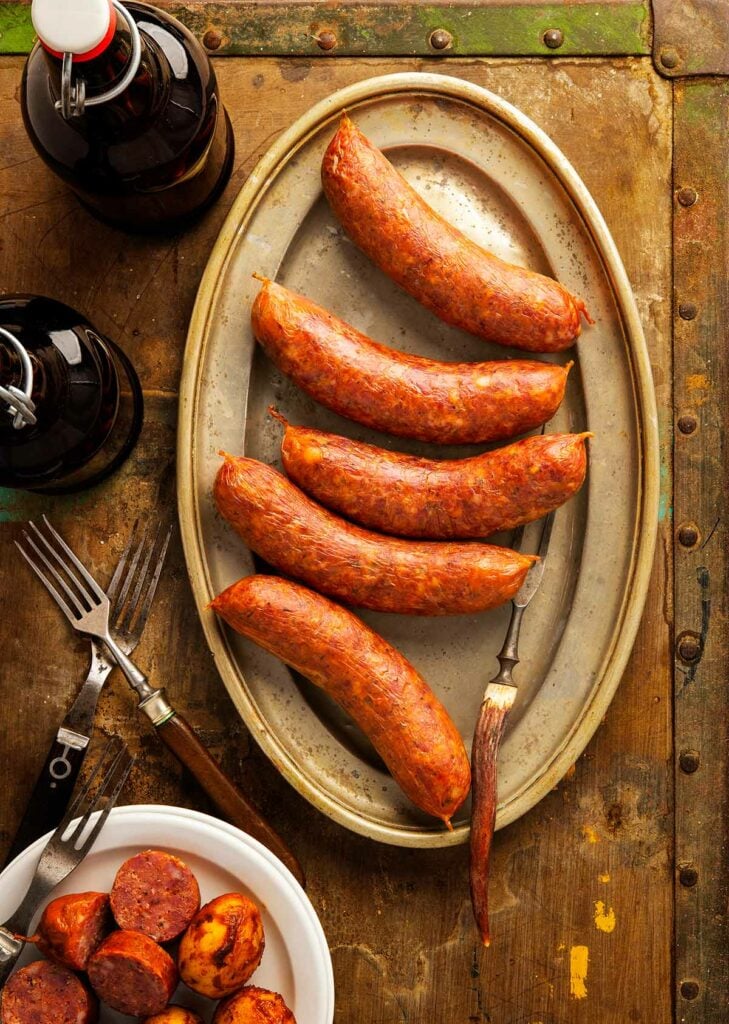
WILD BOAR: Again, for the most part, wild pigs are the same species as domestics (although there are places where you can hunt real Eurasian wild boar here and there), that escaped off someone’s farm many years ago. The biggest thing to know when you are dealing with domestic pork versus wild boar is the smell and amount of the fat. Both animals typically have a decent layer of fat, but wild boar fat can be rank — it depends on what the pig was eating before you shot it. To make my wild boar recipes, you need to buy good domestic pork, with reddish meat and decent fat. Factory hogs will be mushy, white and full of water. With high-quality domestic pork, you need not do anything different to follow my recipes.

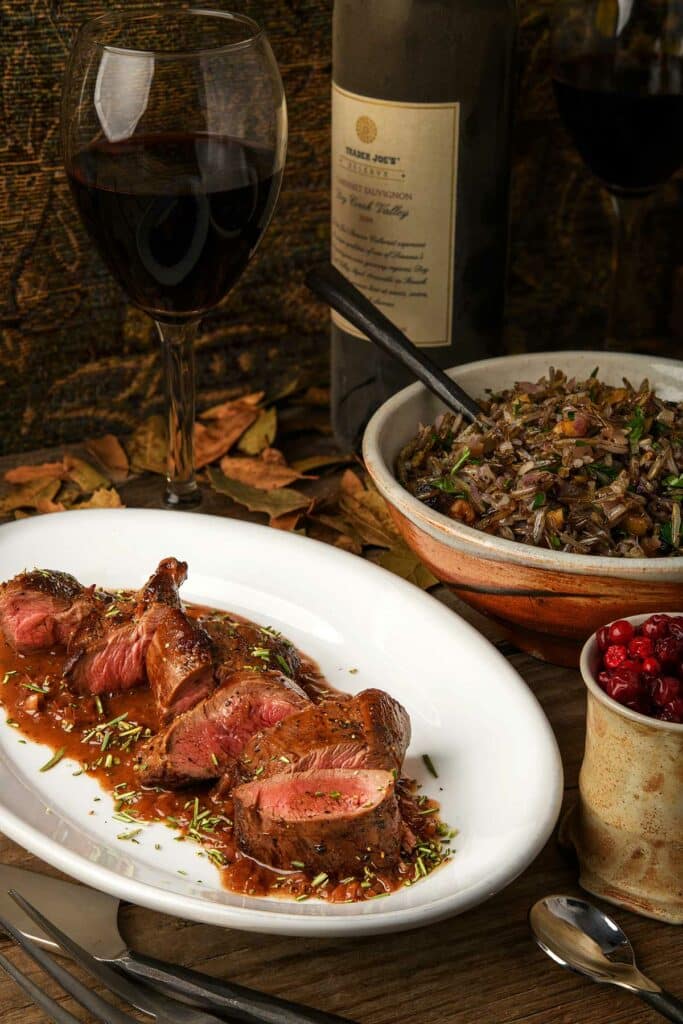
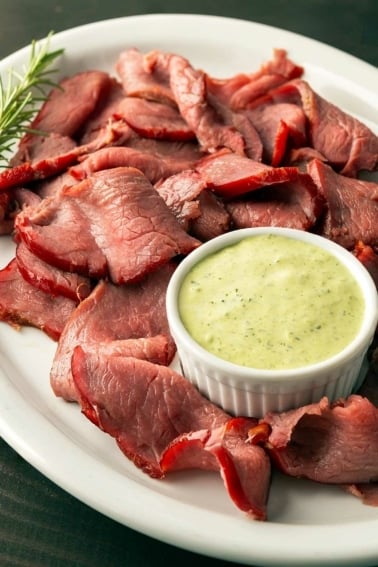
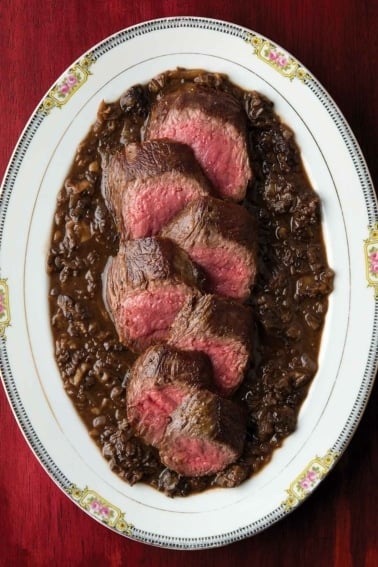
VENISON: Yes, you can get farmed or ranched venison (that from Broken Arrow Ranch in Texas is said to be the best), but for most people the equivalent is beef. Beef will always be fattier and coarser than venison, so you are losing something right there. If you want to approximate the flavor better, buy only grass-fed beef, such as that offered by Panorama meats. This will give you more of the iron-rich flavor you get with venison.

As far as cuts are concerned, substitute filet mignon for any of my venison medallion recipes. For braises, stew meat is stew meat. Use a rump roast or chuck for ground meat dishes — grind it yourself or have your butcher do it for you; I do not recommend you buy pre-ground meat. For offal recipes, you want to buy calf offal to get close to the taste of deer offal; beef is too strong in flavor.

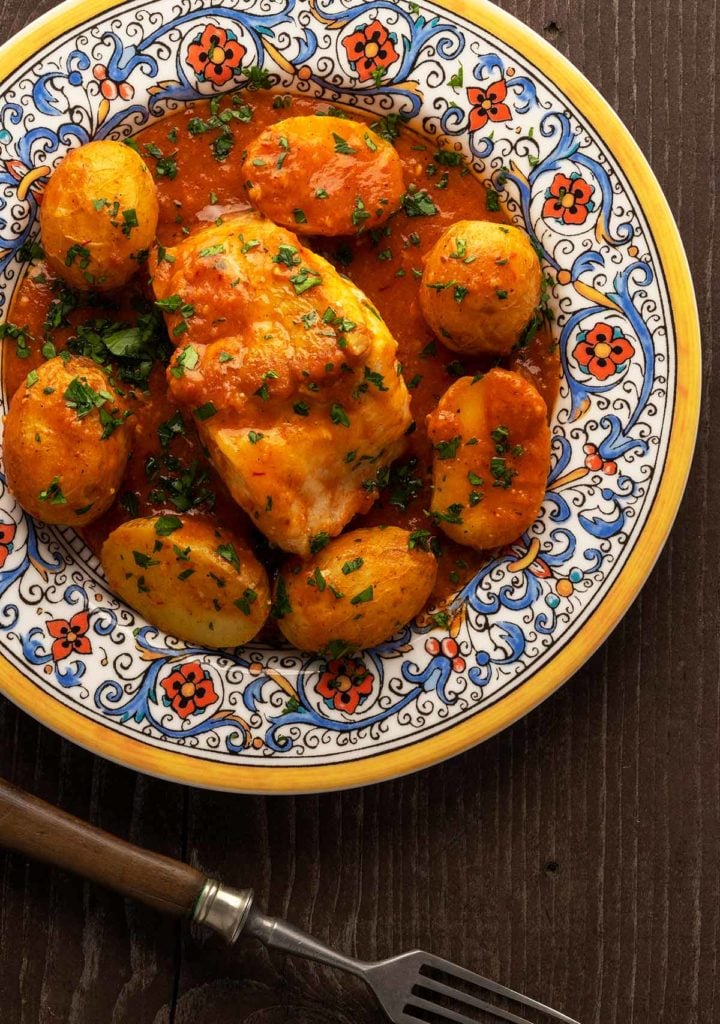
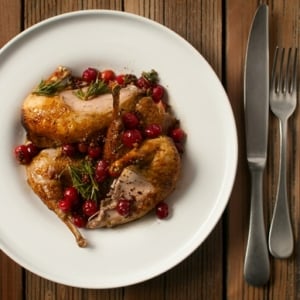
PHEASANT: Pheasants and chickens are very close to one another. In fact, the flavor of stewing hen is superior to that of a pheasant — as this is one of the few cases where the domestic animal lives longer than the wild one. Look for stewing hens at Mexican or Asian markets — and they are called stewing hens for a reason, as they are too tough to roast or fry. Pen-raised, “country club” pheasants can be treated like roaster chickens, while wild pheasants will likely be tougher. Just like turkeys, pheasants are walking birds, so you will have the tendon issue in the legs. Domestics — except for old roosters — don’t have this problem.

My advice? Buy quality chickens that are air-dried and are allowed to age a bit (look for chickens about 3 months old if possible) for the closest approximation to a typical pheasant. Also know that many high-end supermarkets will sell you farm-raised pheasant in the freezer section.

As for a well-aged pheasant? Sorry, there is no substitute.

LAMB/GOAT: A tricky one. Wild equivalents are pretty rare, as few hunters regularly hunt wild sheep or goats. Most often you will find exotics, such as Corsican ram or nilgai antelope. Similar but different is the pronghorn antelope, which has a meat like a young lamb or goat — light in color and mild. Use any grass-fed (NOT Colorado) lamb or young goat in any of my antelope recipes and you’ll do fine.

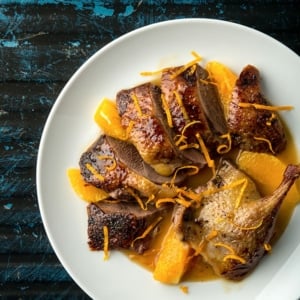
DUCKS & GEESE: Size and fat are what you need to remember here. Domestic ducks are far larger than wild ones, and all domestics will be fatter than their wild brethren.

Wild fat can be variable, too, as I’ve written about before. With a domestic, you will need to trim off all extra fat from the edges of the cuts and the cavities of the birds; save it and render it for use later. When cooking domestics, prick the skin (not the meat!) all over with a thick needle to help let the fat render out. You really need to do this, for as much as I love duck fat, an inch-thick layer on a slice of breast can be daunting on the plate.

A word on size. Wild and domestic geese are about the same size, if you are talking about Canada geese. Specklebellies and snows are a little smaller, and Ross’ and Aleutians are basically ducks.  A domestic goose feeds 4 hearty eaters, and 6 won’t feel cheated. A domestic duck feeds 2-3 easily. Remember again that wild duck and goose is denser and far more filling than wild duck — a mallard will easily feed 2, and even the little teal will satisfy 1.

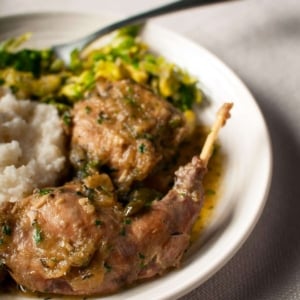
RABBIT: The biggest difference between cottontail rabbits and domestic ones is size. And if you are in Europe and have access to those giant Euro rabbits, then there is even less difference. American cottontails are about half the size of a domestic you buy in the freezer section of the supermarket. Neither has much fat, and what fat it has tends to be bitter. I trim it off. Figure on a domestic rabbit serving 2-3 people; 4 with lots of sides — cut that in half for a cottontail. Cookingwise, they are the same.

Hares are not rabbits. They are larger, older on average, and have dark meat. Unless you get Scottish hares shipped in from D’Artagnan, there is no substitute.

QUAIL: Domestic quail tend to be Japanese quail, which take more kindly to living in captivity. Wild quail are mostly bobwhites and California Valley quail. Both birds cook the same, although domestic quail — especially those bought in Asian markets — tend to be pretty tasteless. They’re small, short-lived and not very fatty. I do cook them on occasion, but not often.

SQUAB/PIGEON/DOVE: Yes you can make my pigeon and dove recipes — with squab. A squab is a pigeon that has been raised in a pen for nearly a year, which makes it both tender and expensive.

Squab are about three times the size of a hunted dove, but are the closest in flavor and cooking times. DO NOT OVERCOOK THEM! Both should be served blood rare to be at their best. The skin on both crisps nicely.

As for pigeons, they are of course closest biologically to squab, but wild pigeon meat is very dense and can be tough as nails — pigeons can live for 10 years in the wild. Squab is a reasonable equivalent, but remember it will be twice as tender and so will not need as much cooking time.

THE BOTTOM LINE

Don’t let the fact that you don’t hunt stop you from enjoying the riches lurking in the hidden corners of the meat counter and the freezer section. And if you do hunt, this guide should help you explain to your non-hunting friends how to cook that wonderful goose or haunch of venison or brace of quail you just gave them. Enjoy!

Tags: ,
Print This Post

________________


Subscribe to comments for this post

15 comments
Leave a comment »

  1. Truly excellent post. Game Meat 101. This might be my favourite of your posts thus far.

  2. ….and THIS is only one example of why you are so very deserving of the nomination for best food blog by the James Beard Foundation!

    Congratulations, Hank! You rock.

  3. PS When are you going to put your work into a book that will become a best seller? Because it is INEVITABLE.

  4. Thanks for the comparisons Hank…good points to remember when cooking either wild or domestic.

  5. Congratulations on the James Beard nom nom nomination!

  6. I thought about 2 you missed but I can’t think of any easy comparison meats and I hadn’t noticed recipes for them on your pages. Bears and big cats. Bears taste somewhat like dog but then most people in the US haven’t been in a situation where need for politeness to a host caused them to sample dog with a bit of grimacing in their mind.

    Nice article although I’d argue that nothing tastes like a good antelope that’s been killed and handled properly, most especially larger African antelopes species, but Prongers are up there too on the “ME WANT EAT NOW!” list for me, anyway.

    Happy Hunting and Eating,
    Thomas

  7. It’d also be hard to find something of equivalent size (big enough that you can make steaks out of) that tastes like gators, too. Similar to crustaceans such as shrimp and lobster et al but different enough. Snakes are also pretty unique.

    For somethings not on the list that I can come up with comparisons for: Nutria and squirrels are both somewhat like rabbit. Raccoons and Possums, it’d be a tough call as to what I’d say was near in taste but they’re all sorta in the “rodent tasting category” in my mind.

    Pardon my rambling, just the reading of your article caused some reminiscing on memorable game meals I’ve created and been served over the years.

    You covered the broad range and that’s what makes this a nice post. I doubt you’ll end up in a situation where somebody ever asks you what to substitute for a lot of stuff I’ve eaten over the years ;-)

    Mostly when people ask me what things are like I have a habit of saying things like “Well, they were like wildebeest testicles, because that’s what they were!”

    You’re a better man than I who wrote a nice utility post.

    Happy Hunting and Eating,
    Thomas

  8. congratulations on your nomination! I’m SURE you’ll win!

  9. I was really impressed with this article, especially since I’m cooking out of Le Cordon Bleu at Home with a group and often doing substitutes because I cannot always get the required protein. Love your blog. Bravo.

  10. Thomas, I’m told mountain lion tastes like pork, but I wouldn’t know because California outlawed mountain lion hunting (and if you do kill one to protect yourself or your livestock, you’re not allowed to eat it, which seems criminally wasteful to me).

  11. I agree with Andrea, again great job. To write so comprehensively about such a little discussed topic is what I love about your blog.

    Angela-coming from a cook who was trained under Le Cordon Bleu in SF, please do not spend to much time on this cookbook. It will be worth your while to delve into some less rigid recipes. If you are a fan of classic french, let me suggest Anthony Bourdain’s Les Halles. This cookbook is much more relaxed and less stuffy french.

  12. NorCal:

    A long time ago in a galaxy far far away, my roomate on a 2000 acre ranch we were caretaking took a bobcat. I can’t think of anything to compare it too and I’ve had the oddness of eating lion loin in Africa, thanks to a mate of Sand River Safaris if you ever go over there, and that didn’t taste at all like the bobcat.

    Funniest thing was, I had a heeler pup at the time, maybe 3 months if that. Barely weaned and about 6lbs dripping wet. She stood guard by the laydown freezer the bobcat went in until it came back out to be skinned and made into foods. Intermittently barking at the freezer because there was a big cat in it. She was one of the best dogs I ever had.

    She ate her serving of bobcat with a large amount of evident enjoyment.

    Was really funny having a pup bark all night at the freezer. Can’t say I blame her even if she did keep us sorta awake all night. She was going to have NO PART of a large cat in the ranch house.

  13. Hank,

    Great post!!! Many people don’t know what they are missing if they have not tried non-traditional meats that are mainly viewed as wild game in the United States. Whether the game is domestically raised or the result of a successful hunt, it is a delicacy not to be missed.
    One of the biggest contributors to gamey tasting wild game is the processing of the game from taking it down until it hits your grill or stove.

  14. Why not colorado lamb?

  15. Josh: Because most lamb raised in Colorado is finished on corn and other grains, which makes them taste milder and makes them a lot fatter. The flavor and fat profile of these lambs is quite different from those that are grass-fed.

Leave Comment

*